
Home Gym Design Ideas by Senior Interior Designers
Home gym and fitness room projects designed around how you actually train. From treadmill nooks to full basement studios, we plan equipment placement, flooring zones, mirrors, ventilation, and storage so your workout space works as hard as you do.
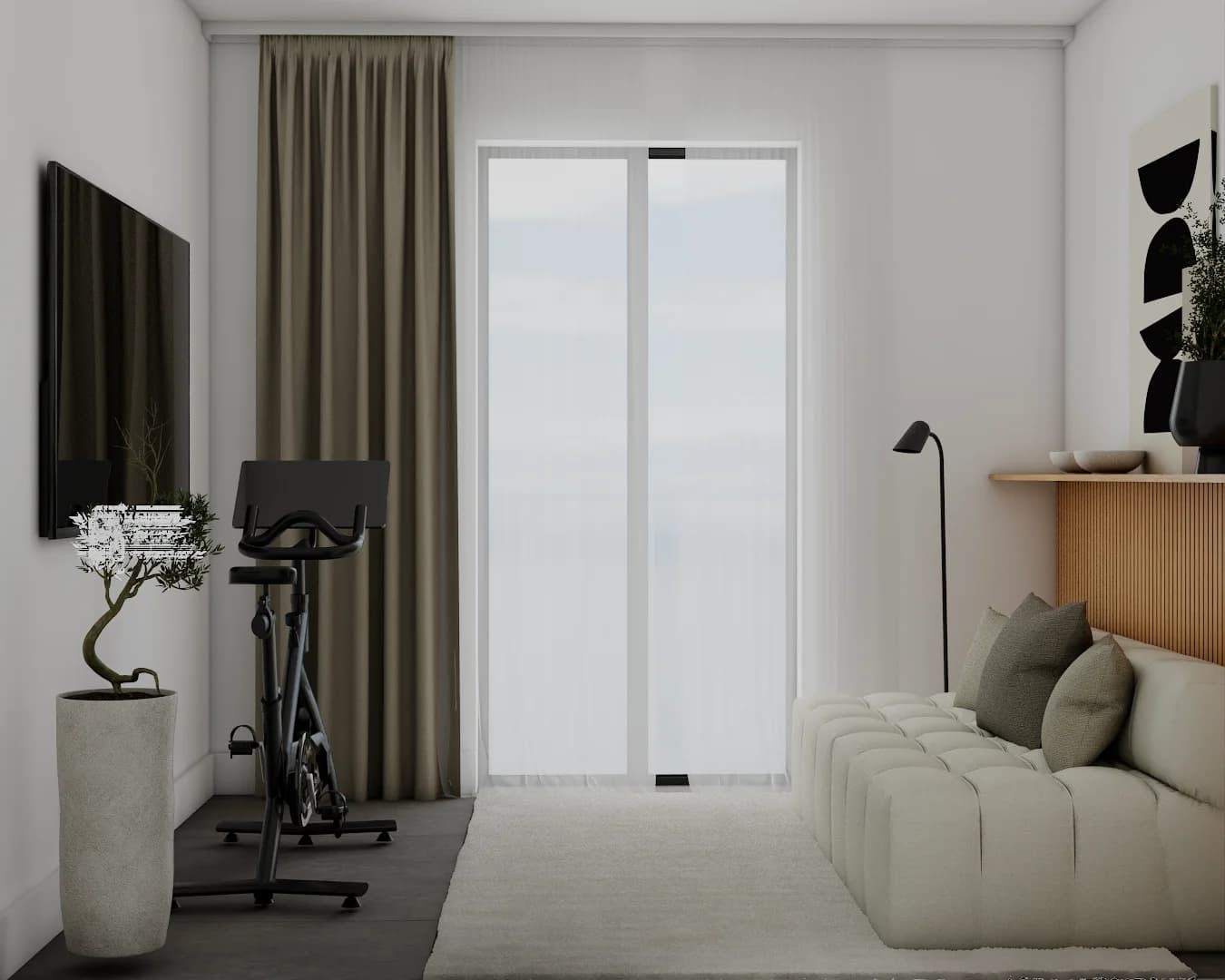
Home Gym Lounge Room
Workout and lounge room with spin bike and boucle sofa. Taupe and white palette.
View project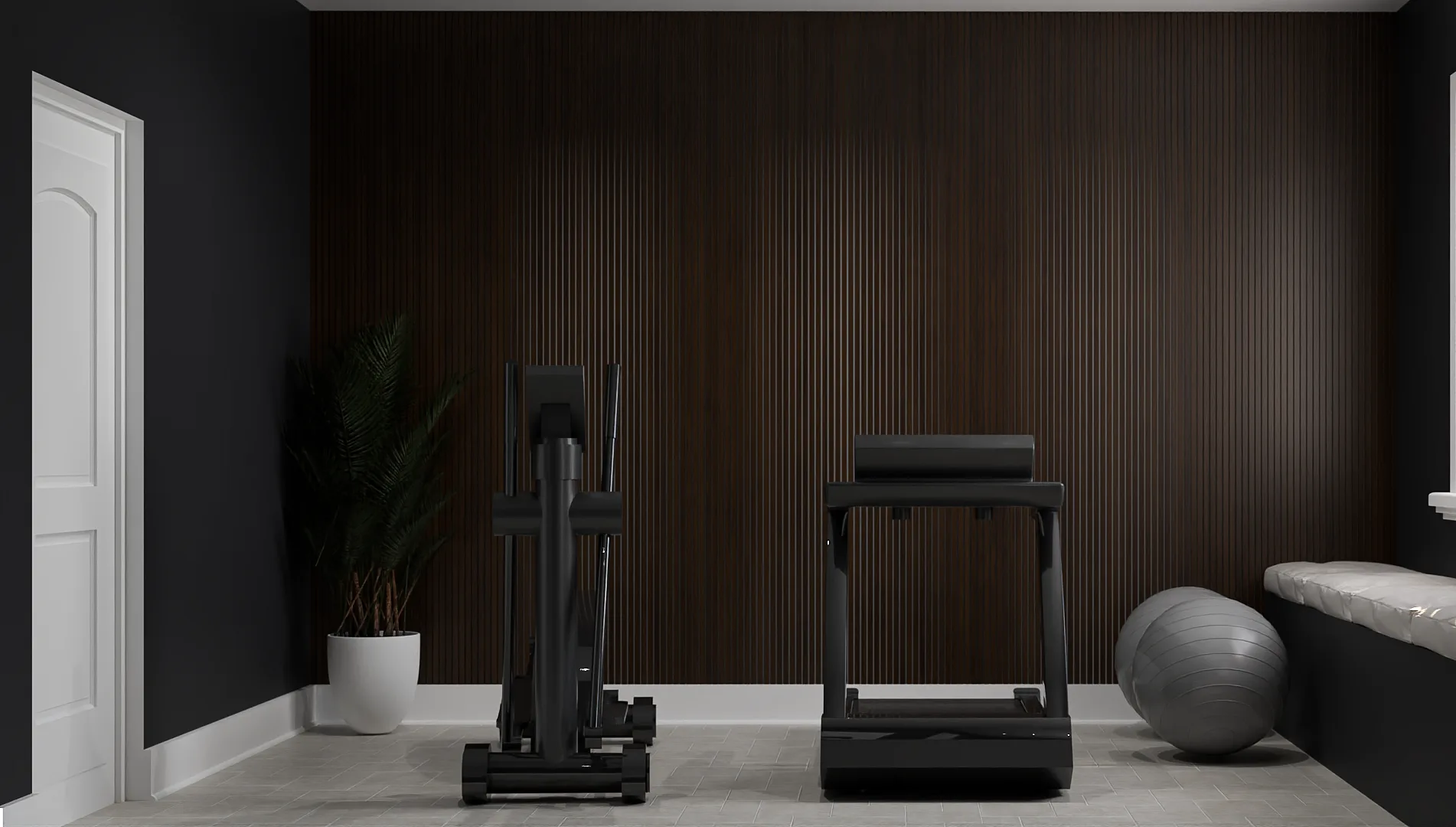
Dark Slat Wall Gym
Dark walnut slat wall gym with black cardio equipment. Concrete floors ground the moody palette.
View project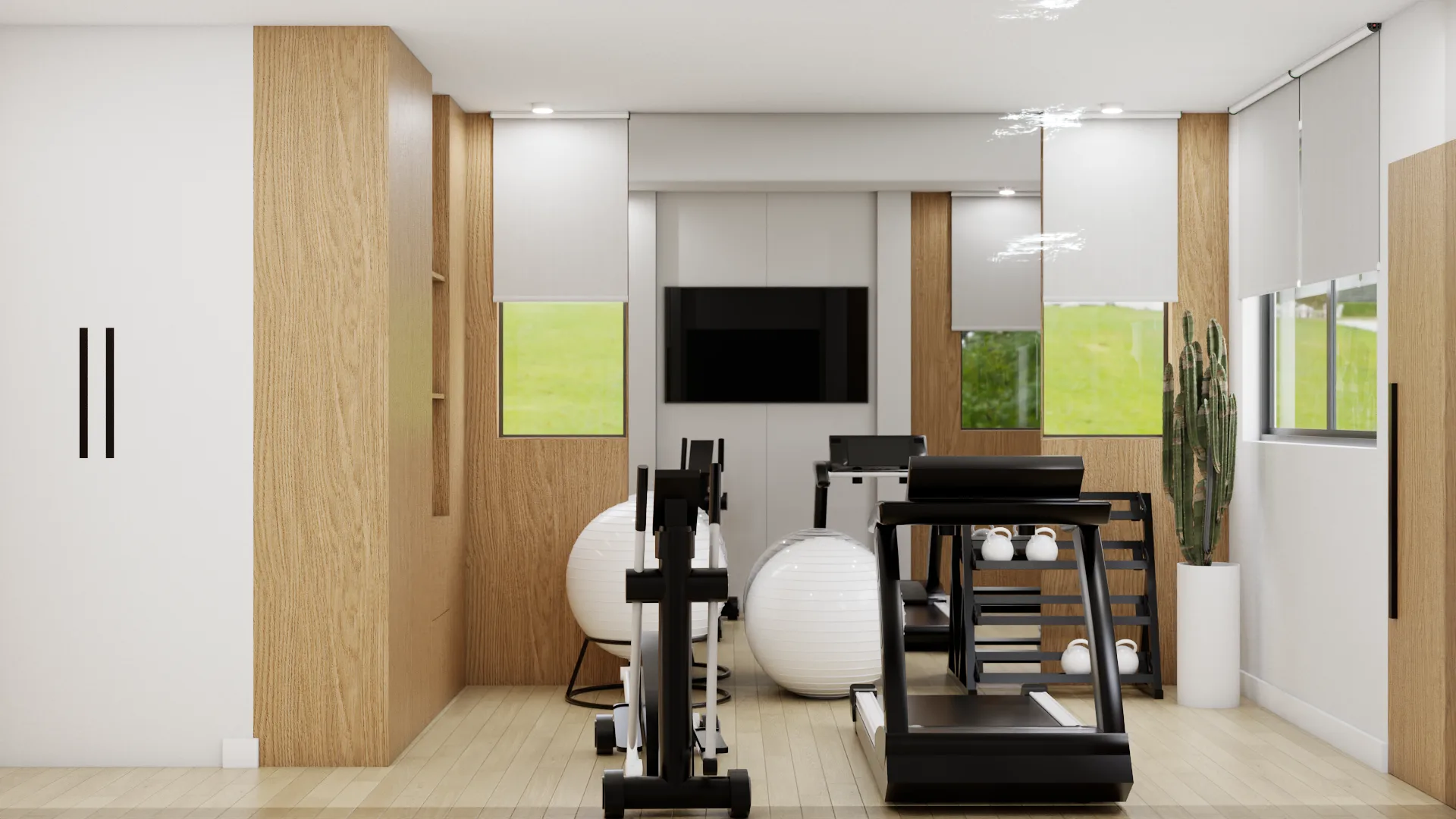
Oak Panel Mirror Gym
Home gym with full-height oak panels, built-in dumbbell shelving, and a mirrored TV wall.
View project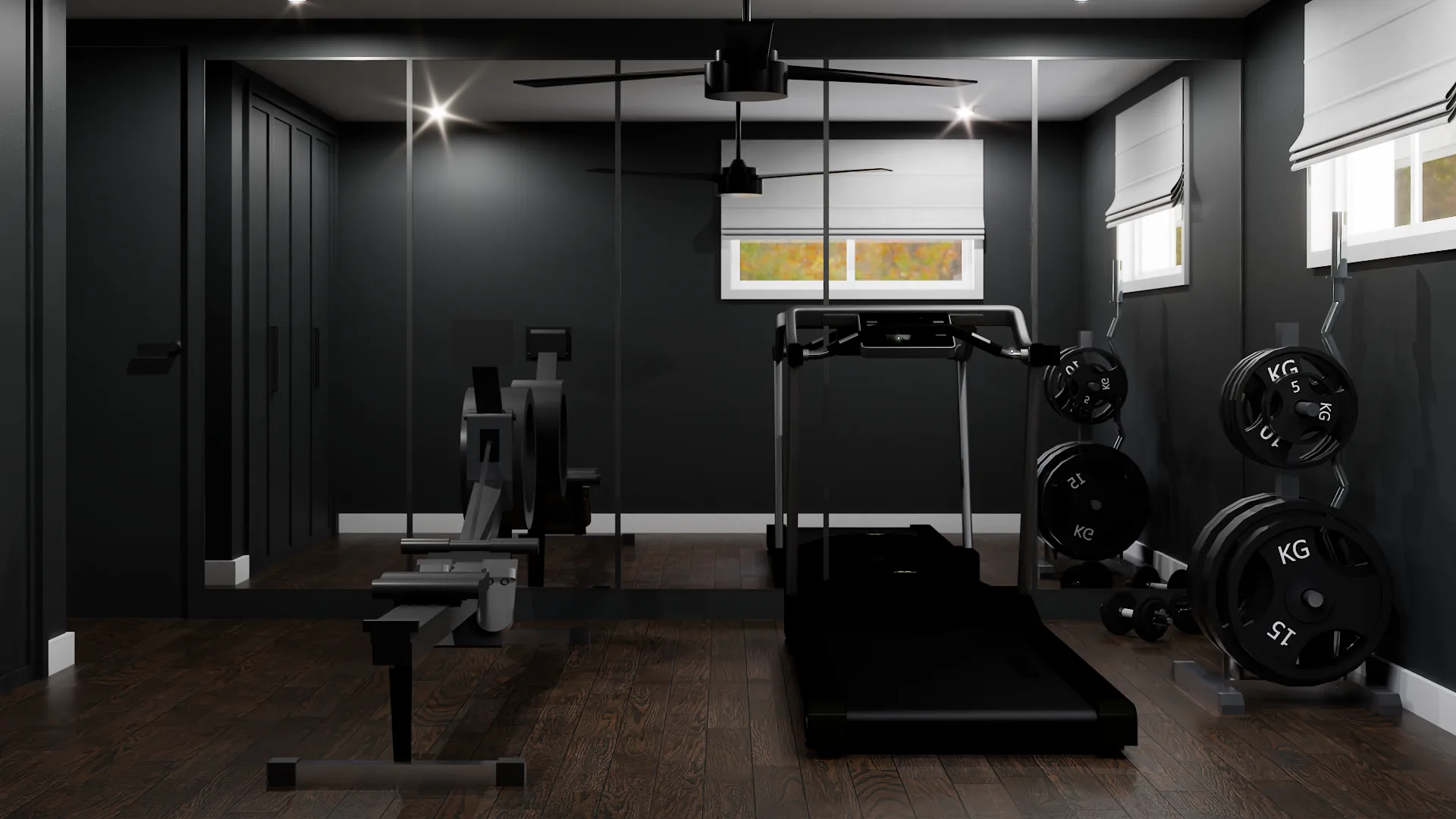
Dark Charcoal Basement Gym
Near-black charcoal gym with panel molding walls and full mirror. Treadmill and weight rack below.
View project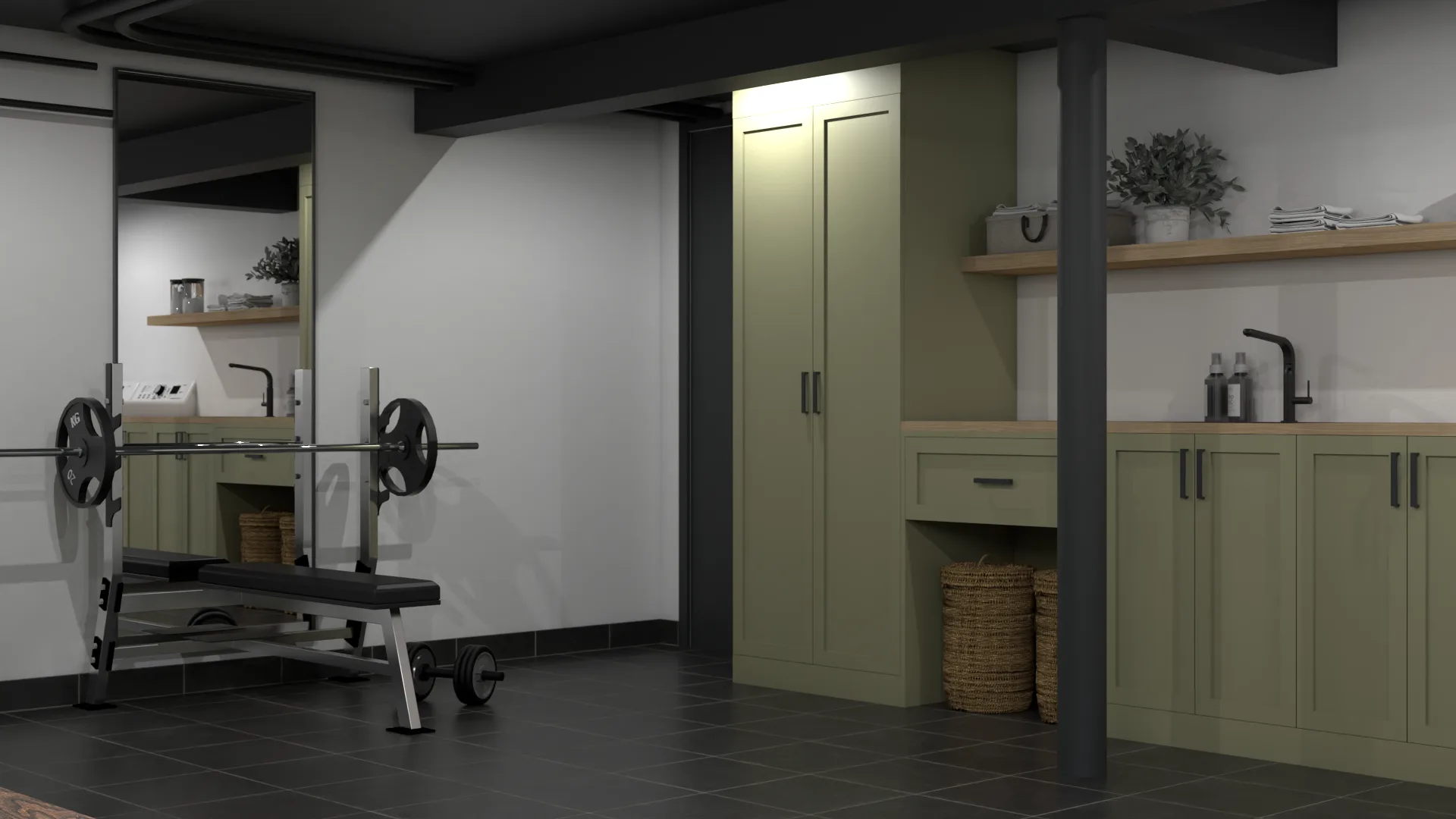
Sage Mudroom Gym Combo
Sage shaker cabinets and butcher block in a basement mudroom-gym combo. Dark slate tile floors.
View project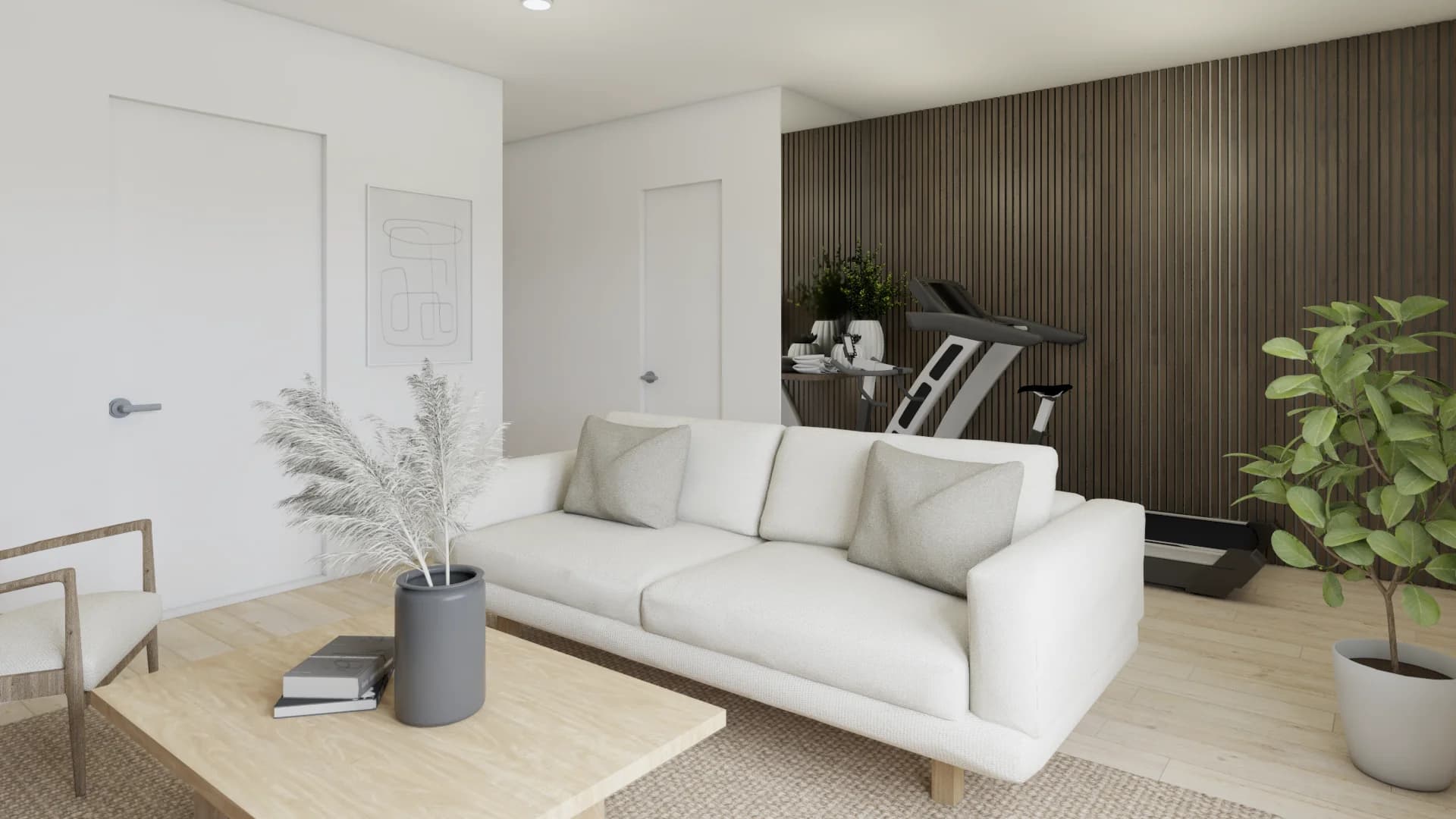
Walnut Slat Wall Gym
A dark walnut slatted feature wall anchors a gym and living room in one bright space.
View project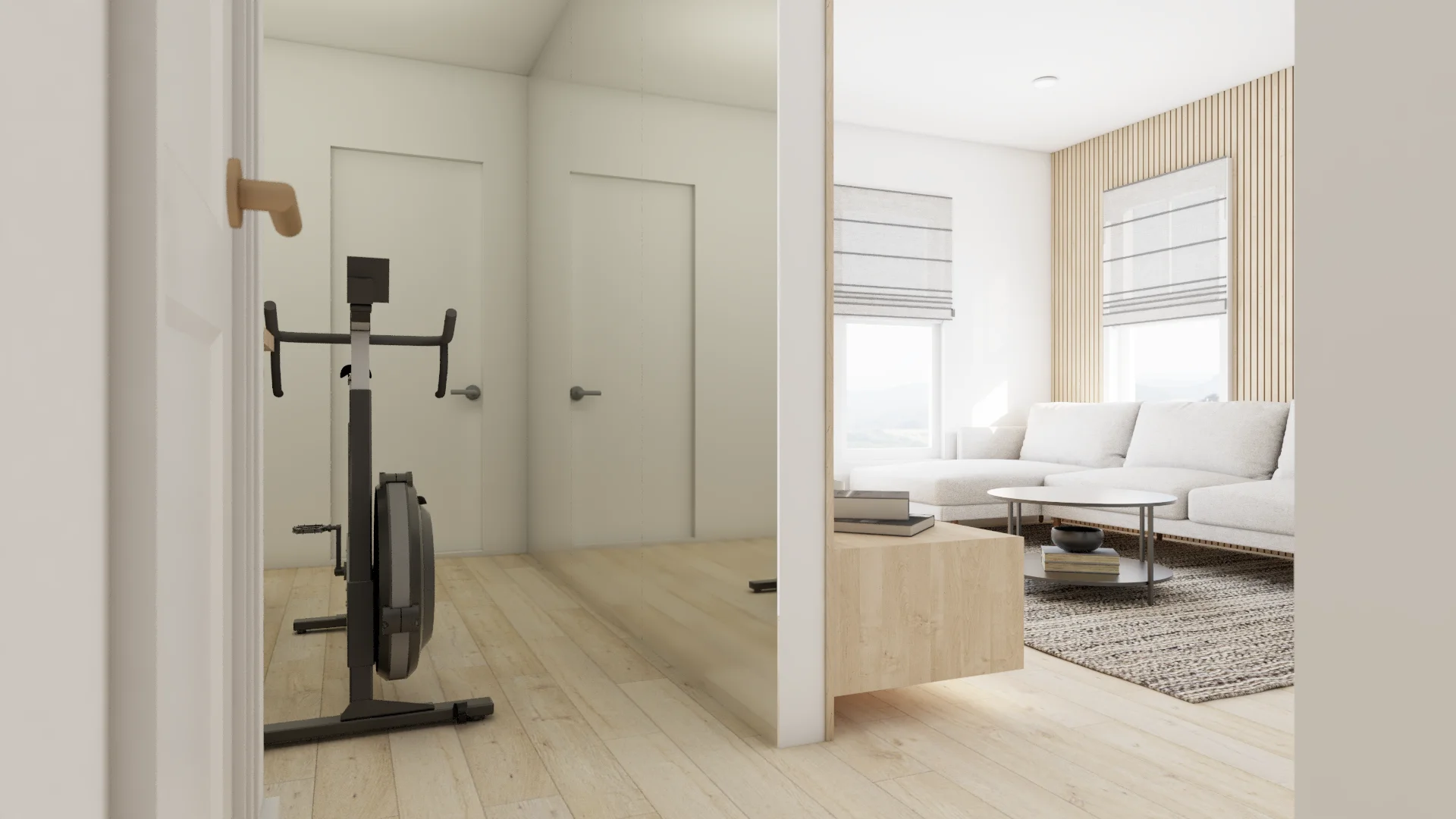
Japandi Gym Nook Plan
An air bike gym nook opens directly onto a Japandi living room with slatted oak walls.
View projectExplore Other Room Types
About This Room Type
Home Gym Design Ideas
A home gym only works if the equipment layout, flooring, and ventilation are planned together. These projects show how to organize weights, cardio machines, and stretching zones in rooms ranging from spare bedrooms to garage conversions.
Browse completed gym designs to see how mirror placement, rubber flooring transitions, and ceiling fan positioning change based on room size and workout type. Each project includes a floor plan with clearance dimensions around every piece of equipment.
Explore Our Services
From concept to curated shopping list, we handle everything virtually.
Learn about our home gyms design serviceDesign Tips
Home Gym Layout Tips
Map Equipment Clearance Zones
A treadmill needs 6 feet of clear space behind it for safety. A squat rack needs 4 feet in front and behind for barbell movement. We draw clearance zones around every piece of equipment in the floor plan.
Install Mirrors on the Longest Wall
Full-height mirrors on one wall let you check form during lifts. Position them starting 18 inches above the floor to avoid direct contact with weights. Mirrors also make compact gyms feel twice the size.
Use Rubber Flooring in the Weight Zone
Interlocking rubber tiles (3/8 to 3/4 inch thick) absorb impact and protect the subfloor. Use a thinner rubber mat under cardio equipment and a thicker one where weights are dropped.
Add a Fan or Ventilation System
A ceiling fan or wall-mounted industrial fan is essential. Without air circulation, small gym rooms overheat within 20 minutes. We specify fan size and placement based on room volume.
Planning Guide
Before You Start
Floor Load Capacity
A loaded squat rack can exceed 500 pounds on a small footprint. Upper-floor gyms may need structural reinforcement. We recommend consulting an engineer for any second-floor gym with heavy free weights.
Sound and Vibration
Cardio machines and dropped weights generate noise and vibration that travel through floors. Thick rubber mats and machine isolation pads reduce this. We specify the right mat thickness for each equipment type.
Garage vs. Indoor Conversion
Garage gyms need insulation and climate control for year-round use. Indoor rooms (spare bedrooms, basements) already have HVAC but may lack ceiling height. We design for both setups.
Lighting for Workout Motivation
Bright, even lighting (4000-5000K) keeps energy levels up during training. Avoid overhead fixtures directly above a bench press position. We plan fixture placement around your equipment layout.
Common Questions
Frequently Asked Questions
Want This Look in Your Home?
Book a free consultation and we will help you recreate this design tailored to your space and budget.
Want a Home Gym Like This?
Our senior interior designers can create a custom design tailored to your space and style. Start with a free consultation.