
Spa Interior Design by Senior Interior Designers
Spa projects designed for calm, cleanliness, and client flow. From treatment rooms to wellness corridors, we coordinate humidity-rated materials and sensory lighting, and a 360 VR walkthrough confirms the full atmosphere.
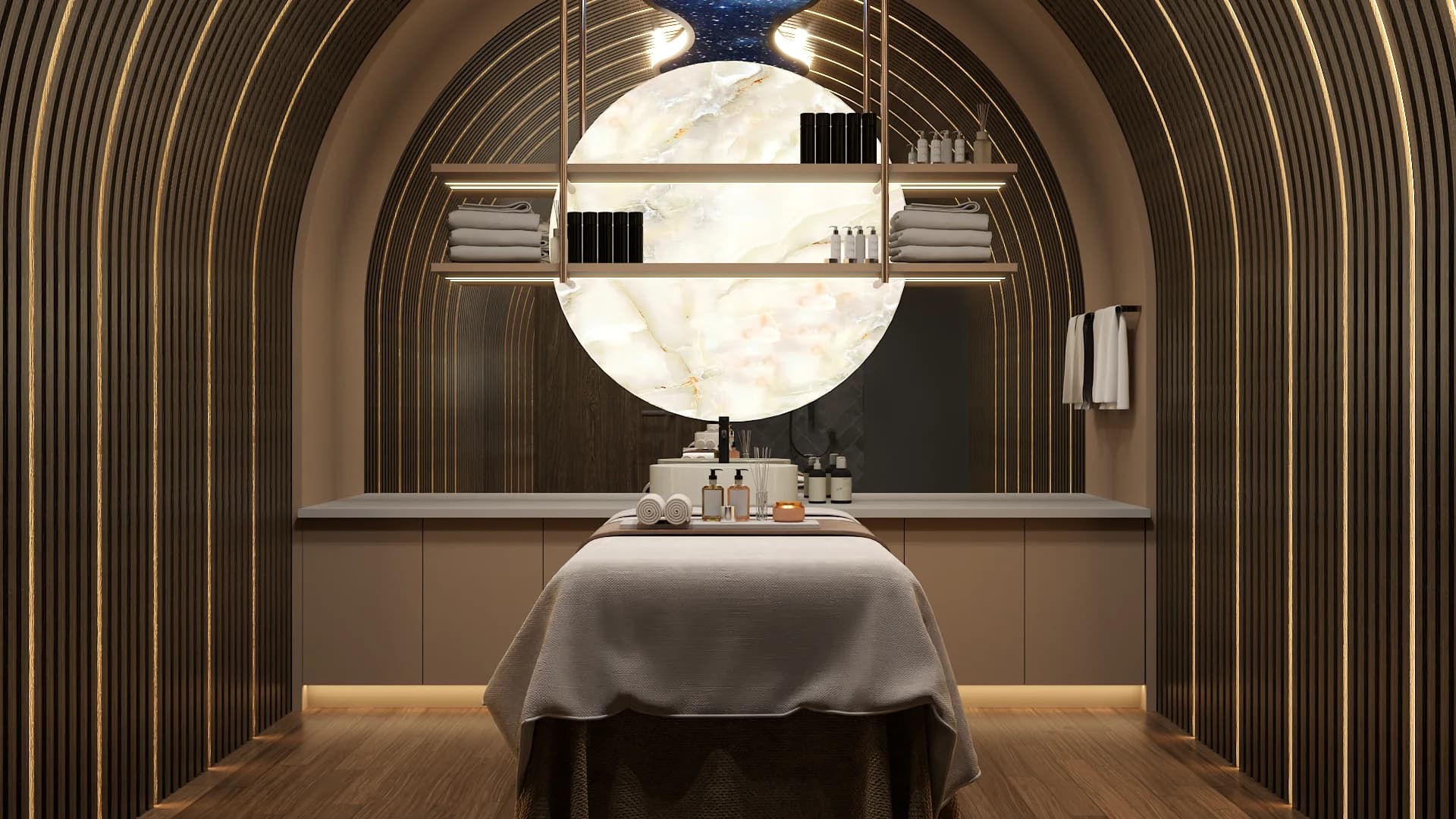
Art Deco Treatment Room
Arched brass ribs frame a treatment bed beneath a backlit marble disc. Gold and walnut tones.
View project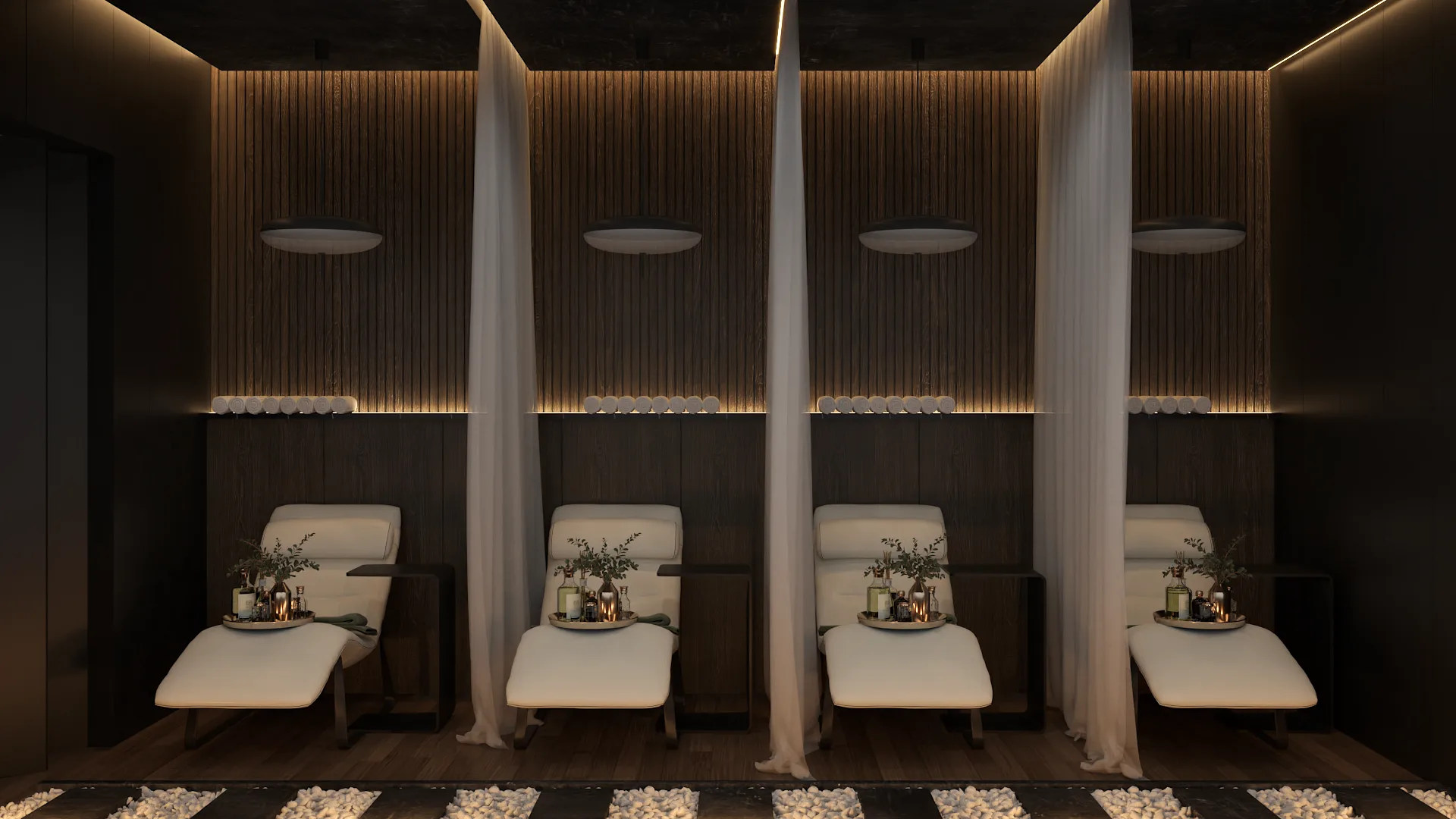
Celestial Spa Treatment Pods
Fiber optic star ceiling and onyx moon focal point. Dark walnut slats and stacked stone base.
View project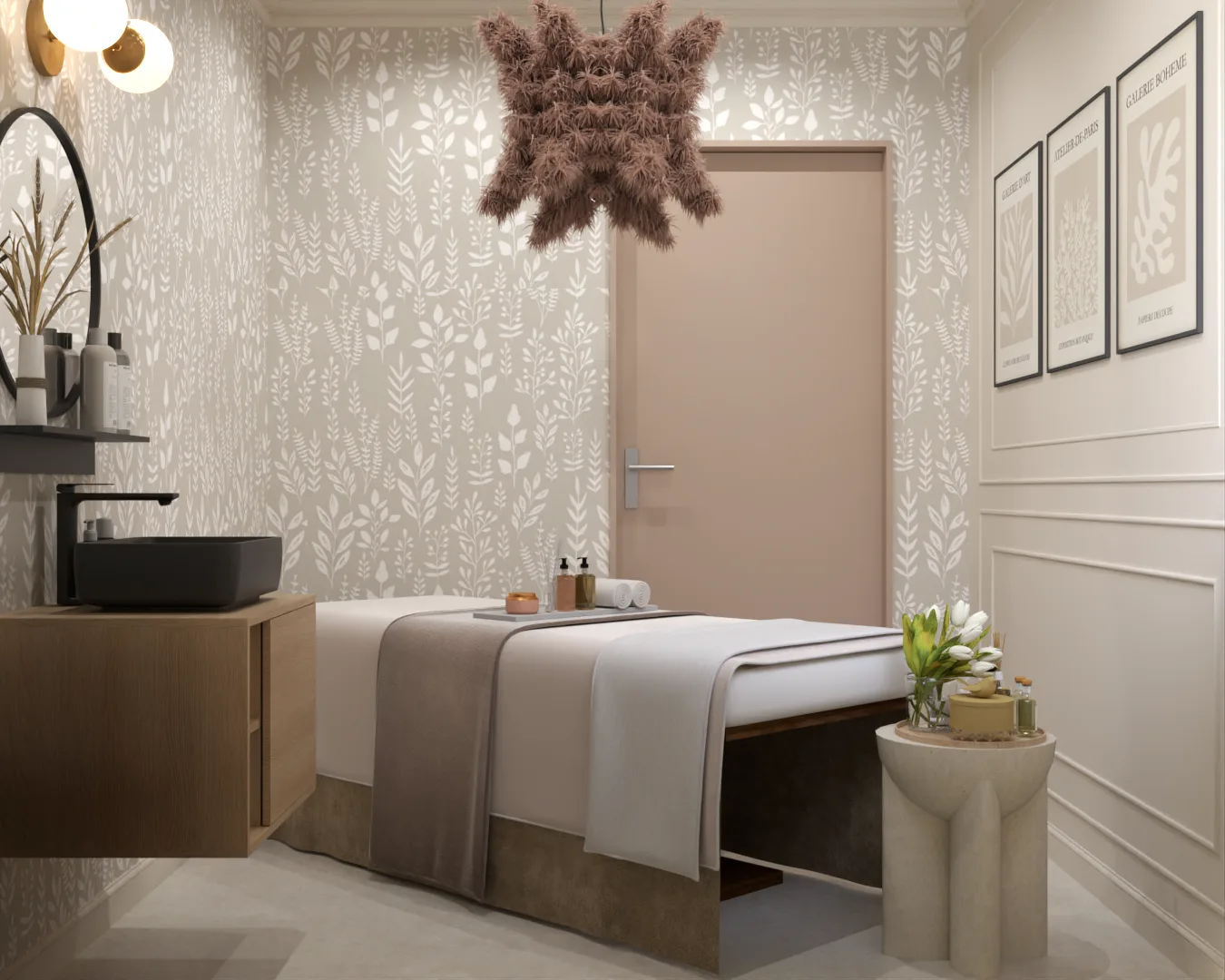
Blush Botanical Medical Spa
Blush tones and leaf wallpaper anchor this full spa. Oak, cream, and black form the palette.
View project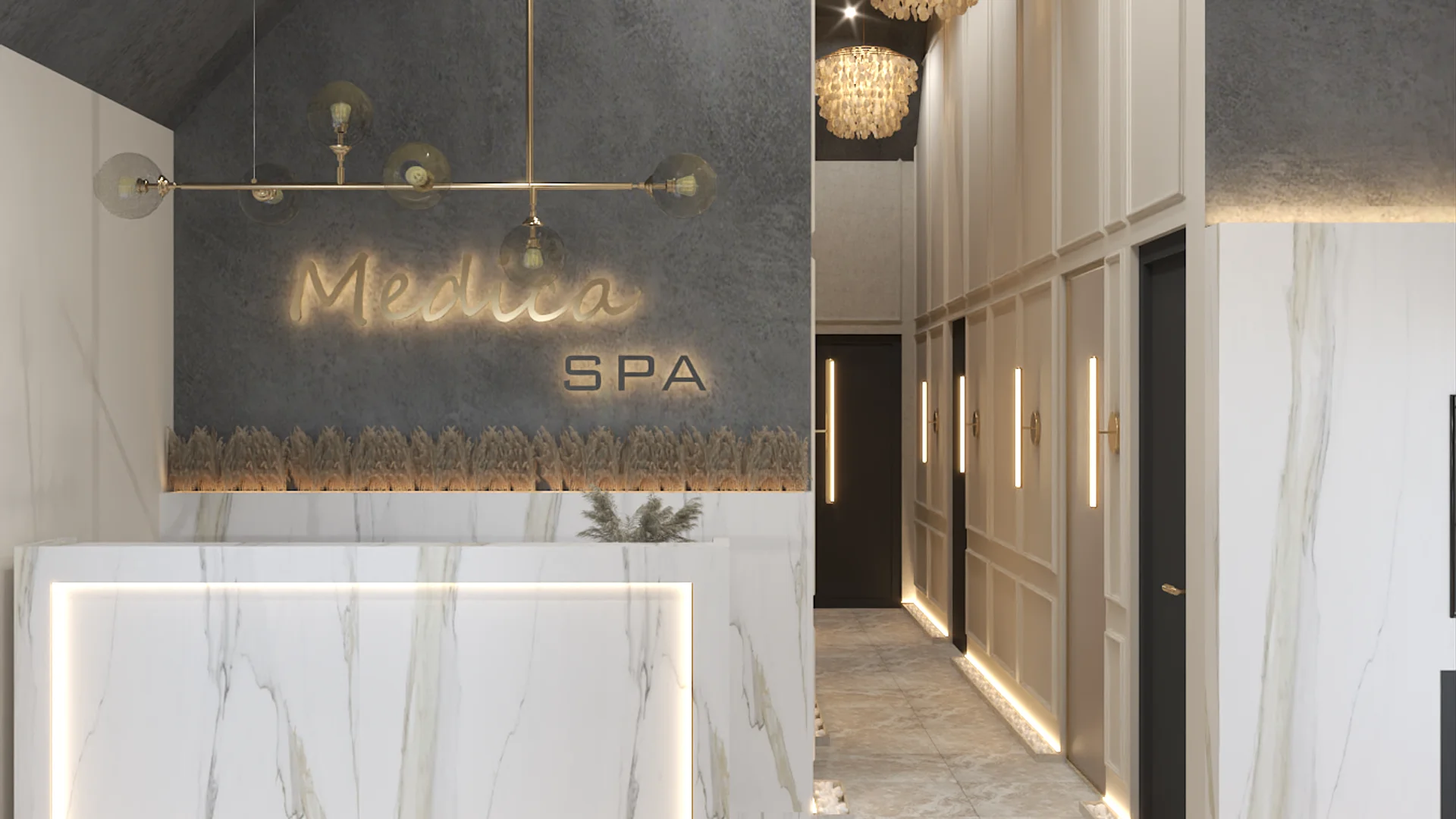
Marble Gold Spa Suite
Medical spa with marble reception and paneled treatment corridors. Cream, brass, and gold.
View project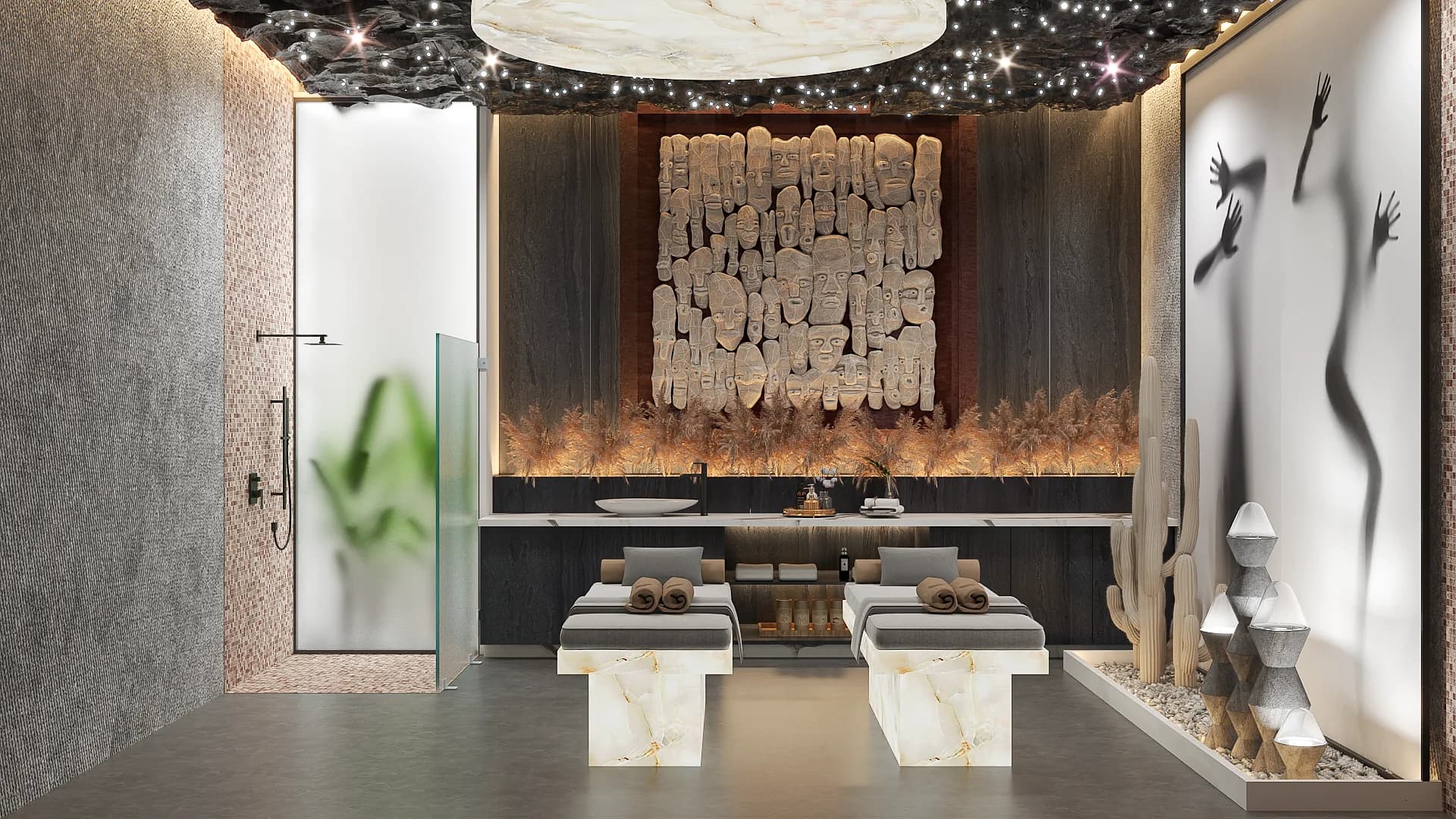
Couples Massage Spa Suite
Dual marble beds beneath a star ceiling with driftwood art and silhouette panels.
View project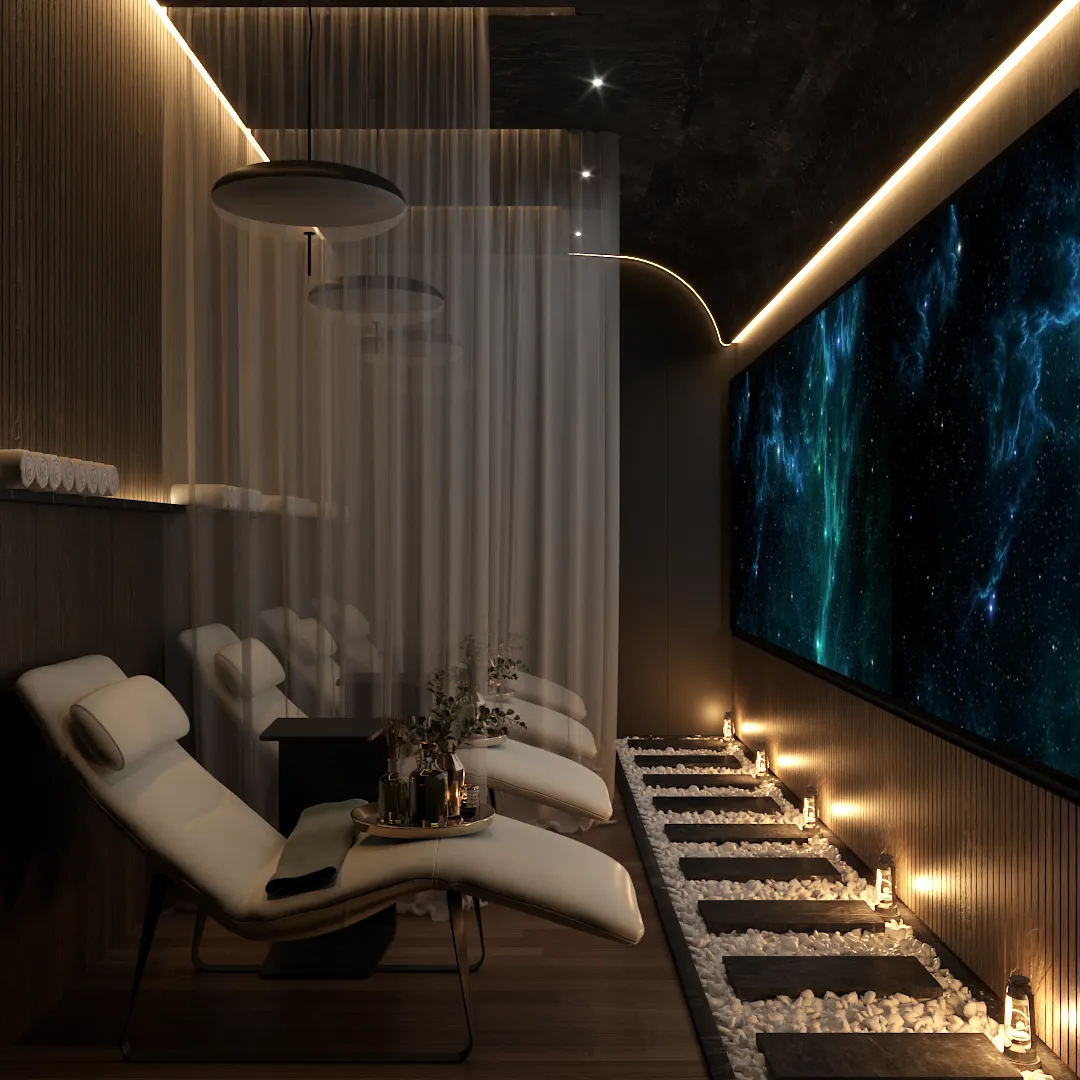
Cosmic Theme Spa Room
Spa room with cosmic theme and celestial wall mural. Soft lighting creates peaceful ambiance.
View project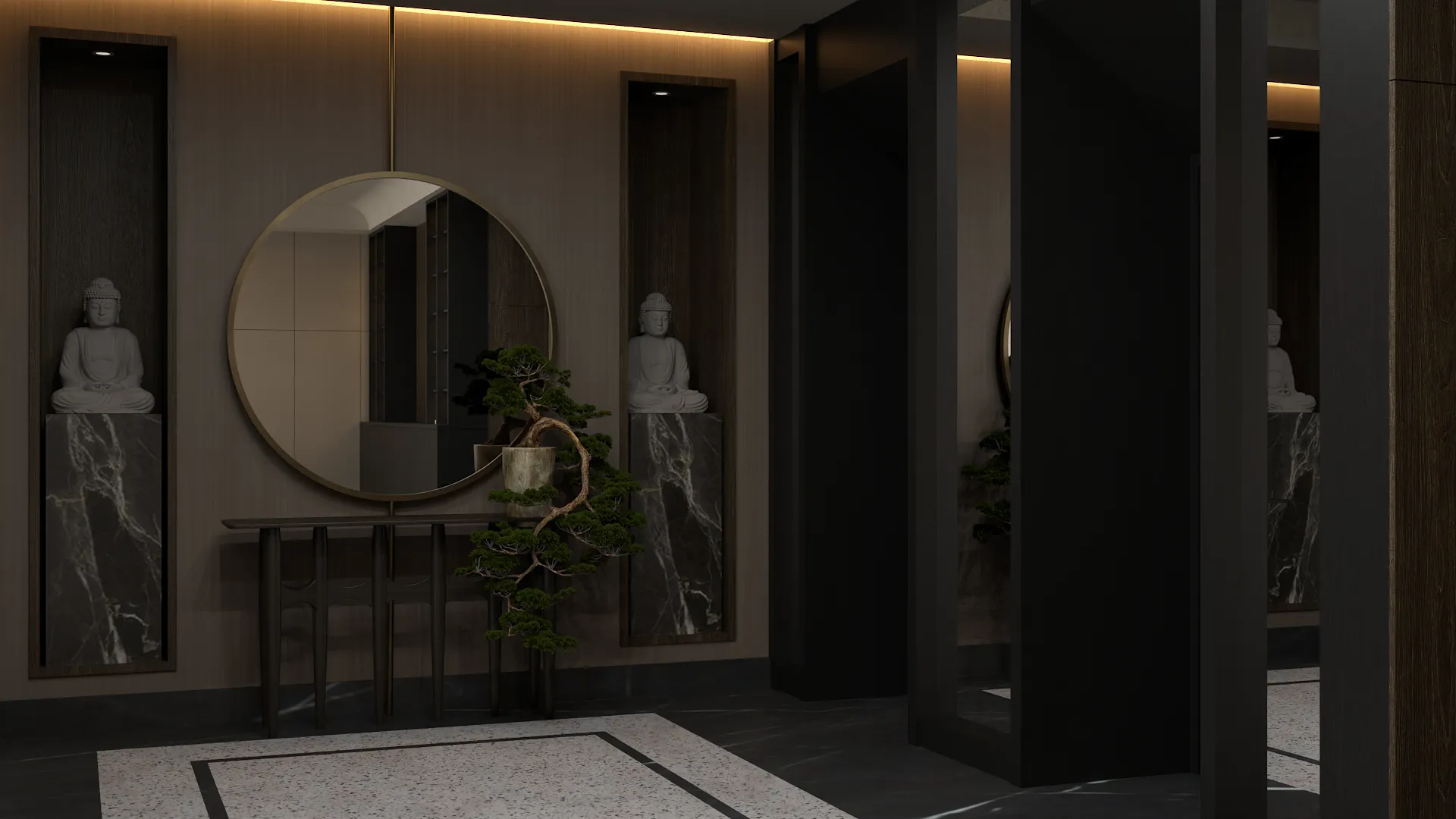
Minimalist Sculptural Hallway
Minimalistic hallway with sleek lines and neutral palette. Sculptural decor adds artistic touch.
View project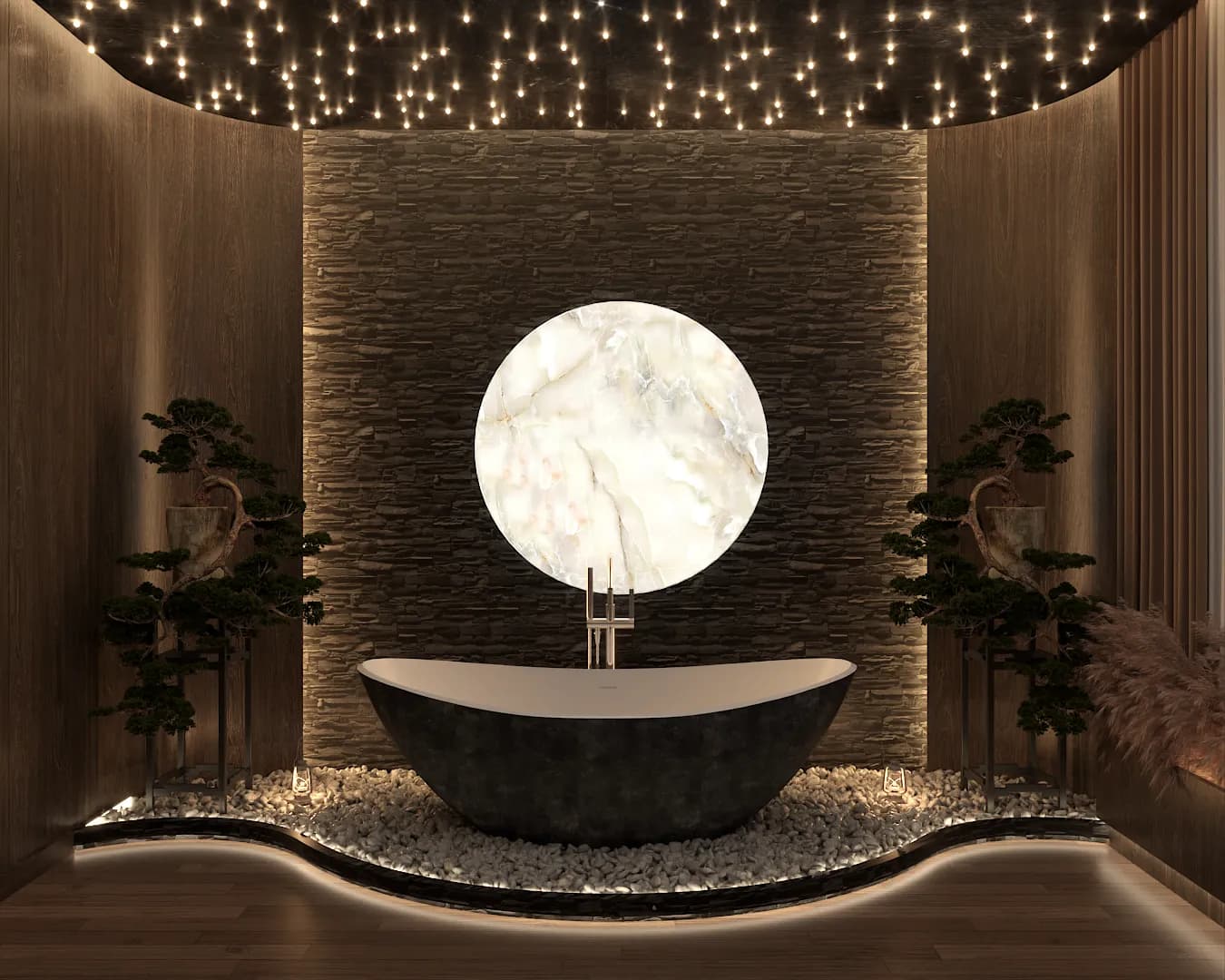
Celestial Moon Element Spa
Luxurious spa with central glowing moon element and ambient lighting. Otherworldly relaxation awaits.
View projectExplore Other Room Types
About This Room Type
Spa & Wellness Design Ideas
Spa design is the only category where you design for all five senses, not just sight. Temperature, humidity, acoustics, scent diffusion, and tactile surfaces all require intentional planning that standard interior design does not address.
Browse treatment rooms, relaxation lounges, reception areas, and wellness corridors. Each project shows how material selection, lighting color temperature, and spatial flow create an immersive experience from the moment guests enter.
Explore Our Services
From concept to curated shopping list, we handle everything virtually.
Learn about our spa & wellness interior design ideas design serviceDesign Tips
Spa Design Tips
Design the Guest Journey as a Sequence
Reception to changing room to wet zone to treatment room to relaxation lounge. The path should flow in one direction with no backtracking. Each transition should feel like a deliberate shift in atmosphere.
Control Humidity With Material Choices
Wet zones need porcelain tile, stainless steel, and marine-grade fixtures. Dry treatment rooms can use wood, fabric, and natural stone. We specify materials by zone based on the moisture exposure each area actually receives.
Use Warm, Dim Lighting Everywhere
Treatment rooms and relaxation areas should use 2200-2700K color temperature at low intensity. Bright overhead lighting destroys the calming atmosphere guests are paying for. Layer with cove lighting, candle-style sconces, and dimmable controls.
Soundproof Between Treatment Rooms
Conversation from one treatment room bleeding into the next ruins the experience. We specify wall construction with acoustic isolation (STC rating 50+), sealed doors, and white noise systems.
Planning Guide
Spa Planning Factors
Ventilation and Air Exchange
Commercial spas require mechanical ventilation for humidity control (30-50% relative humidity) and air quality. Treatment rooms with essential oils need independent air exchange to prevent scent crossover.
Temperature Zoning
Different spa zones need different temperatures: saunas at 150-185F, steam rooms at 110-120F, treatment rooms at 70-73F, relaxation lounges at 75-78F. HVAC must serve each zone independently.
Health Department Compliance
Commercial spas must meet local health codes for water features, sanitation, and ventilation. Treatment rooms need non-porous surfaces. Wet zones require specific drain and waterproofing standards.
Treatment Room Sizing
A standard massage room needs 90-120 square feet. Rooms with laser or equipment need 120-140 square feet. Couples rooms need 180-200 square feet. We plan room dimensions around the specific services you offer.
Common Questions
Frequently Asked Questions
Want This Look in Your Home?
Book a free consultation and we will help you recreate this design tailored to your space and budget.
Want a Spa & Wellness Interior Design Idea Like This?
Our senior interior designers can create a custom design tailored to your space and style. Start with a free consultation.