
Walk-In Closet Ideas by Senior Interior Designers
Walk-in closet projects organized to every shelf and drawer. From L-shaped layouts to island dressers, the design covers rod heights, LED lighting, and drawer configurations, and you tour the finished layout in 360 VR first.
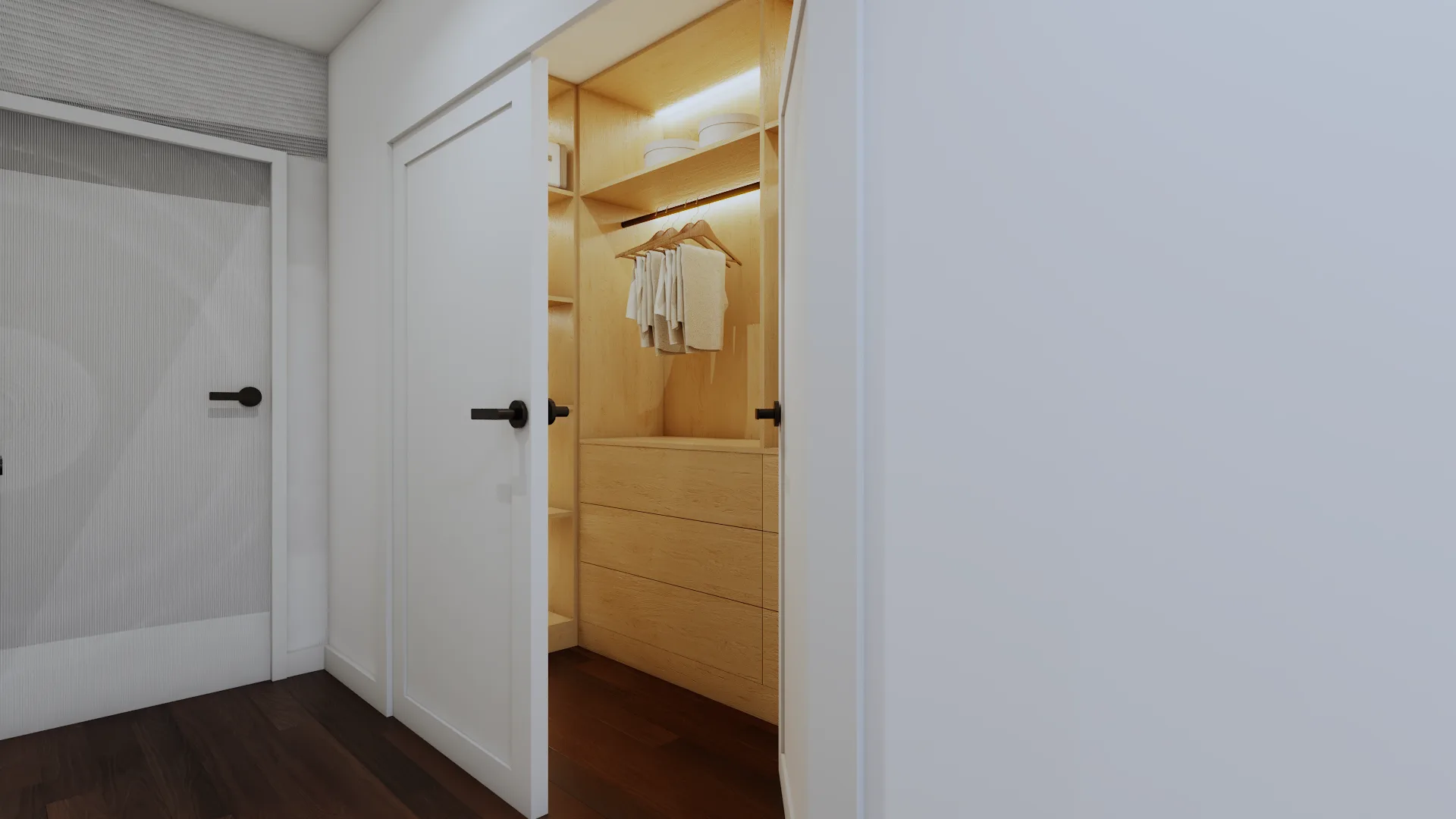
Oak Reach-In Closet
Compact reach-in closet lined in light oak with a single hanging rod, floating shelf, and three-drawer base. LED strip lighting under the shelf illuminates the interior through white double doors with matte black handles.
View project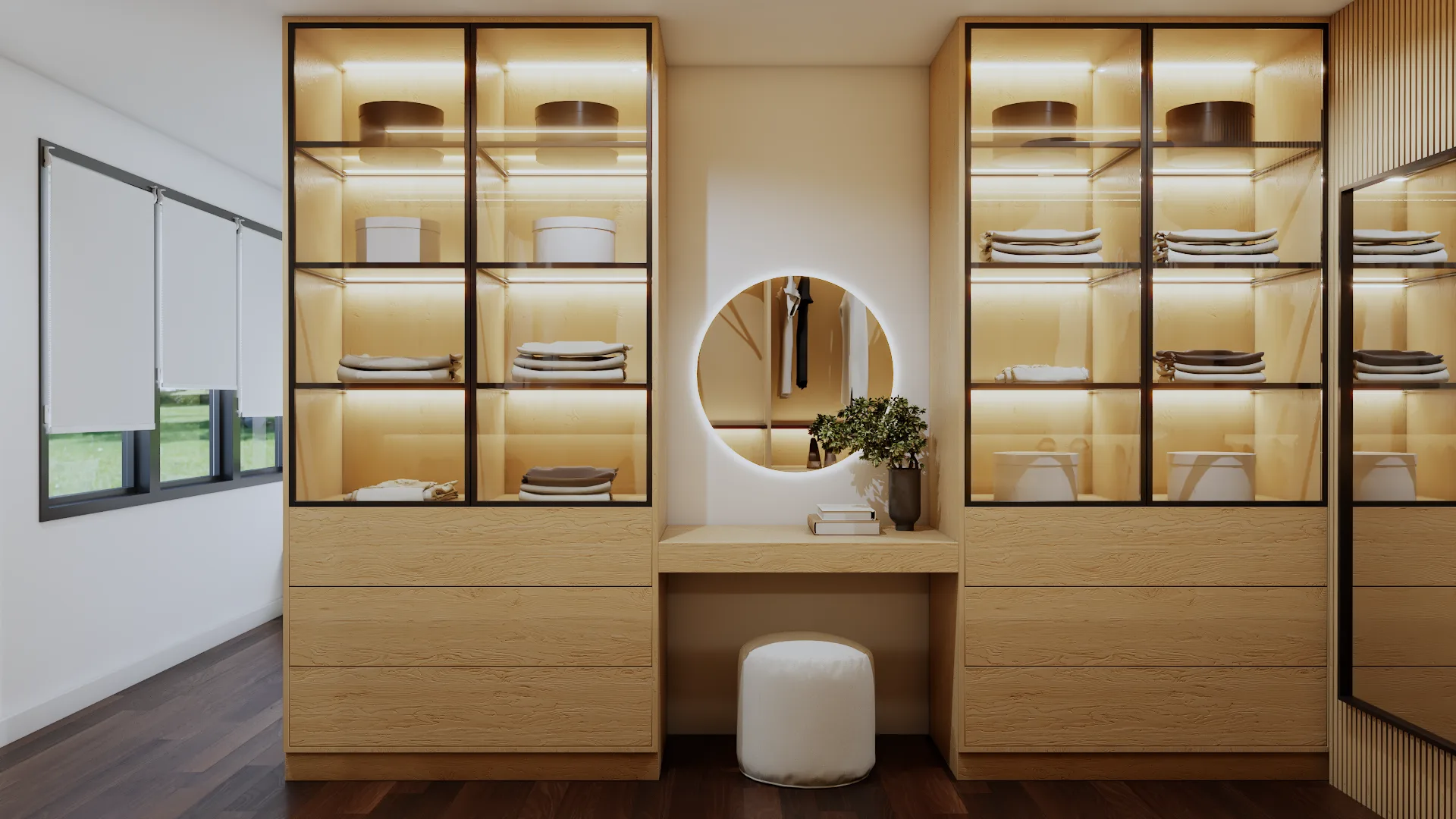
Oak Dressing Room Vanity
Floor-to-ceiling oak cabinetry with lit glass-front display cases and a backlit round vanity mirror.
View project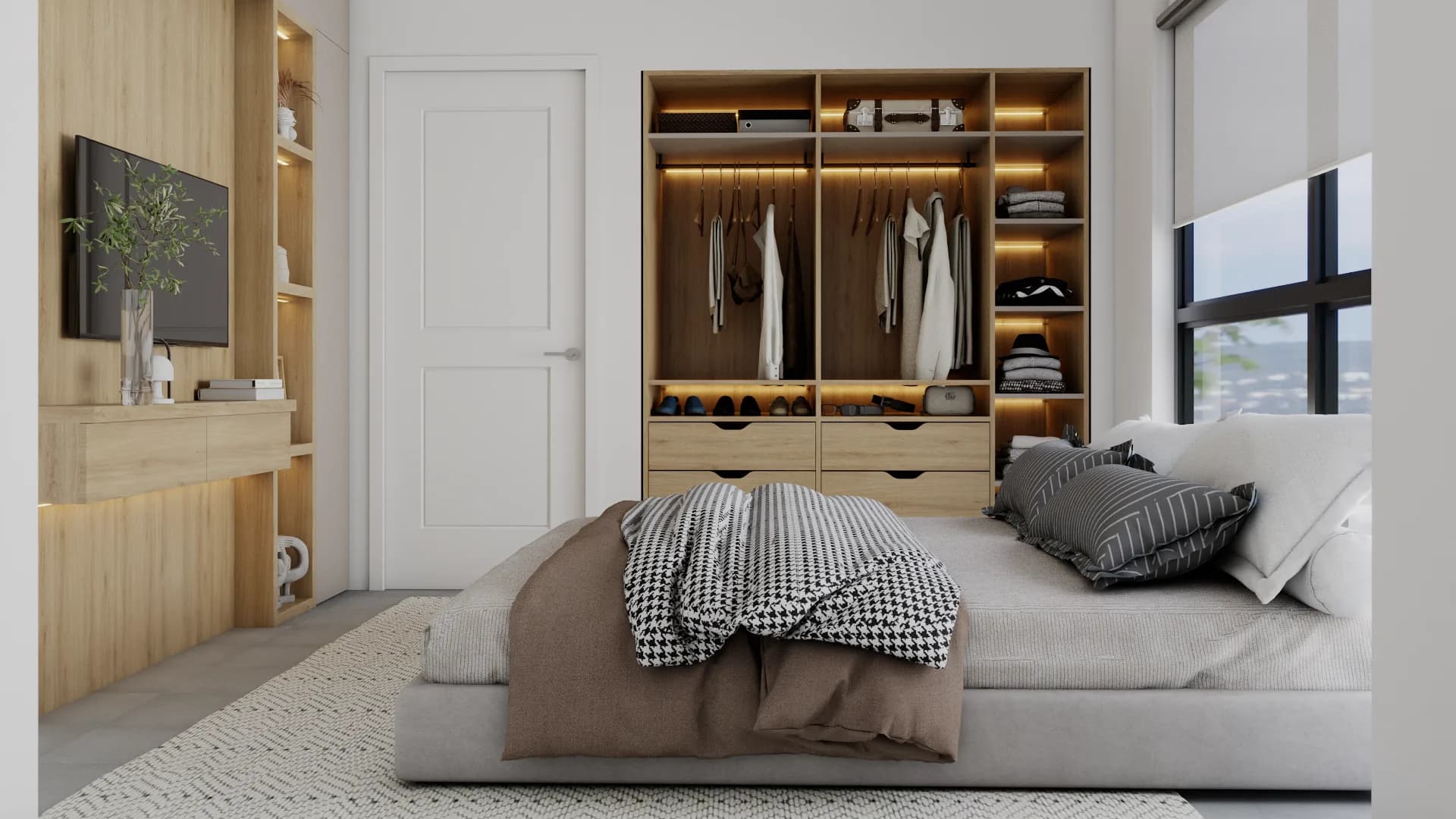
Wood LED Bedroom Closet
Built-in wardrobe with LED strips and warm birch interior. Cream and charcoal palette.
View project
Glass Front Wardrobe Wall
Glass shelves and hanging rod organize each closet zone by type. Taupe, linen, oak palette.
View project
Walk-In Closet Vanity
Vanity with round mirror anchors taupe built-ins. Cream ottoman and oak flooring throughout.
View project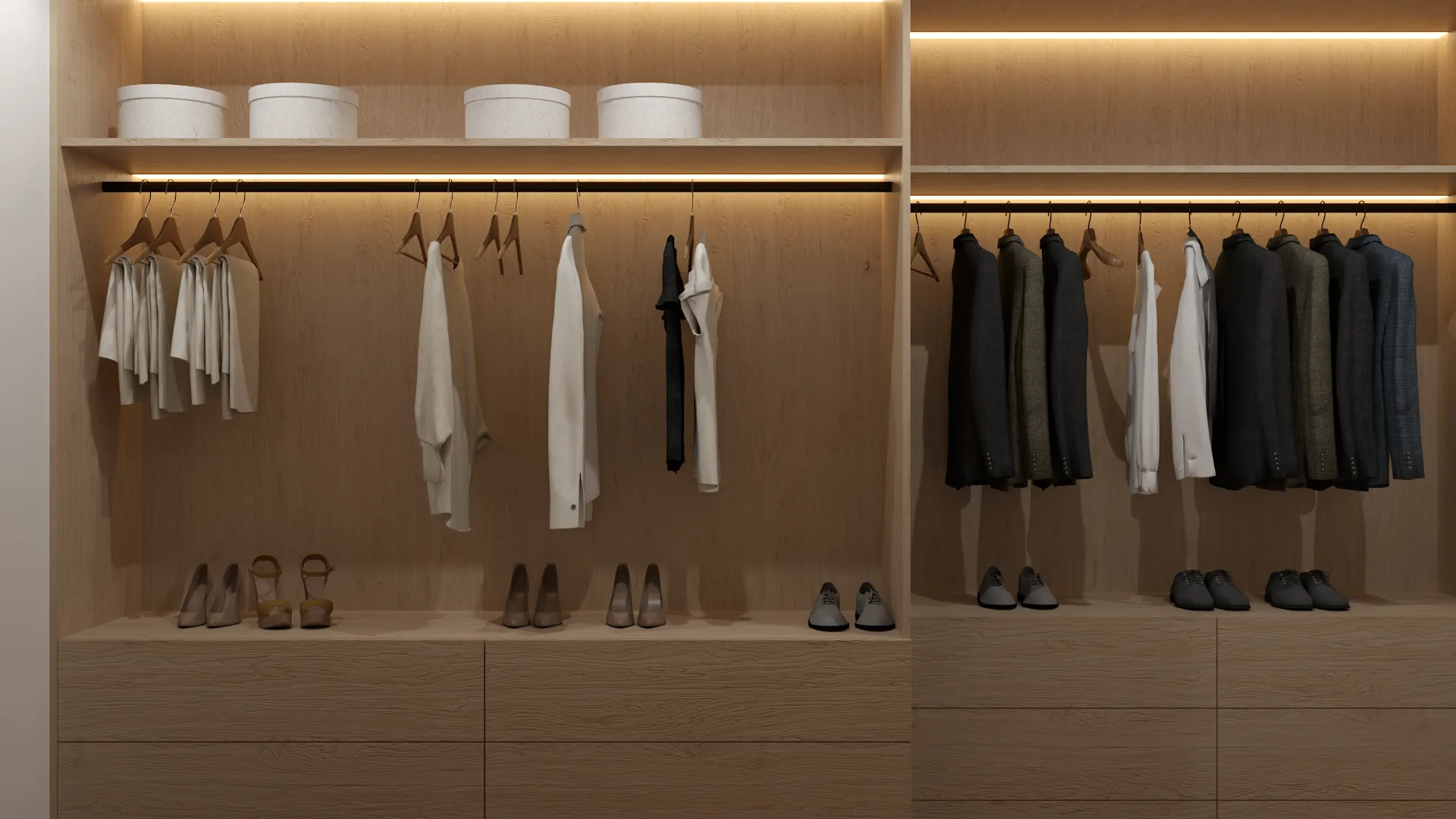
Oak Walk-In Wardrobe Closet
Light oak panels line a full walk-in closet. Open hanging rails, shoe shelf, and flat-front drawers stay minimal.
View project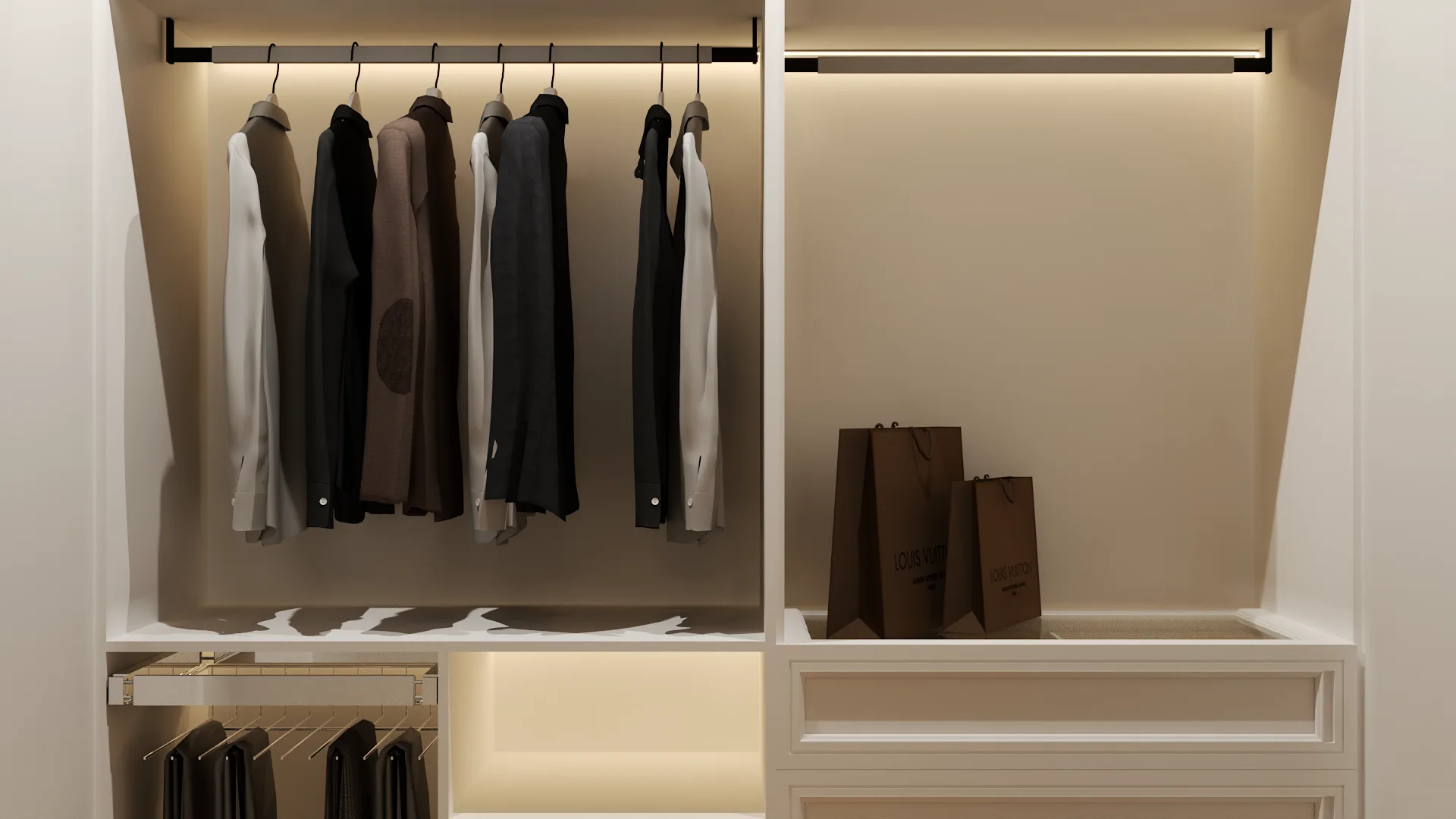
White LED Wardrobe System
Dual hanging zones with warm LED strips and pull-out trouser rack. Raised panel drawers and black rod accents.
View project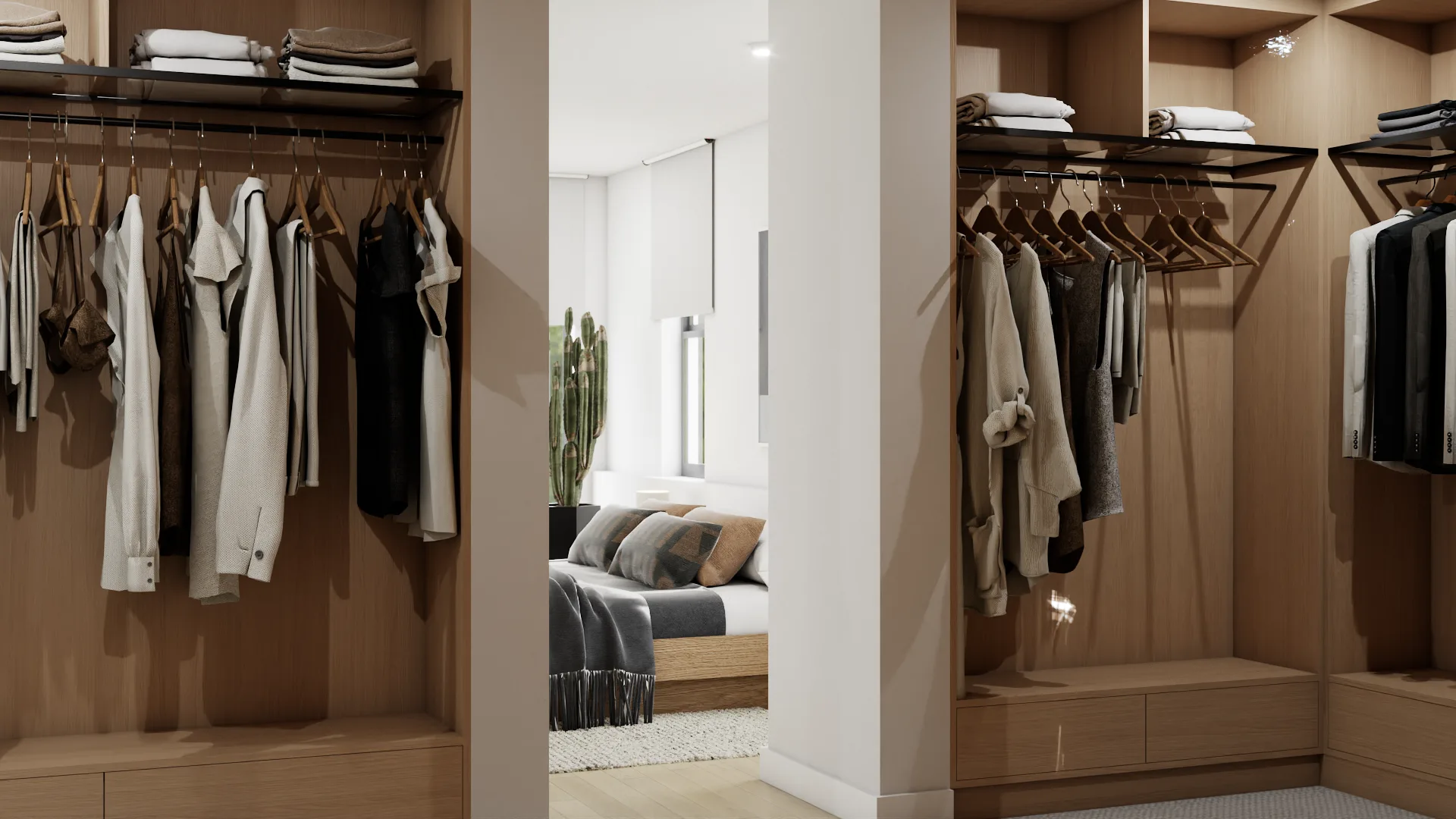
Oak Passthrough Closet
Warm oak walk-through closet with open hanging rails and a framed bedroom view beyond.
View project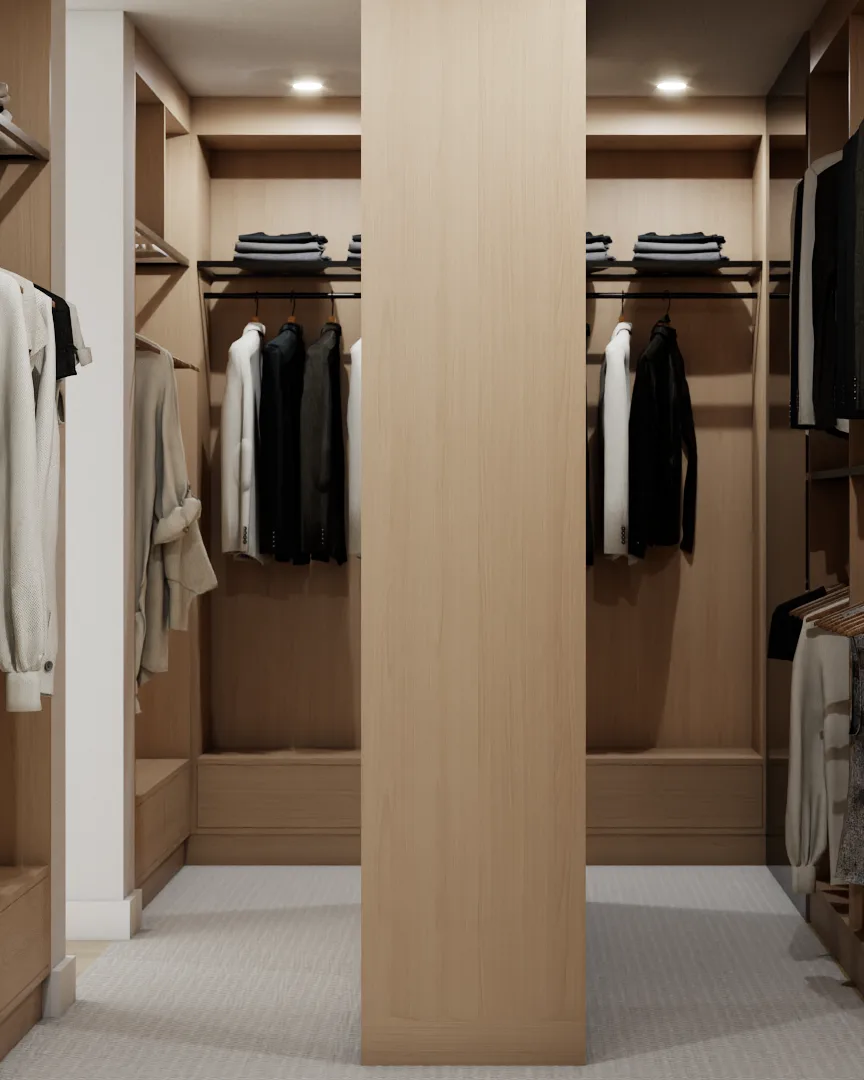
Oak Column Walk-In
Full oak walk-in with column divider, symmetric hanging bays, open shelves, and art display.
View project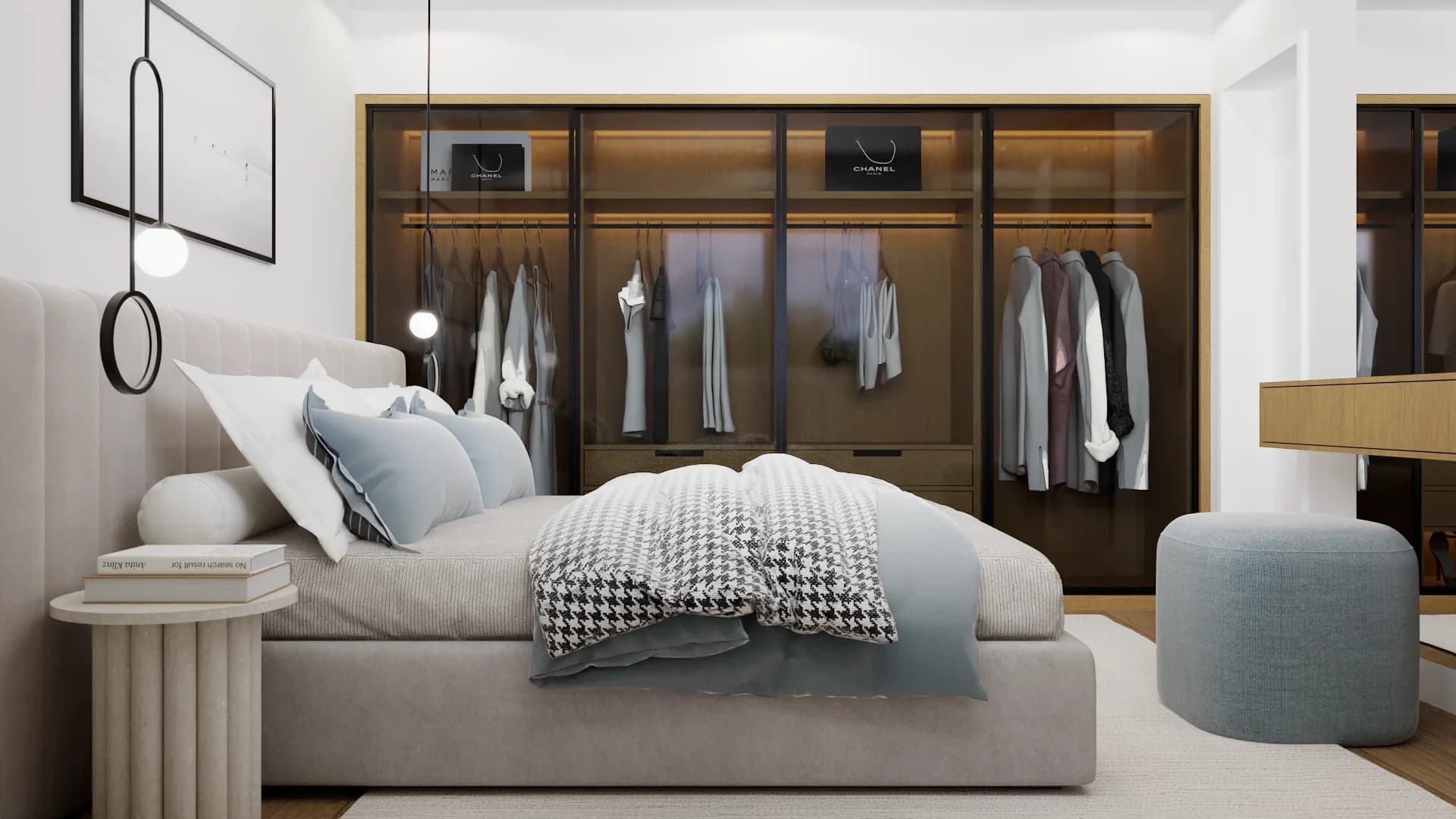
Gold Glass Wardrobe Bedroom
Gold-framed glass wardrobe with LED glow anchors this room. Blue accents soften the palette.
View project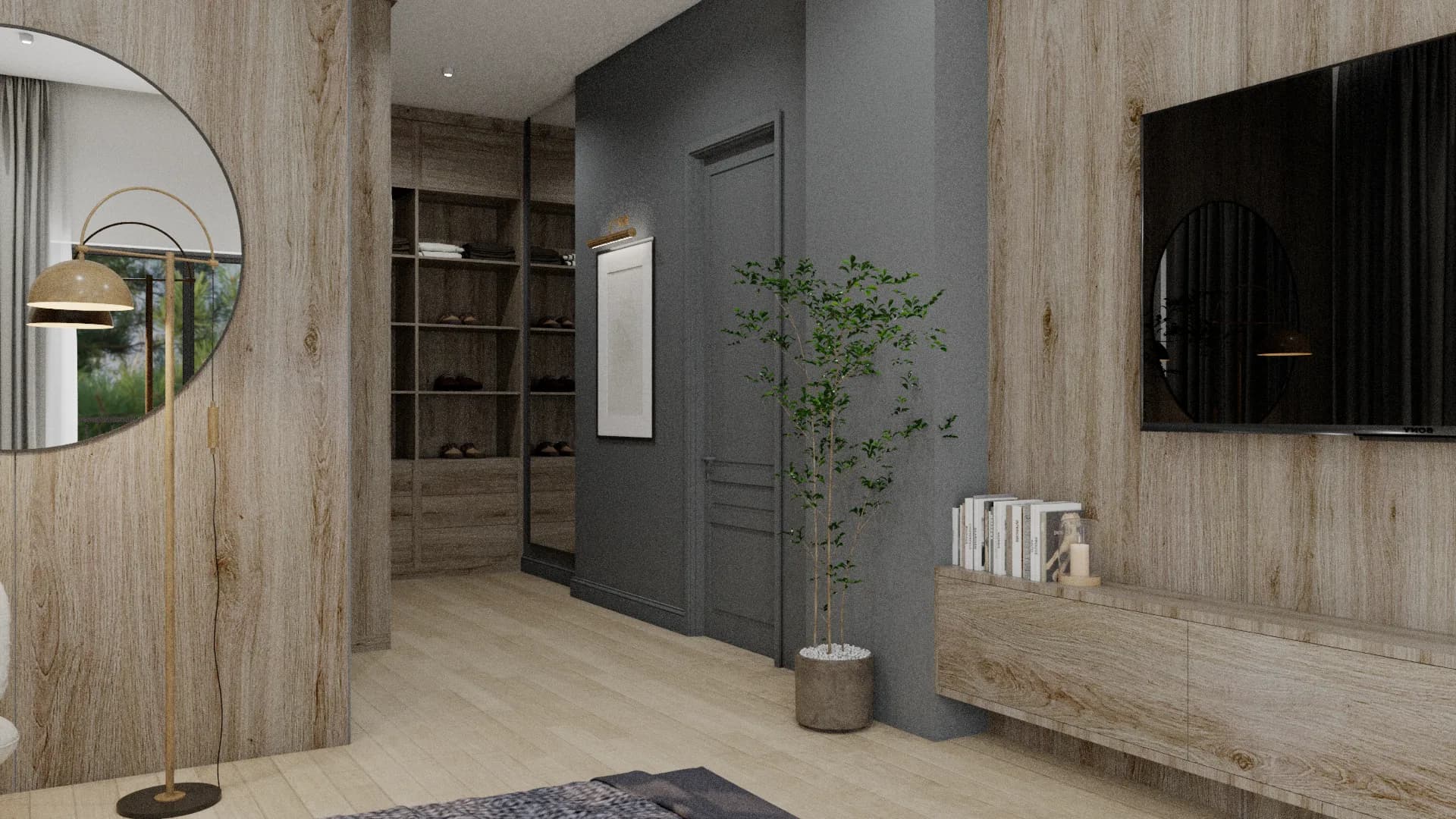
Dark Walnut En-Suite
Open dark walnut closet with hanging, shoe shelves, suitcase display, and wood veneer TV wall.
View project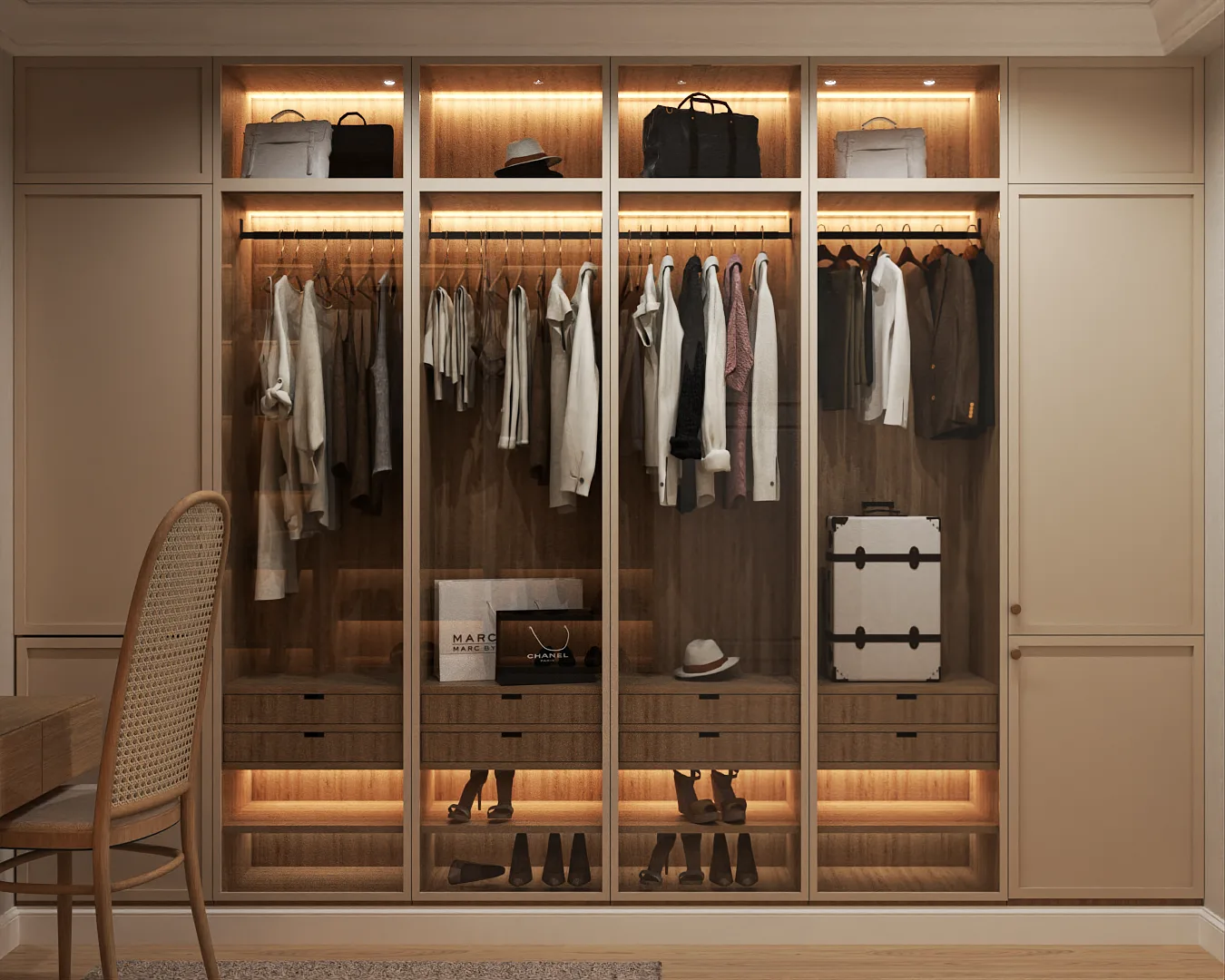
Oak Cream LED Closet
Walk-in with LED-backlit glass wardrobe wall, cane vanity chair, and integrated floor mirror.
View project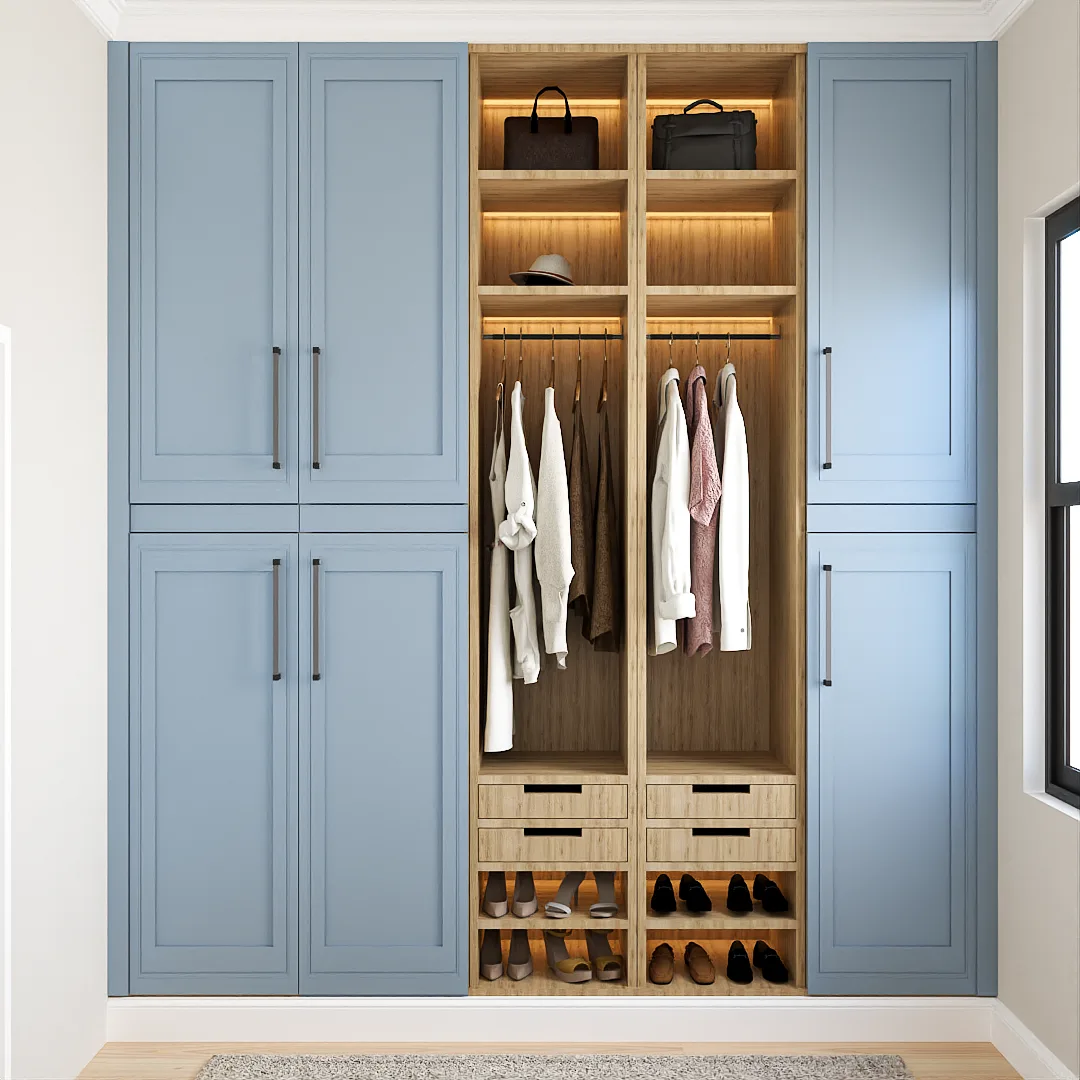
Blue Shaker Walk-In
Floor-to-ceiling blue shaker cabinets with oak interior, LED lighting, and vanity nook.
View project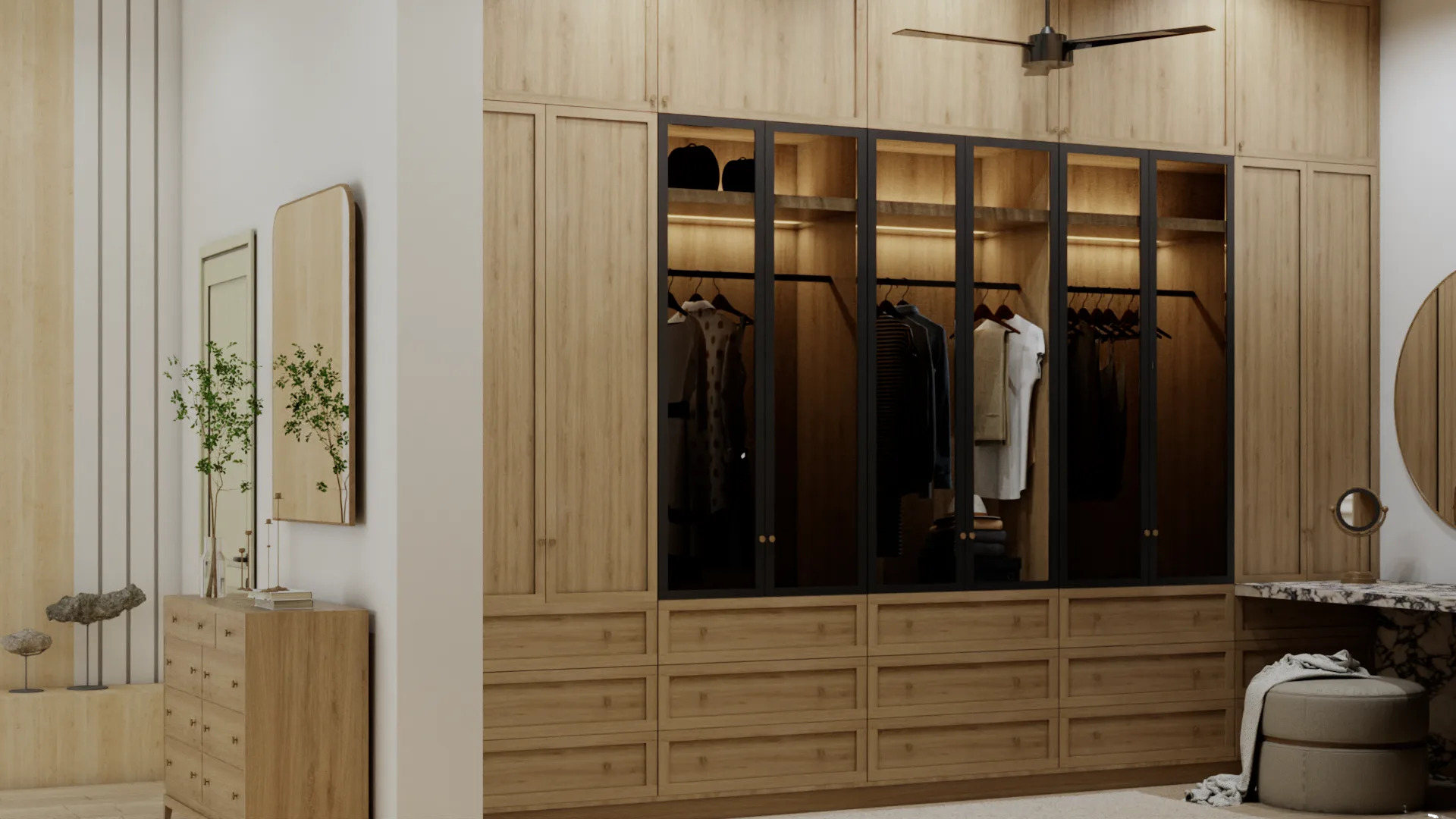
Oak Glass Door Closet
Master walk-in with floor-to-ceiling glass-door wardrobes, marble vanity, and dark oak storage.
View project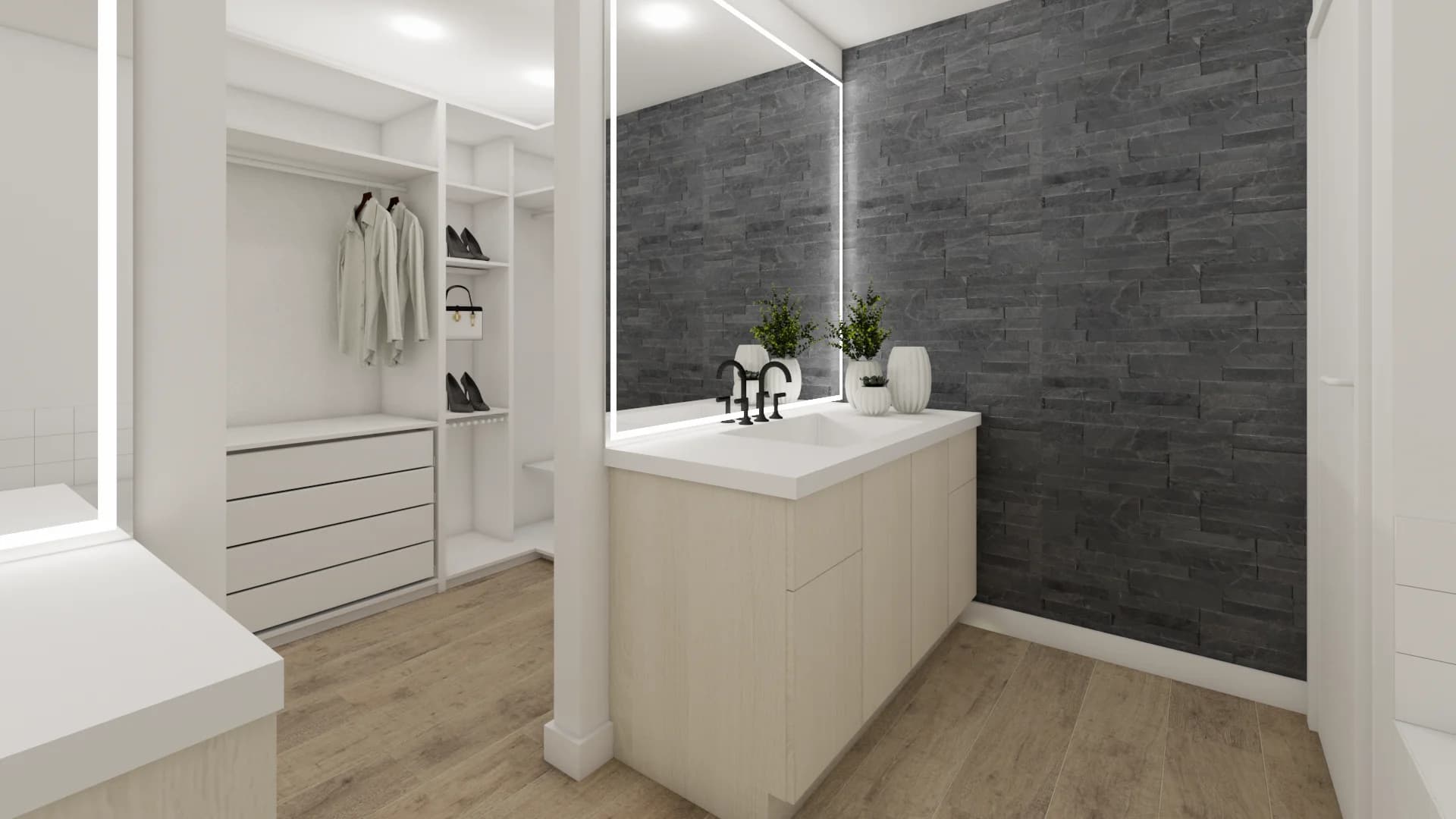
Stone Wall Vanity Closet
Walk-in closet with white open shelving, built-in drawers, and a charcoal stone vanity island.
View project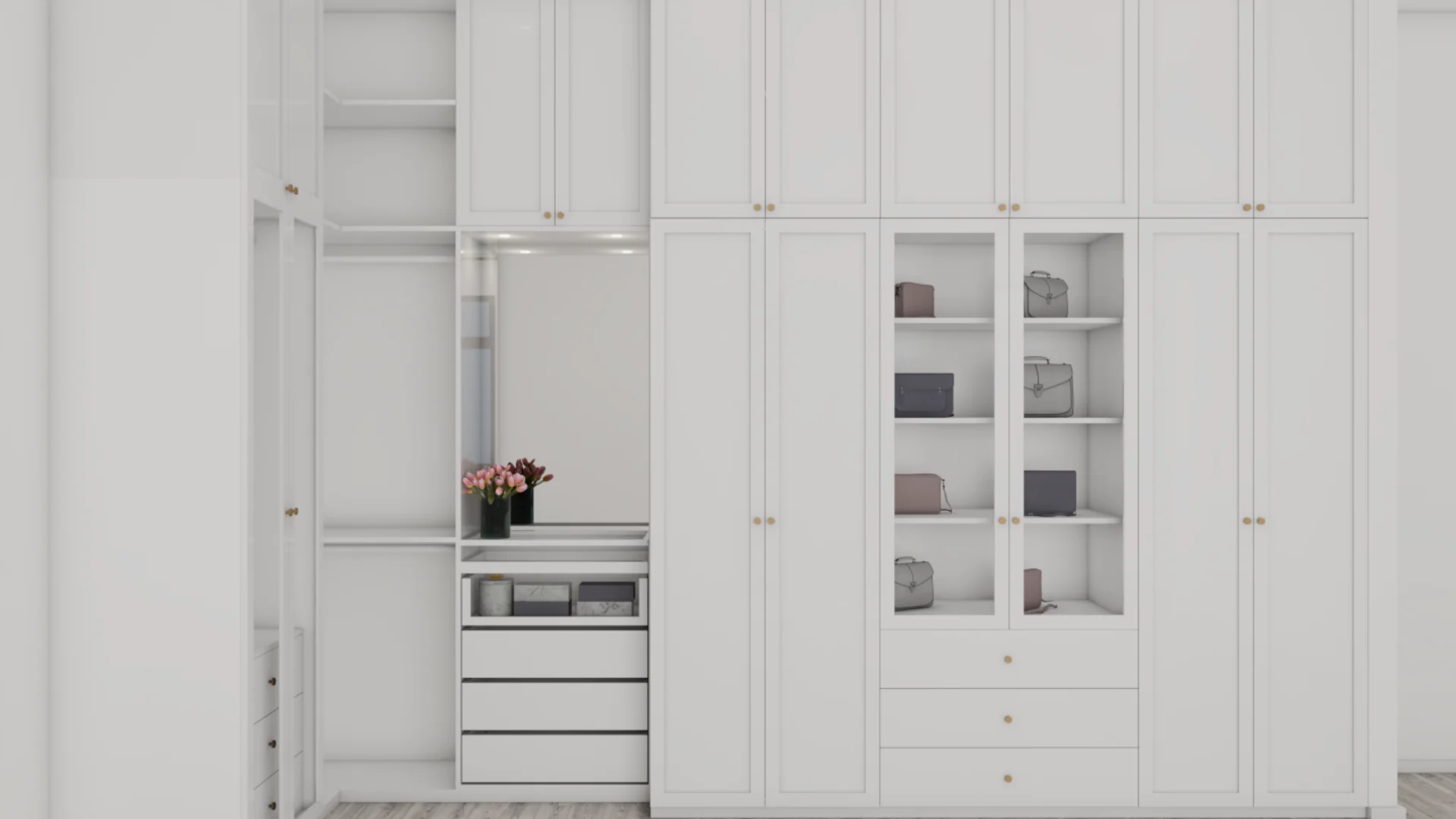
White Shaker Built-In Closet
Floor-to-ceiling shaker cabinetry with brass hardware and a glass display bay for handbags.
View project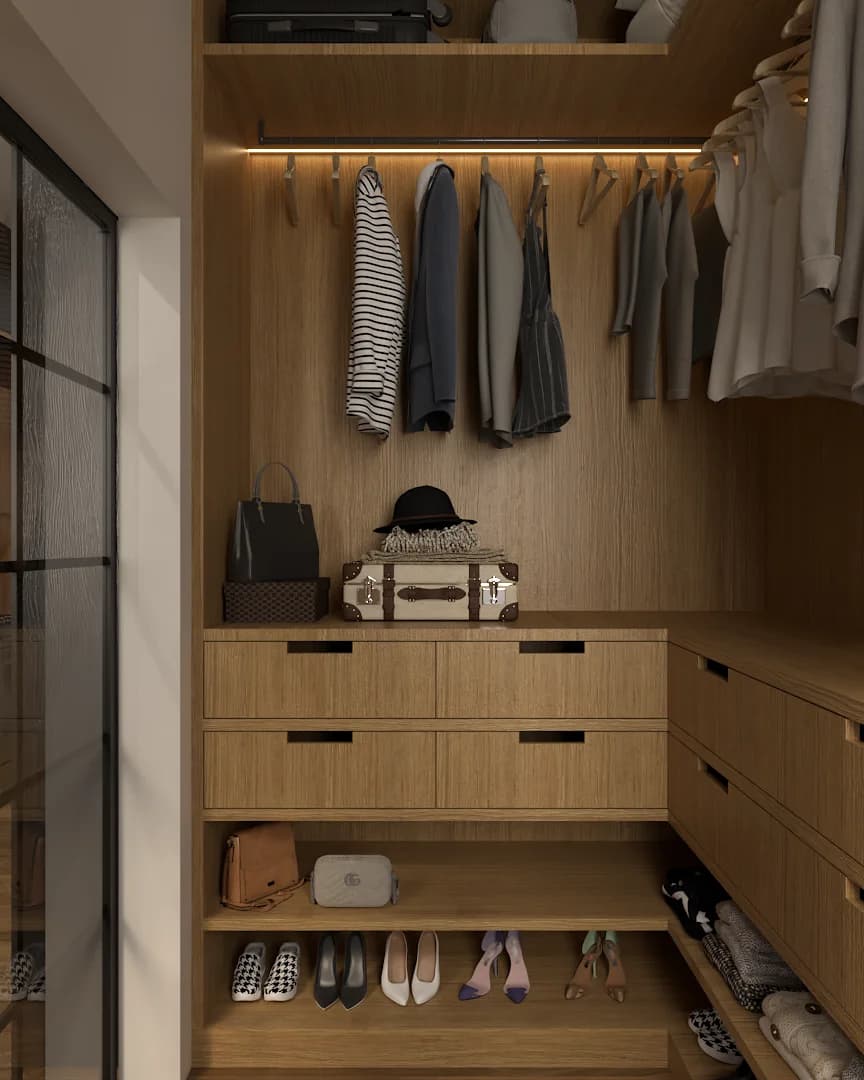
Studio Oak Walk-In Closet
Oak walk-in closet with LED-lit drawer towers, bag display, window bench, and dark bedroom with platform bed.
View project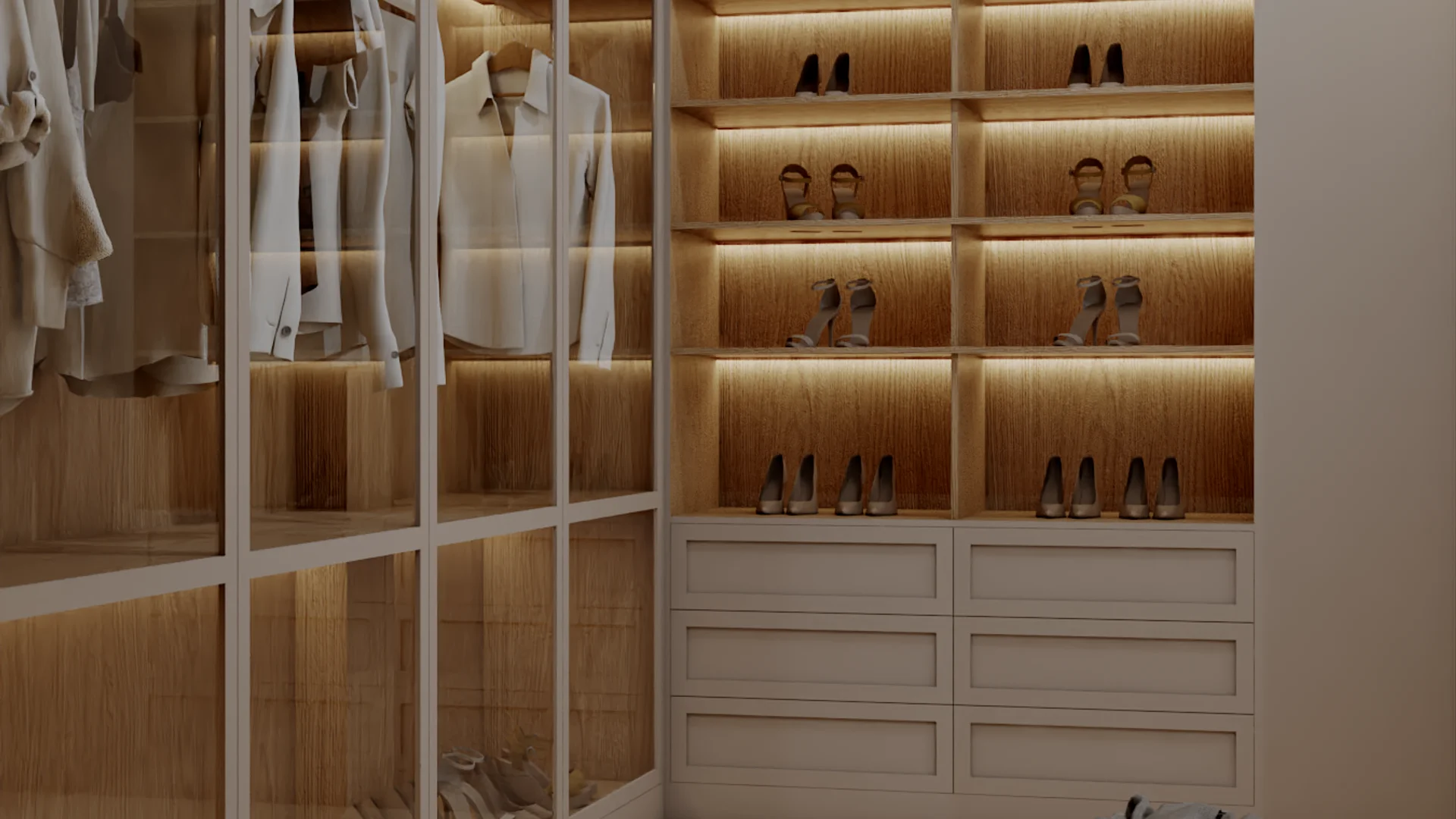
Transitional Oak Walk-In Closet
Custom walk-in with oak shelving, glass-door wardrobes, LED shoe display, and cream drawer system.
View projectExplore Other Room Types
About This Room Type
Walk-In Closet Design Ideas
Closet design is the most dimension-specific room in the house. Hanging rod heights, shelf depths, drawer widths, and aisle clearance all follow exact measurements that determine whether your closet works or frustrates you daily.
Browse L-shaped closets, corridor layouts, and island dressing rooms. Each project shows how rod height, shoe storage, and drawer placement maximize every inch of your available space.
Explore Our Services
From concept to curated shopping list, we handle everything virtually.
Learn about our walk-in closets design serviceDesign Tips
Closet Organization Tips
Double-Hang for Short Items
Install two rods at 40 inches and 80 inches for shirts, blazers, and folded pants. This doubles your hanging capacity. Reserve a separate section with one rod at 68 inches for dresses and long coats.
Use Drawers Instead of Shelves Below Waist
Items on low shelves become messy piles. Drawers below waist height (under 36 inches) keep folded items organized and visible when pulled open. This is the single biggest closet upgrade for daily use.
Light Every Zone Separately
LED strip lights under each shelf and inside drawers eliminate shadows. A single overhead light leaves the bottom half of your closet dark. Motion-activated strips make the biggest difference per dollar.
Size Shoe Cubbies Correctly
Each shoe cubby should be 8-10 inches wide, 6 inches tall for flats and 10 inches for heels. Angled shelves display shoes better and fit more pairs per row than flat shelves.
Planning Guide
Closet Planning Factors
Closet Shape and Minimum Width
A walk-in closet needs at least 7 feet wide for storage on both sides with a 24-inch aisle. Under 7 feet, use storage on one side only with a pass-through layout.
His/Hers Division
Two people sharing a closet need separate zones. We allocate hanging, drawer, and shoe space based on each person wardrobe type. More dresses means more long-hang space; more folded items means more drawers.
Ventilation in Windowless Closets
Enclosed closets without windows trap moisture and odors. A small ceiling fan, louvered doors, or an HVAC vent connection prevents musty smells and protects clothing from humidity damage.
Jewelry and Accessories
Velvet-lined drawers, pull-out trays for watches, and hooks for necklaces keep accessories organized and protected. These details separate a functional closet from a dressing room.
Common Questions
Frequently Asked Questions
Want This Look in Your Home?
Book a free consultation and we will help you recreate this design tailored to your space and budget.
Want a Walk-In Closet Like This?
Our senior interior designers can create a custom design tailored to your space and style. Start with a free consultation.