Why Your New Sofa Looks Wrong: An Interior Designer Explains
You unwrap the plastic, slide the cushions into place, step back, and something is off. The sofa you spent weeks researching, the one that looked perfect on the website, somehow does not fit your room. The color reads different. The scale feels wrong. Nothing around it suddenly looks right either.
You are not imagining it, and you are not alone. After designing more than 2,000 living rooms across all 50 states, I can tell you that asking "why is my new sofa wrong" is one of the most common questions clients bring me, and almost every answer falls into one of nine specific reasons. Once you can name what is wrong, you can usually fix it without returning the couch.
1. The scale is off
This is the most common reason, and the hardest to see in photos. A sofa that looked generous in a 4,000 square foot showroom shrinks visually the moment it sits next to your existing armchair, your coffee table, and the wall behind it.
The rule I use with clients: your sofa should fill about two-thirds of the longest wall it sits against. Not the entire length, and not less than half. If your wall runs 12 feet, your sofa wants to be 84 to 96 inches long. Anything bigger crowds the room. Anything smaller feels like a kid's chair pushed against a giant blank wall.
Before you order, tape the sofa's dimensions on your floor with painter's tape. Live with it for two days. Walk around it. You will know within an hour whether the size feels right.
2. The color temperature clashes with your room
Every color has a temperature. Warm tones lean toward red, orange, and yellow. Cool tones lean toward blue, green, and violet. When a cool sofa lands in a warm room, or the reverse, the sofa reads as a foreign object.
A cool-gray sectional in a room with honey oak floors and warm cream walls will always look like it was airlifted in. Not because either piece is wrong on its own, but because they are speaking different temperature languages.
The fix, when you cannot return the sofa, is to add bridging colors. A rug that contains both the cool gray of the sofa and the warm tones of the floor. Throw pillows in two intermediate colors. Artwork that includes the sofa's gray alongside warmer hues.
3. The undertones don't agree
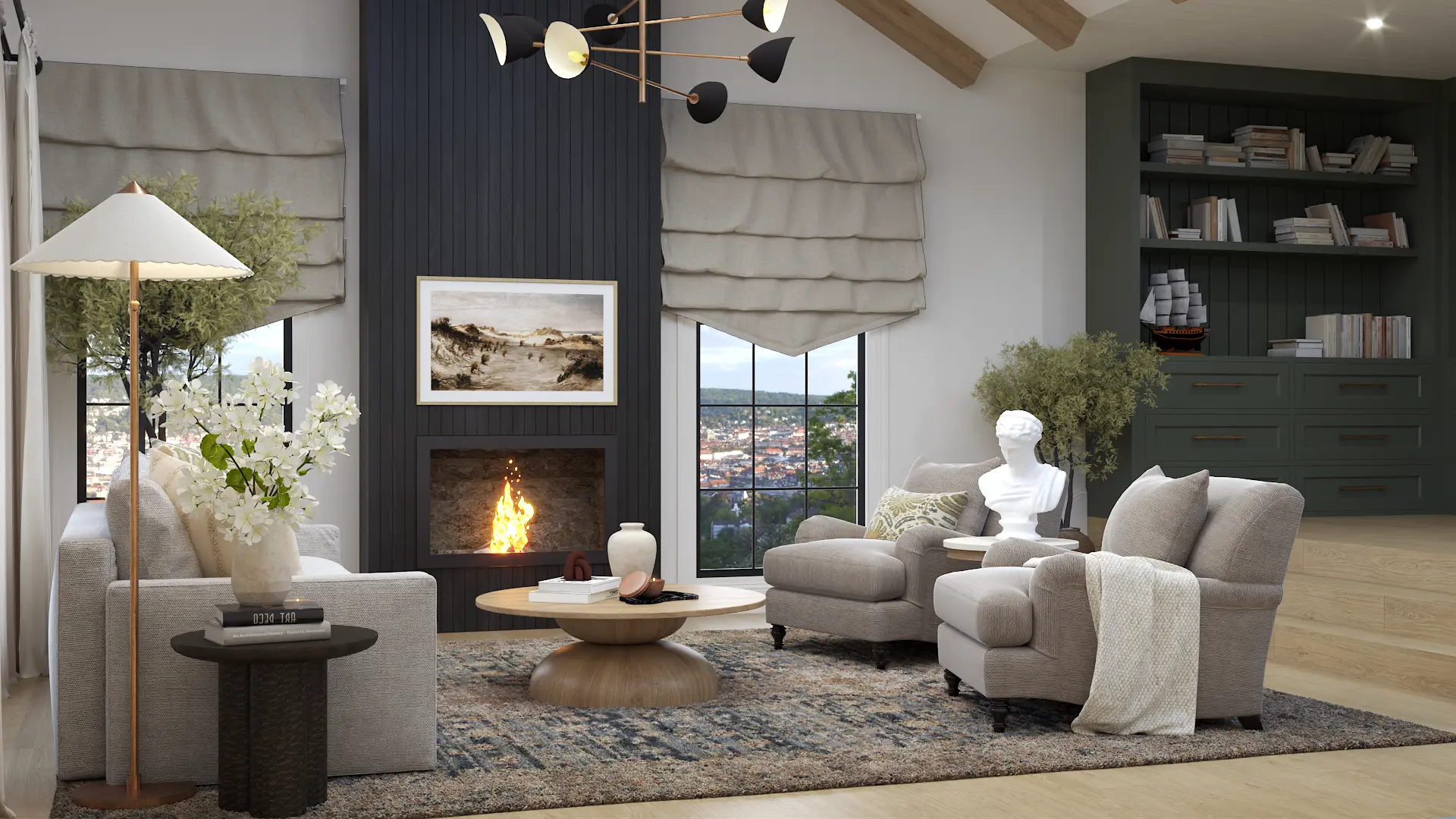
This one is invisible until you live with it. Two grays can look identical in a swatch and entirely different on your wall. One has a blue undertone, the other a green or violet undertone. When the wall undertone fights the sofa undertone, the room reads "muddy" without you being able to say why.
North-facing rooms intensify cool undertones. South-facing rooms warm them. Your bulbs change everything: a 2700K warm bulb pushes a violet-gray sofa toward purple, while a 4000K cool bulb pushes the same sofa toward blue.
Before you commit, order fabric swatches and tape them to the wall in your actual room. View them at three times of day: morning, afternoon, and evening with your lamps on. The right gray will look consistent in all three. The wrong one will shift dramatically.
4. The leg style doesn't match the architecture
The legs of your sofa are a style declaration most people skip past. A skirted sofa, where the upholstery falls to the floor, reads traditional and formal. Exposed wood legs read mid-century or transitional. Metal legs read industrial or modern. Tapered legs read Scandinavian.
When the sofa's leg style fights your room's architecture, the sofa looks parked rather than planted. A skirted English roll-arm in a loft with concrete floors and exposed beams will always feel off. A modern sofa with thin chrome legs in a Victorian parlor with crown molding will feel the same way.
The fix is either swapping the legs (some sofas allow this) or supporting the sofa with one piece that matches its style language. A turned-leg side table next to a skirted sofa. A modern marble coffee table next to a chrome-legged sectional. The supporting piece tells the room the sofa was a deliberate choice.
5. The seat depth doesn't match how you actually sit
Seat depth is measured from the front of the cushion to the back. A standard depth runs 21 to 22 inches. Lounge depths run 24 to 28 inches. Deep "cloud" sofas can hit 36 inches.
If you bought a deep-seat sofa and you are 5'4", your feet will dangle. Sitting upright requires bunching pillows behind you. If you bought a shallow-seat sofa and you are 6'2", your knees will sit higher than your hips and your back will hurt within twenty minutes.
The depth mismatch affects how the sofa looks more than people realize. When you cannot sit comfortably, you fill the sofa with pillows and throws to brace yourself, and the sofa starts looking cluttered and unkempt.
If you are stuck with the wrong depth, lumbar pillows for too-deep sofas and a firmer mattress topper laid under the seat cushions for too-shallow sofas can buy time while you save for a replacement.
6. The lighting changed everything
Showrooms are lit for sales. Bright, even, high-CRI LED arrays designed to make every fabric look its best. Your home is lit for living: a few overhead fixtures, table lamps, maybe an arc floor lamp. The same sofa under those two lighting conditions can look like two different products.
A velvet sofa that read jewel-toned in the showroom can look dusty and flat at home. A linen sofa that looked crisp can look gray and tired. A dark leather sofa that read rich and warm can look cold and severe.
Lighting is also the easiest fix. Add a warm-bulb table lamp on each side of the sofa. Install a dimmer on your overhead fixture. Place a floor lamp behind or beside the sofa to wash light down its surface. Within a week, the sofa will look entirely different.
7. The sofa has no anchor
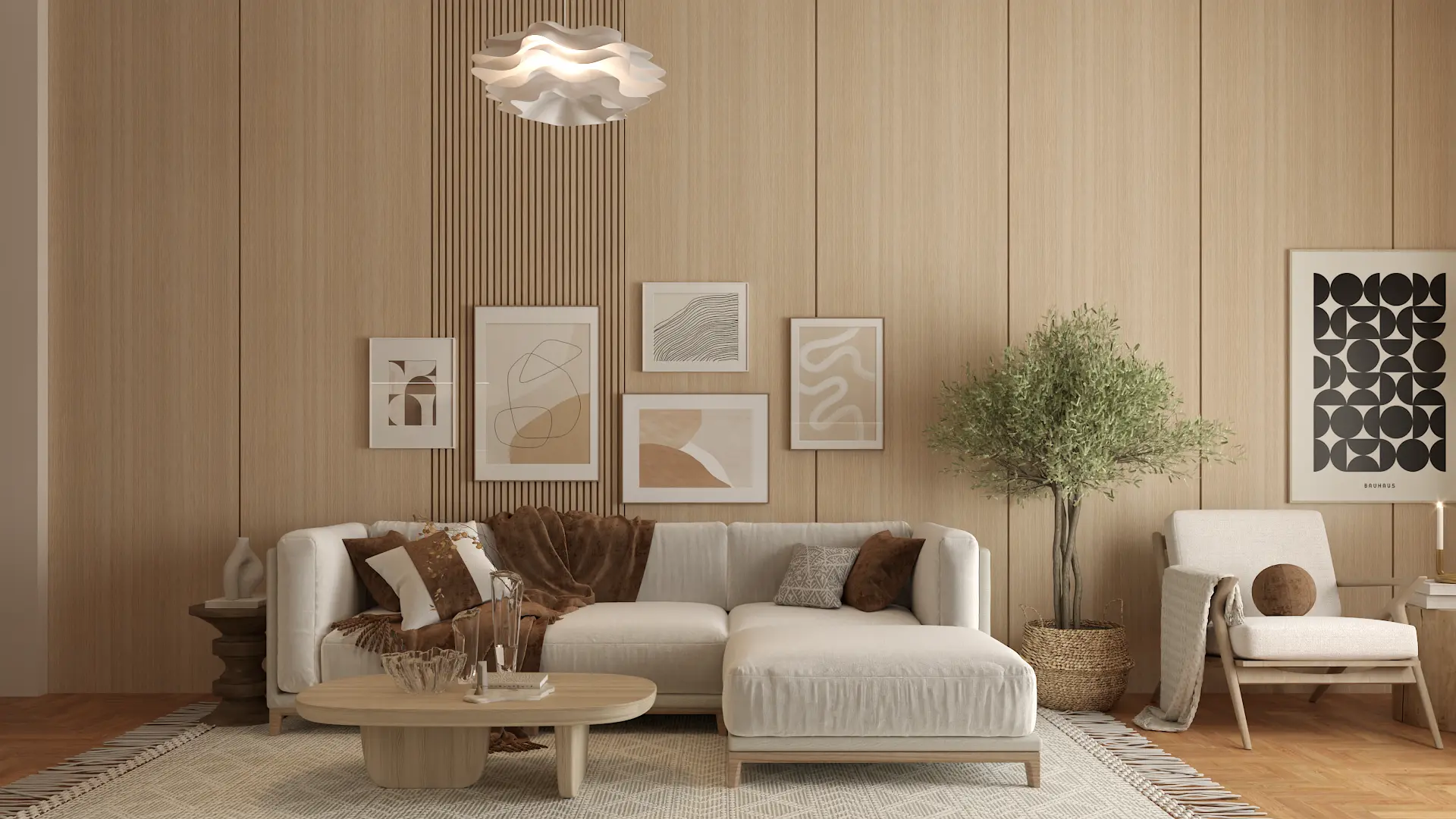
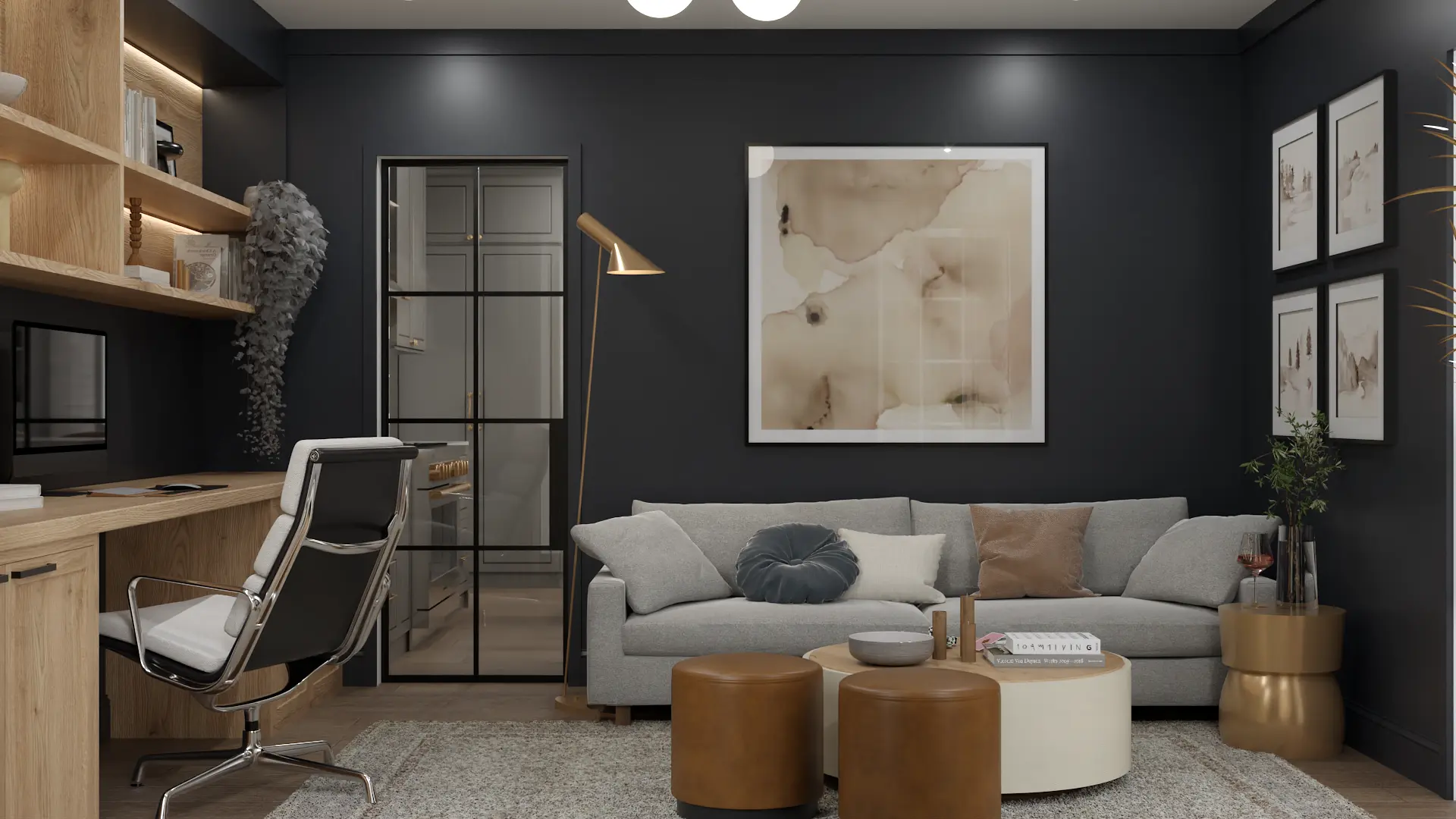
A sofa needs a rug, a coffee table, a side table, and at least one piece of art on the wall behind it. When any of these are missing or undersized, the sofa floats. It looks like it is parked in your room rather than living there.
The rug is the most common failure. A 5x7 rug under an 8-foot sofa is too small. The front legs of the sofa should sit on the rug, ideally with at least 6 inches of rug visible on each side of the sofa. An 8-foot sofa wants a 9x12 rug, minimum.
The coffee table is the next most common miss. It should be roughly two-thirds the length of the sofa and sit 18 inches in front of it. Too small reads cheap. Too far reads inaccessible.
Art behind the sofa should span at least two-thirds of the sofa's length and hang with its center 60 to 65 inches from the floor. That is roughly the standard museums use to place work at standing eye level. The most common diagnosis I make for a sofa that "looks wrong" has nothing to do with the sofa itself: the art above it is hung too high. People instinctively hang relative to the ceiling instead of relative to the seated viewer, which leaves the sofa stranded in a visually empty zone.
A single small piece centered above an 8-foot sofa makes the wall look empty even when something is there. Either go bigger, span at least two-thirds the sofa's width, or commit to a gallery wall that fills the visual zone above the back cushions.
8. The sofa is in the wrong place
Sometimes the sofa is the right size, the right color, the right style, and it still looks wrong because of where you put it. A sofa pushed flat against a wall with no breathing room reads cramped. A sofa floating in the middle of a room with no rug under it reads adrift.
Walk the room. Where do you naturally enter? Where does the natural light come from? What do you want to look at when you sit down: the TV, the fireplace, the window, the people across from you? The sofa should support that orientation, not fight it.
Pull the sofa 4 to 6 inches off the wall when possible. The negative space behind it lets the eye rest. Angle the sofa across a corner if your room is square; the diagonal opens up sight lines and makes the room feel larger.
9. The sofa is the only thing in its style
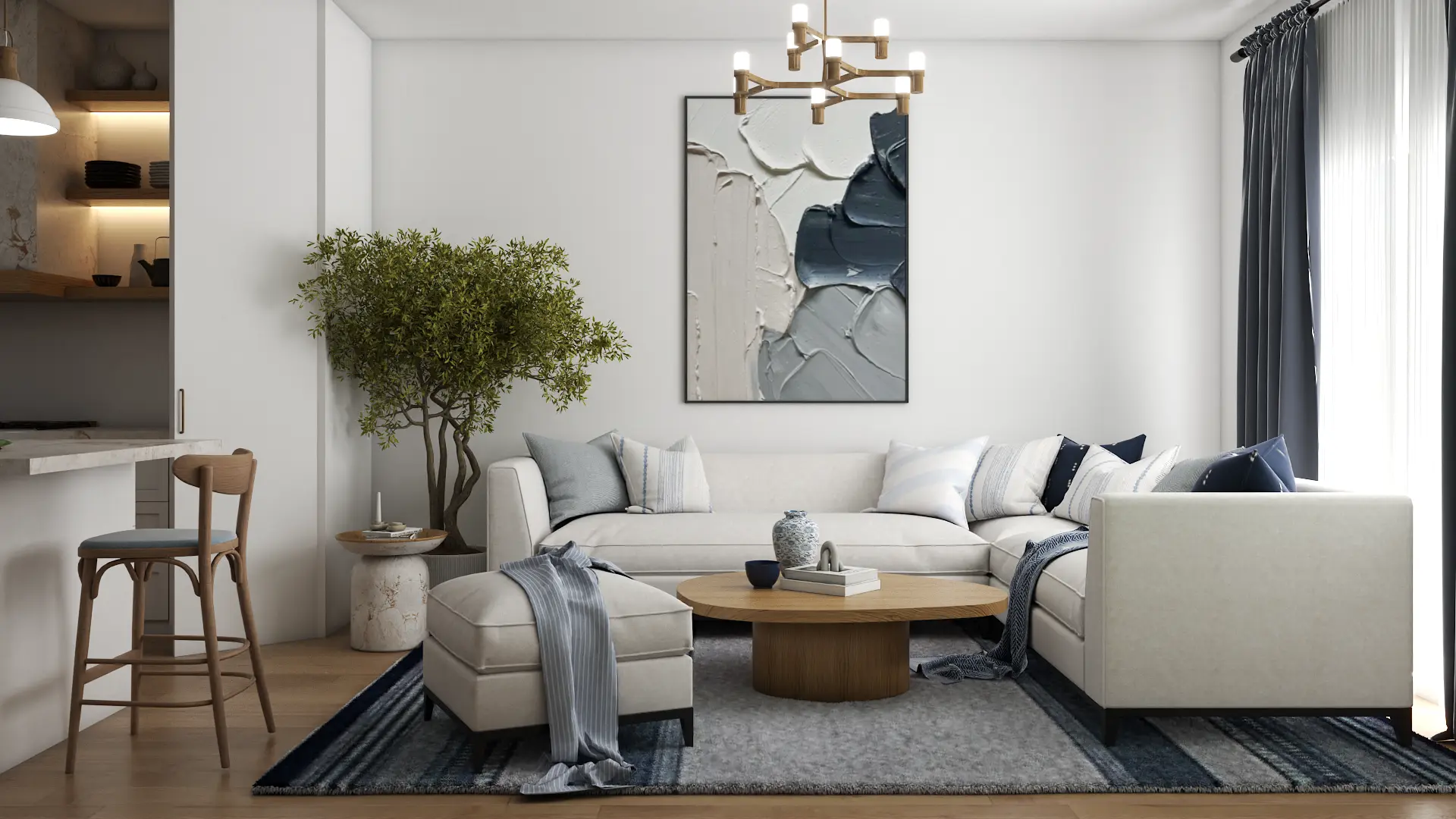
This is the failure mode that surprises clients most. The sofa is fine. Your room is fine. They just have nothing in common.
A bouclé curved sofa needs at least one other curved object in the room. A round mirror. A drum side table. A circular rug under it. Without that echo, the sofa reads like a single sentence in a language no one else in the room speaks.
A leather chesterfield needs at least one other masculine, traditional element. Brass lamps, dark wood, a vintage rug, a heavy art frame. A modern slab-back sofa needs at least one other piece with clean horizontal lines.
When you walk into a room and the sofa "looks wrong," there is a good chance the sofa is just lonely. Add one or two style allies and the room comes together.
The interior designer fix: see it before you buy
Every reason on this list is preventable. Not "easier to handle" or "cheaper to fix later." Preventable. The way I prevent it for my clients is simple: I build the entire room in 3D before anyone orders a sofa.
Here is what that looks like in practice. You send me your room measurements, photos from each corner, and a few inspiration images. We talk for thirty minutes about how you actually live in the room, what you keep, and what you hate. Over the next two weeks, I model your space to scale in 3D software and place every proposed piece, including the sofa, with exact dimensions and rendered materials.
Then you walk through the room in a 360-degree virtual tour. You see the sofa against your real wall color. You see the rug under it at the actual size. You see how light falls on it from your specific windows. If anything looks wrong, we change it before you spend a dollar.
What you receive:
- Photorealistic 3D renders from multiple angles
- 360-degree virtual tour of your finished room
- Detailed floor plan with traffic flow clearances
- Curated shopping list with trade discounts of 15 to 25 percent off retail
- Two revision rounds with implementation guidance
This is what online interior design is built for. You can see your space in 360 virtual reality before you buy, avoid returns, and implement with confidence. Pricing starts at $600 per room up to 300 square feet. The first proposal arrives in about 14 days. You can browse our portfolio to see how this method has worked across 2,000 projects, or book a free consultation if you want to talk through your room.
When the sofa is already in the room
If you are reading this with a wrong sofa already in your living room, the good news is that most regrets are layerable. Before you list it on Facebook Marketplace, work through this in order.
First, photograph the room and identify which of the nine reasons applies. Often it is more than one. Scale problems and color problems compound, so naming each one matters.
Second, address the cheapest fix first. Lighting changes are usually the most transformative for the lowest cost. Swap your bulbs to 2700K (the US Department of Energy's lighting guide is the cleanest primer on color temperature if you want the science), add a table lamp on each side of the sofa, and install a dimmer on the overhead fixture.
Third, layer in bridging pieces in this order:
- A bigger rug that contains both your sofa color and your room's dominant tone
- Art behind the sofa centered at 60 to 65 inches
- Two throw pillows in bridging colors, plus one neutral textured pillow
- A throw blanket draped over one arm in a tone that picks up either the warmest or coolest part of the room
- Floor-length curtains in a color that ties to the sofa
- Two or three plants. Snake plants and pothos are the most forgiving starters, and the soft organic shape pulls the eye away from any one piece looking out of place
Fourth, repaint the wall the sofa sits against if the layering is not enough. A warmer cream or pale earth tone behind a cool sofa, or a cooler putty behind a warm sofa, can reset the entire room's temperature for the cost of a gallon of paint.
Fifth, give yourself a few weeks. In my experience, clients often spend the first ten to fourteen days disliking a new piece simply because it is new. The eye needs time to integrate it with everything around it. If after three weeks the sofa still feels foreign and the layering changes have not helped, trust that judgment.
If after all of that the sofa still fights the room, it is the sofa. Return it if you can (Apartment Therapy's gray couch regret piece is a good gut check on whether to live with it or move on). Sell it and start with a render-first approach. The cost of getting it wrong twice is always higher than the cost of designing it right the first time.
What I want you to take from this
A sofa that looks wrong is almost never the sofa's fault alone. It is the relationship between the sofa and everything around it: the wall color, the floor, the rug, the lighting, the architecture, the supporting furniture. Interior designers do not pick sofas in isolation, because they cannot live in isolation.
Before your next major furniture purchase, build the room first, even if you do it on paper. Measure your space. List your existing pieces. Identify the temperature and undertone of your floors and walls. Then, and only then, choose the sofa that supports them.
Or skip the trial and error. That is what I am here for.
Does that help? If you want me to walk through your specific room before you buy anything else, book a consultation or read through how online interior design works for the full process.
Frequently Asked Questions
Answers drawn from 2,000+ projects and real client conversations.