How to Design the Perfect Home Theater: A Designer's Guide
Creating a home theater involves much more than just setting up a screen and speakers. It's about crafting a space that combines cutting-edge technology, thoughtful design, and an immersive atmosphere. The examples shared here highlight how to blend comfort and elegance to create a truly luxurious entertainment room. With the right planning and inspiration, you can transform your home into the perfect venue for family movie nights, gaming marathons, or private screenings. Let's dive into the key elements to help you design the ultimate home theater.
1. How do you plan the space and layout?
The foundation of a great home theater starts with a well thought out layout. A carefully planned design ensures that every element, from seating to pathways, feels intentional and functional.
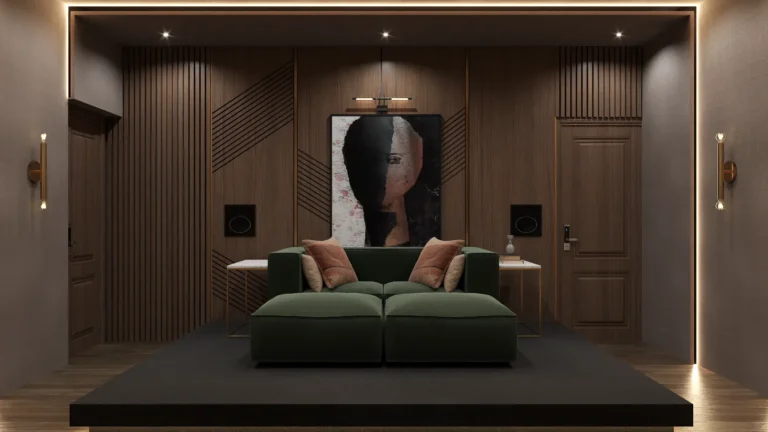
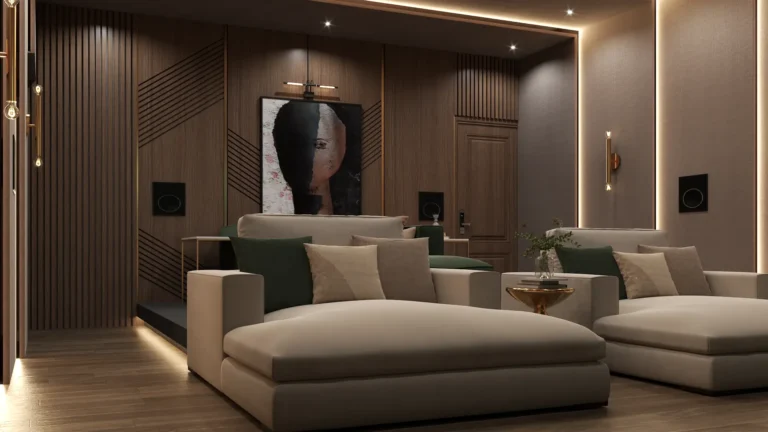
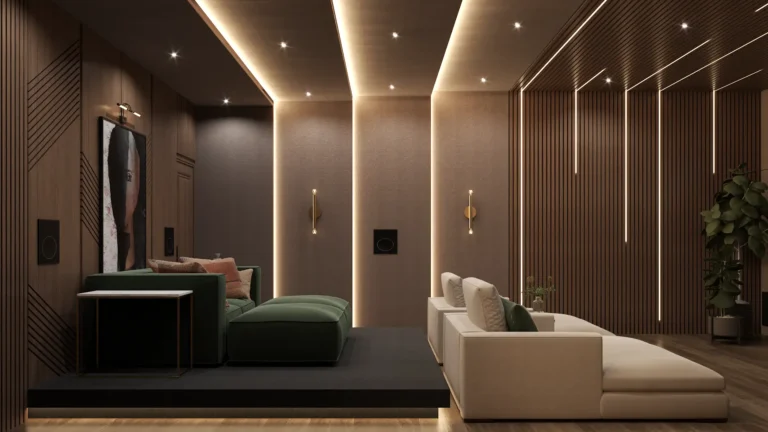
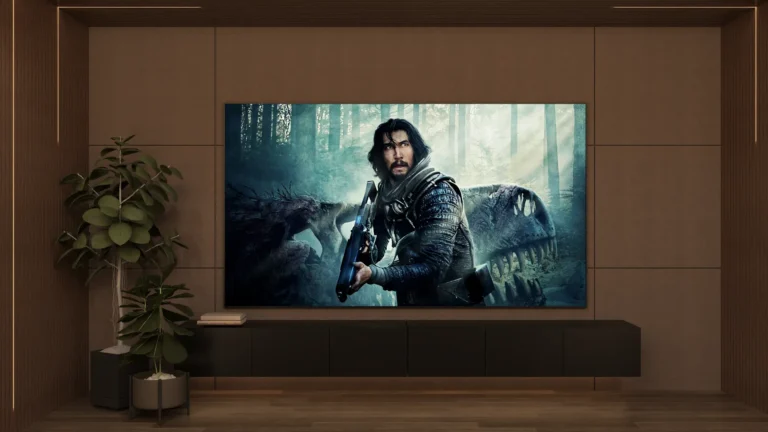
Optimizing the Space
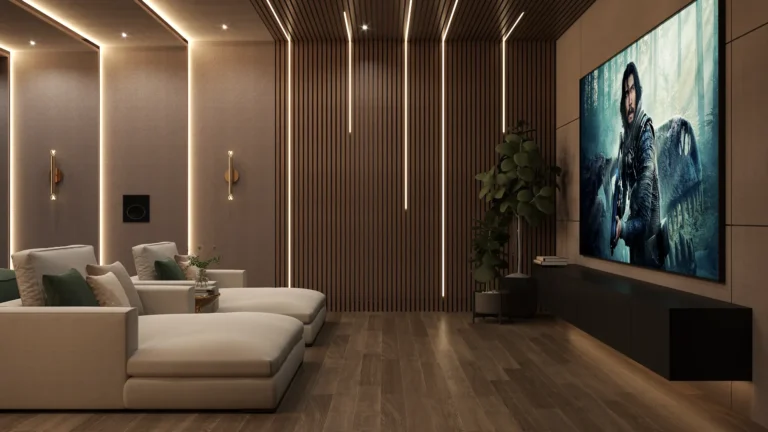
Tiered seating - where each row is slightly elevated - ensures that everyone has a clear view of the screen. For smaller or uniquely shaped rooms, modular risers that can be adjusted or stacked offer maximum flexibility. This approach not only enhances viewing angles but also adds a professional theater-like aesthetic to the room. If space is limited, consider modular furniture that's easy to rearrange, allowing the room to serve multiple purposes.
Maintaining Clear Pathways
Open pathways are essential to a functional and inviting design. By avoiding clutter and ensuring ample room to move, you'll create a space that feels organized and balanced. Clear pathways also enhance the visual flow, making the room feel more spacious and polished.
2. How do you set the right mood with lighting?
Focused lighting near seating areas, such as on side tables, ensures practicality while complementing the theater's ambiance. These lights can be carefully positioned to highlight essential areas, avoiding unnecessary glare and ensuring a seamless visual experience.
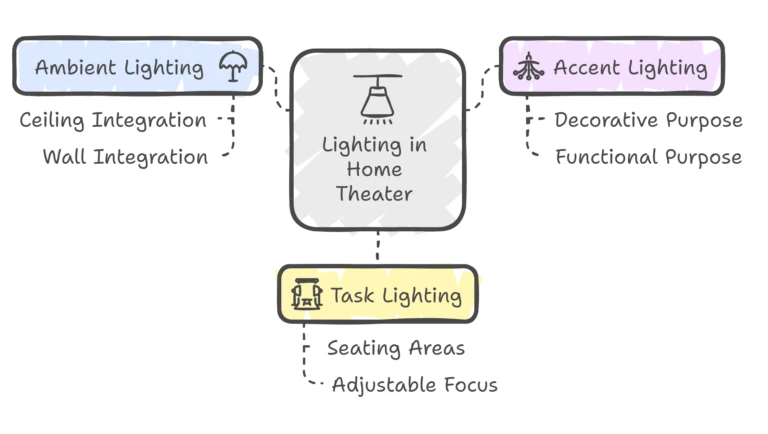
| Home Theater Lighting Types | Purpose | Best For |
|---|---|---|
| Ambient Lighting | Soft LED strips in ceiling/walls | Cinematic depth without glare |
| Accent Lighting | Wall sconces with metallic finishes | Decorative elegance and warmth |
| Task Lighting | Focused lights near seating | Grabbing snacks, managing remotes |
3. How do you choose seating for a home theater?
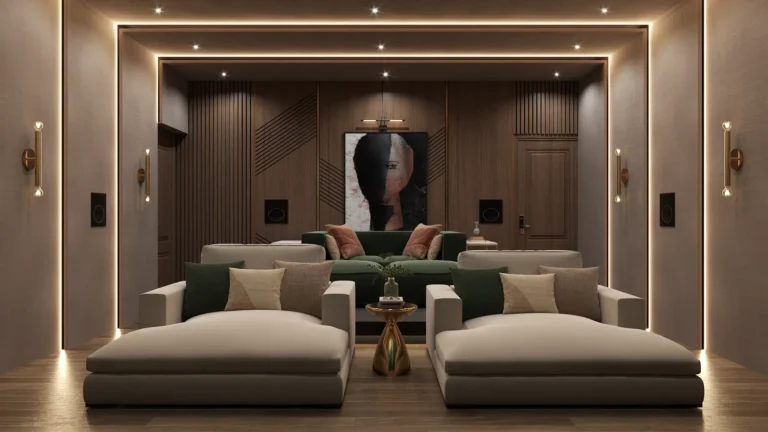
Seating is the heart of your home theater. Prioritizing comfort while incorporating stylish elements ensures that everyone enjoys the experience.
- Versatile Options: Combine lounge chairs, sectional sofas, and recliners
- Premium Features: Built-in cup holders, USB ports, adjustable headrests
- Luxury Add-Ons: Recliners with massage functions or heated seats
- Color Palette: Neutral tones like beige, green, and brown for timeless appeal
- Texture Layering: Velvet and woven fabrics with throw pillows for warmth
4. How do you treat walls for acoustics and style?
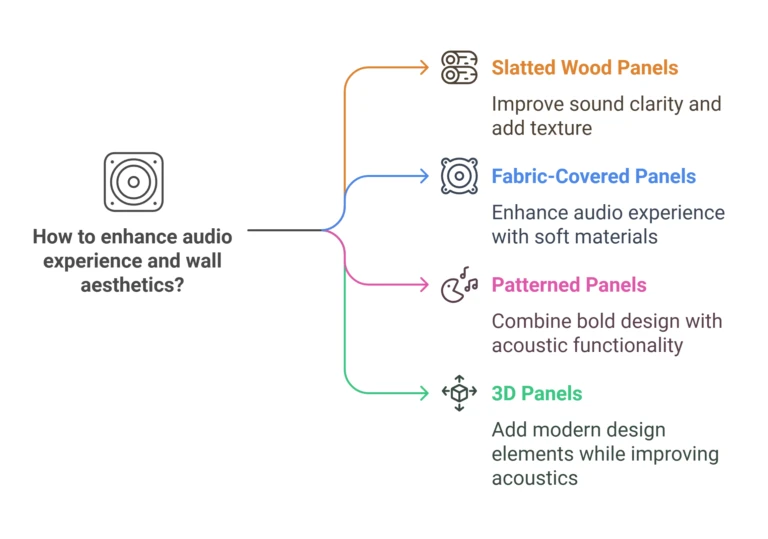
The walls in a home theater are more than just a backdrop - they contribute to both the room's acoustics and its visual appeal.
- Acoustic Panels: Slatted wood or fabric-covered panels reduce echoes
- 3D Panels: Modern touch with bold design elements
- Strategic Artwork: Abstract or themed pieces create focal points
- Texture Variety: Combine different wall treatments for visual interest
5. What flooring works best for a home theater?
Flooring choices significantly impact the comfort and acoustics of your home theater.
6. How do you design the screen wall?
The screen wall is the focal point of any home theater, and its design should seamlessly integrate technology with aesthetics.
- Framing the Screen: Wooden slats or textured panels add depth and sophistication
- Backlighting: Subtle lighting around the frame creates an immersive focal point
- Hidden Technology: Cables and equipment neatly concealed for a clean look
- Smart Integration: Voice and app controls for lighting, sound, and screen settings
7. How do you personalize a home theater?
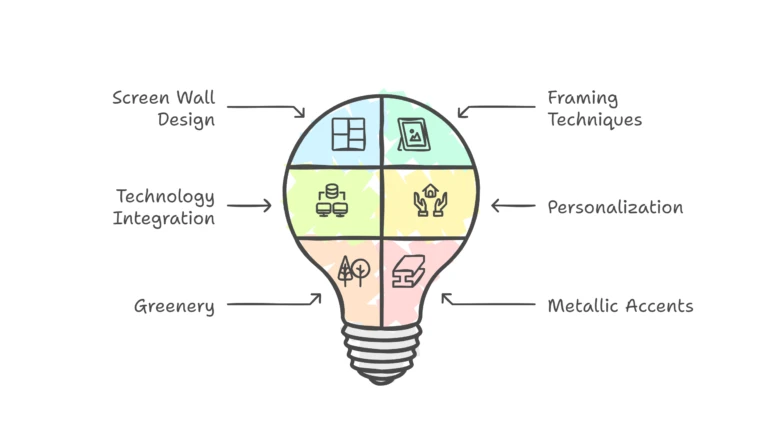
Personalization transforms a good design into an unforgettable space.
- Greenery: Plants soften the room's lines and add life
- Metallic Accents: Gold or chrome finishes introduce sophistication
- Personal Collections: Display movie memorabilia or awards
- Custom Themes: From classic cinema to modern minimalist
Conclusion
A well designed home theater is about more than just watching movies. It's about creating a versatile space where memories are made, whether through gaming, karaoke nights, or virtual meetings. Every detail, from the seating to the lighting, plays a role in crafting a room that's as functional as it is beautiful. For package details, visit our pricing page.
Book a free consultation and let's design a space tailored to your lifestyle and preferences.
Free ConsultationFrequently Asked Questions
Answers drawn from 2,000+ projects and real client conversations.