Studio Apartment Closet Ideas: Solving the Space Problem
If you live in a studio apartment, you already know the frustration. One room for sleeping, working, eating, and storing everything you own. The closet is either tiny, awkward, or nonexistent.
This project solved that. Here's how.
Project Palette
Dark and moody in the bedroom, warm and functional in the closet. The oak creates a bridge between both zones.
When Your Studio Has Zero Closet Space
The brief was straightforward: a studio apartment with no dedicated closet. The client needed a full wardrobe system, a proper bed with storage, and a clear visual separation between sleeping and dressing. All in one room.
I see this constantly. Clients reach out with photos of a single rod and a shelf, clothes piled on chairs, shoes lined up along the wall. The space itself isn't the issue. The issue is that nobody designed it with intention.
The biggest constraint here? Floor space. There was no spare corner for a wardrobe or armoire. Every square foot was already committed. So we stopped thinking about the closet as a piece of furniture and started thinking about it as a room within a room.
Why a Hanging Rod and a Shelf Will Never Work
Most studio closets come with the same builder-grade setup: one rod, one shelf above it, wire shelving if you're lucky. It handles about 30 hangers before everything starts bunching together. Folded clothes stack on the shelf until they topple. Shoes end up on the floor in a pile.
The problem isn't your stuff. It's that nobody planned zones for different types of items. Hanging clothes need rod space at the right height. Folded items need drawers, not shelves (things slide and fall on shelves). Shoes need their own tier. Bags and accessories need visible spots so you actually use them instead of forgetting they exist.
A single rod and shelf addresses maybe one of those needs. We needed to address all of them in under 50 square feet.
A Platform Bed That Doubles as a Dresser
The first decision was the bed. In a studio, the bed takes up the most space, so it had to earn its footprint.
We designed a platform bed with deep pull-out drawers along the base. These aren't decorative. They hold seasonal clothing, extra linens, and anything that doesn't need daily access. The platform raises the mattress about 16 inches off the ground, creating a full row of storage underneath while making the bed feel grounded and intentional.
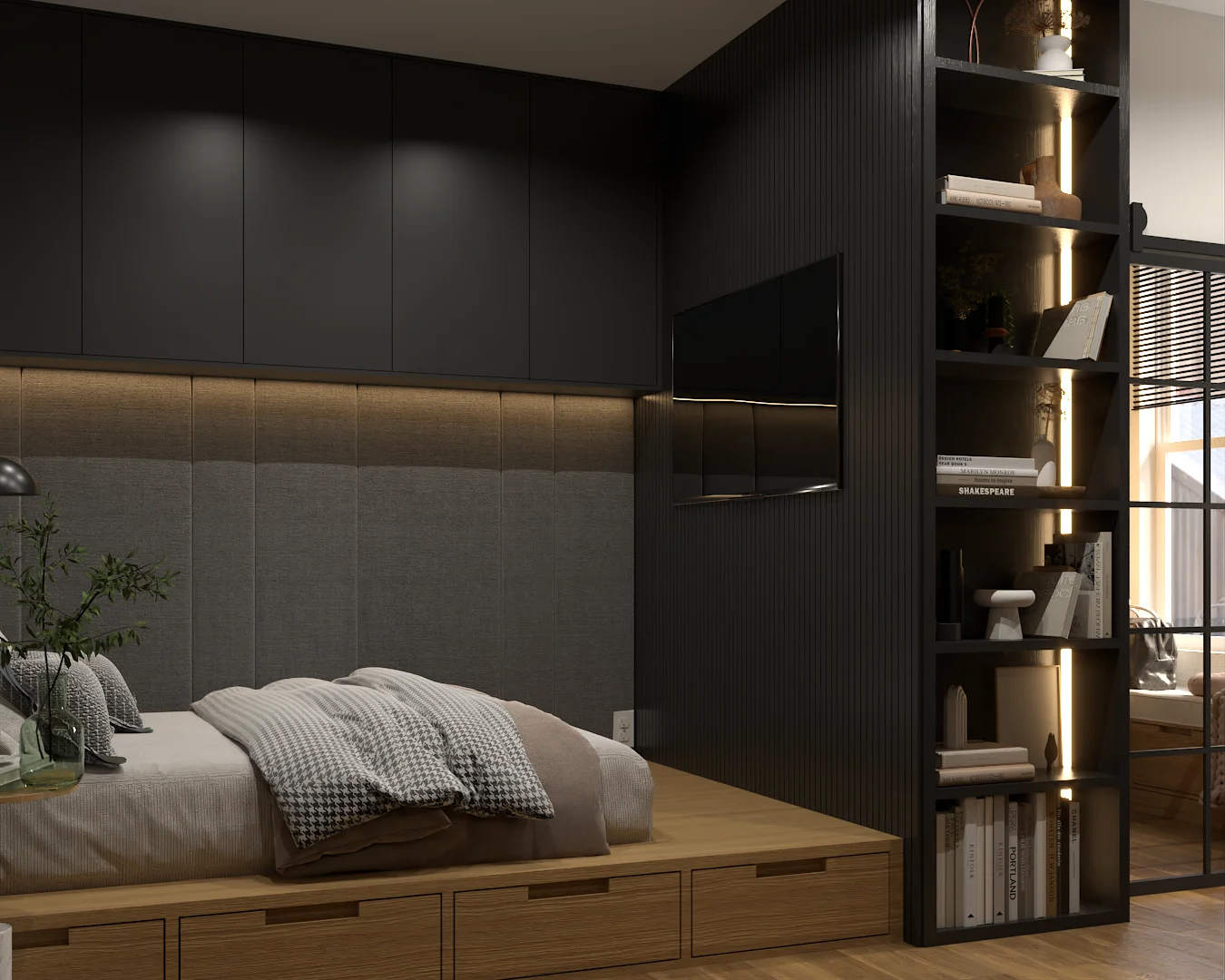
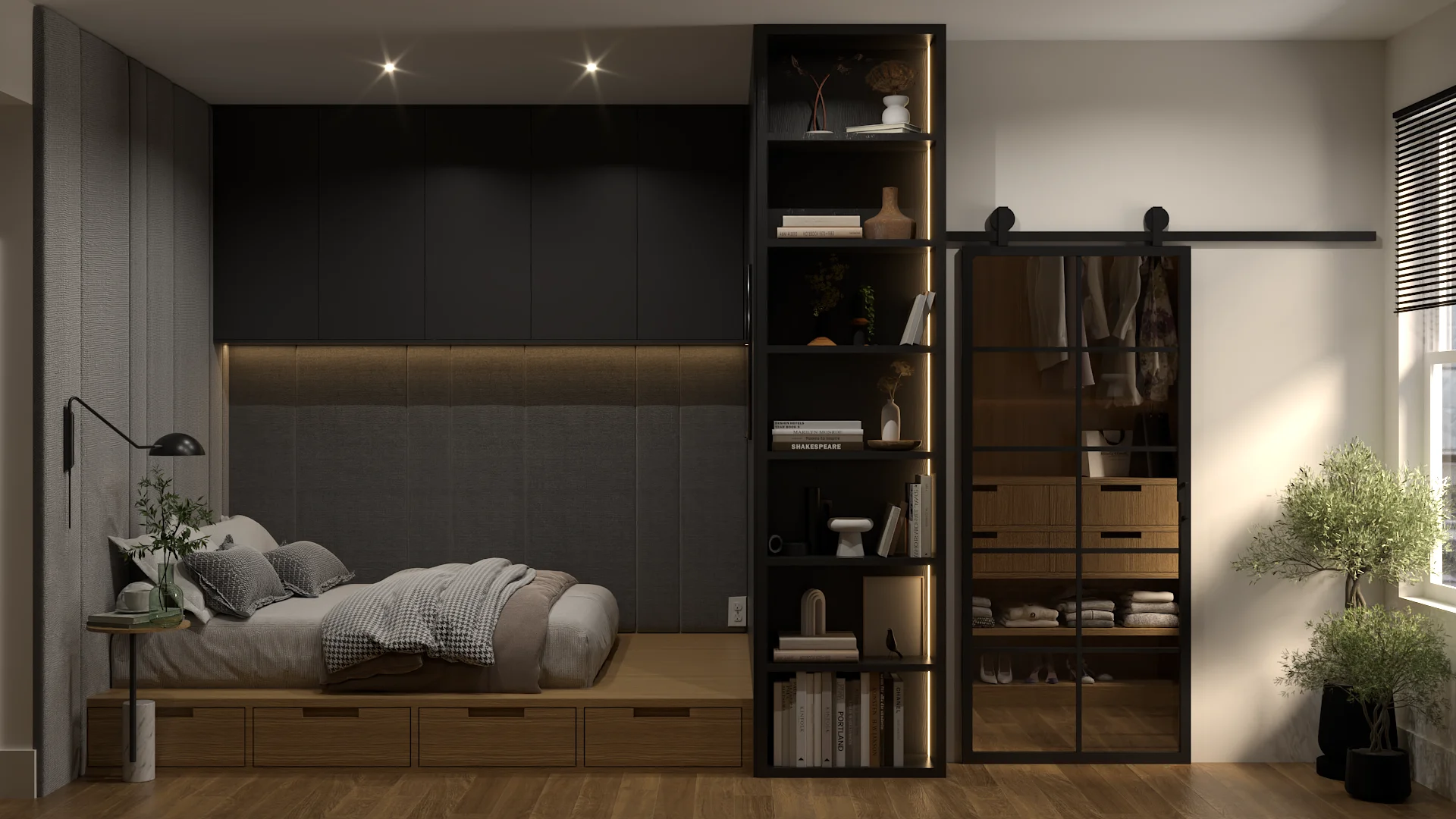
The dark charcoal wall behind the bed creates a sense of enclosure. A padded headboard panel with integrated LED strip lighting adds warmth without taking up nightstand space. The vertical bookshelf tower between the bed zone and closet zone acts as both a display piece and a visual divider.
This is the part most people overlook. In a studio, the bed isn't just where you sleep. It's the anchor of the entire layout. Get it wrong and everything else fights for scraps.
The Sliding Door That Created a Walk-In
Swing doors are space killers in small rooms. They need clearance to open, and that clearance is floor space you can't use for anything else.
We used a sliding barn door on an exposed track to separate the closet zone from the bedroom. When open, you get full access to the walk-in. When closed, the bedroom feels clean and self-contained. The glass panels in the door let natural light from the closet window pass through into the bedroom, so neither space feels dark.
This single decision, sliding instead of swinging, recovered about 8 square feet of usable floor space. In a studio, that's the difference between cramped and comfortable.
Designing Storage Zones in a Compact Closet
The closet itself is compact. But compact doesn't mean limited when you zone it properly.
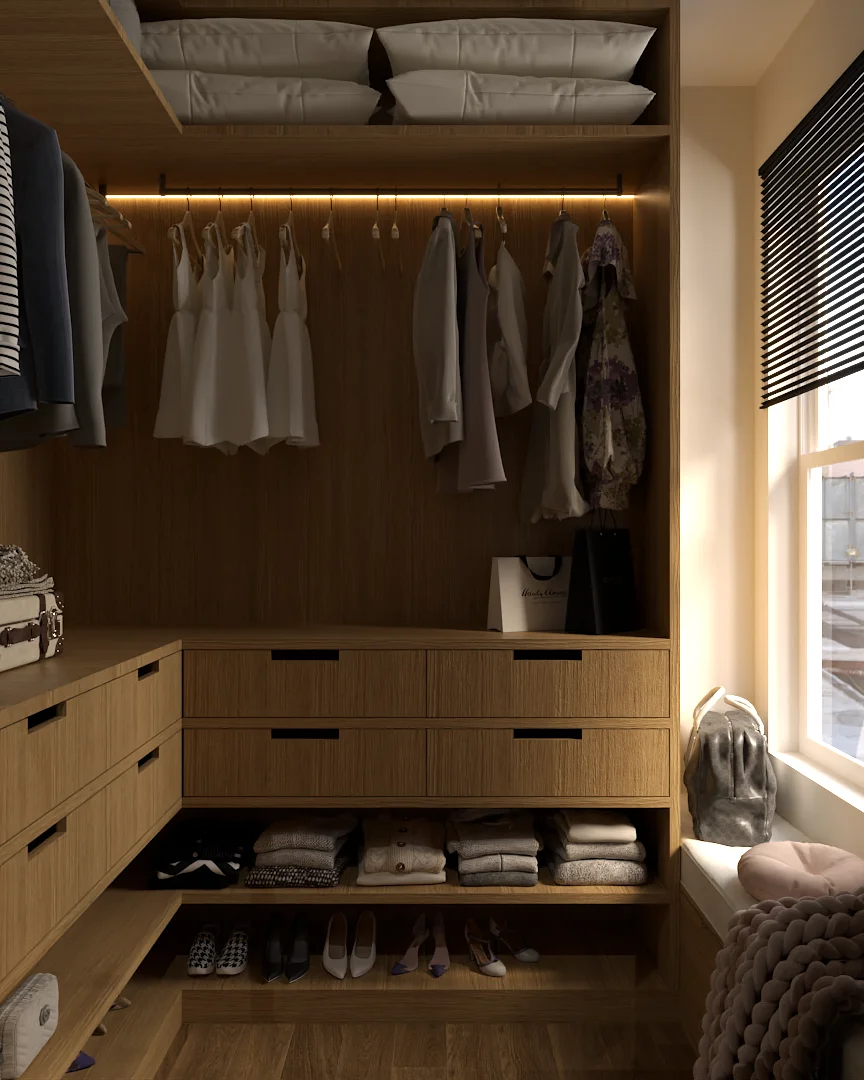
Here's how we broke it down:
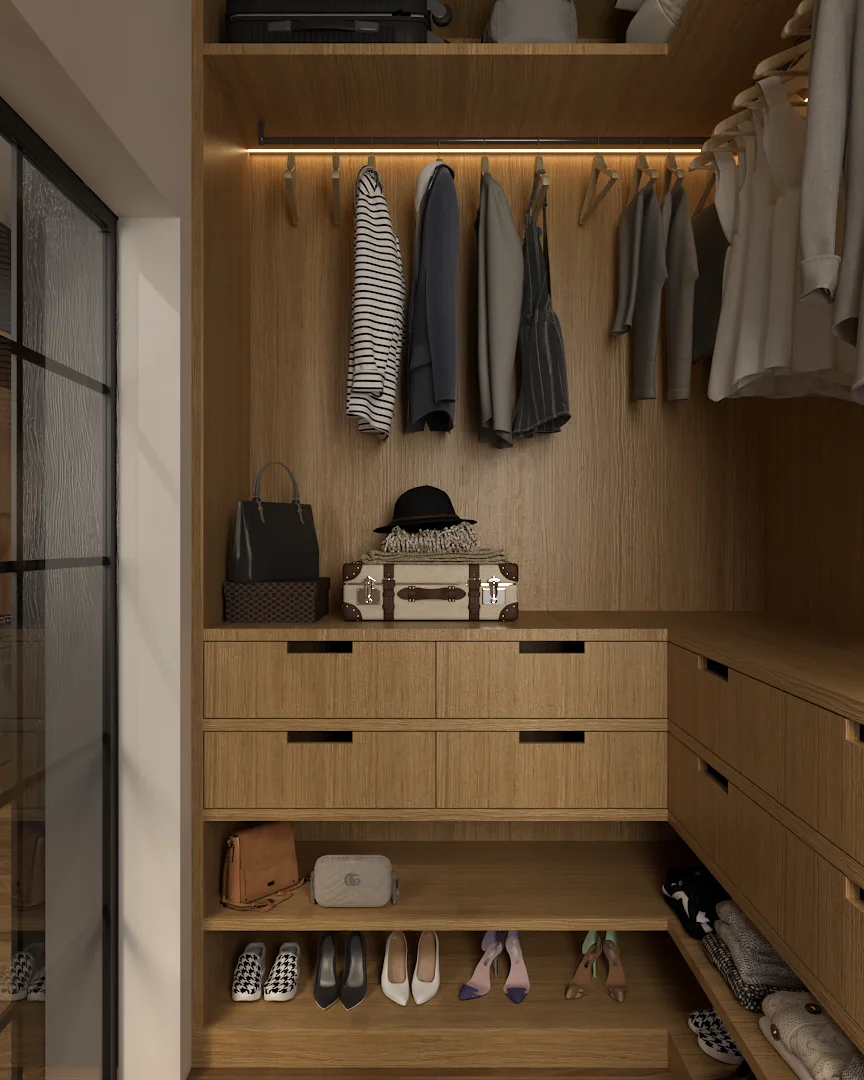
Top zone (eye level to ceiling): A hanging rod with warm LED strip lighting above it. This is where daily wear lives. Shirts, jackets, dresses. The LED strip is not decorative. It makes color matching possible in the morning, even when the overhead light is off.
Middle zone (waist to eye level): Wide oak drawers with soft-close mechanisms. Folded sweaters, workout clothes, pajamas, undergarments. Drawers beat shelves here because nothing slides or topples. You pull open, grab, close. Done.
Bottom zone (floor to waist): Open shelving for shoes and bags. No doors, no bins. Everything is visible and accessible. If you can see it, you use it. If it's hidden in a box, you forget about it.
The three-zone approach is an industry standard for closet design, and for good reason. It works with how people actually get dressed. You reach for daily wear first (eye level), grab folded basics second (drawers), and pick shoes last (floor level). The specific heights vary based on ceiling height and wardrobe mix, but the principle holds across almost every closet we see in the industry. Once you organize around that natural sequence, the space stops fighting you.
Dark Walls, Warm Oak, and Why the Contrast Works
Why does this contrast work?
The dark bedroom walls create a cocoon effect. When you're winding down at night, the space feels enclosed, calm, quiet. It absorbs light instead of bouncing it around.
The closet is the opposite. Natural oak reflects the warm LED strips and the window light, making a small space feel open and inviting. You step from a dark, restful bedroom into a bright, organized dressing area. The mood shift is immediate and functional.
The matte black hardware (drawer pulls, the barn door track, shelf brackets) ties both zones together without competing with either palette. It's the connecting thread.
The Window Seat Nobody Expected
The closet has a window. In most small closets, this would be treated as an obstacle, something to build around. We turned it into the best feature in the room.
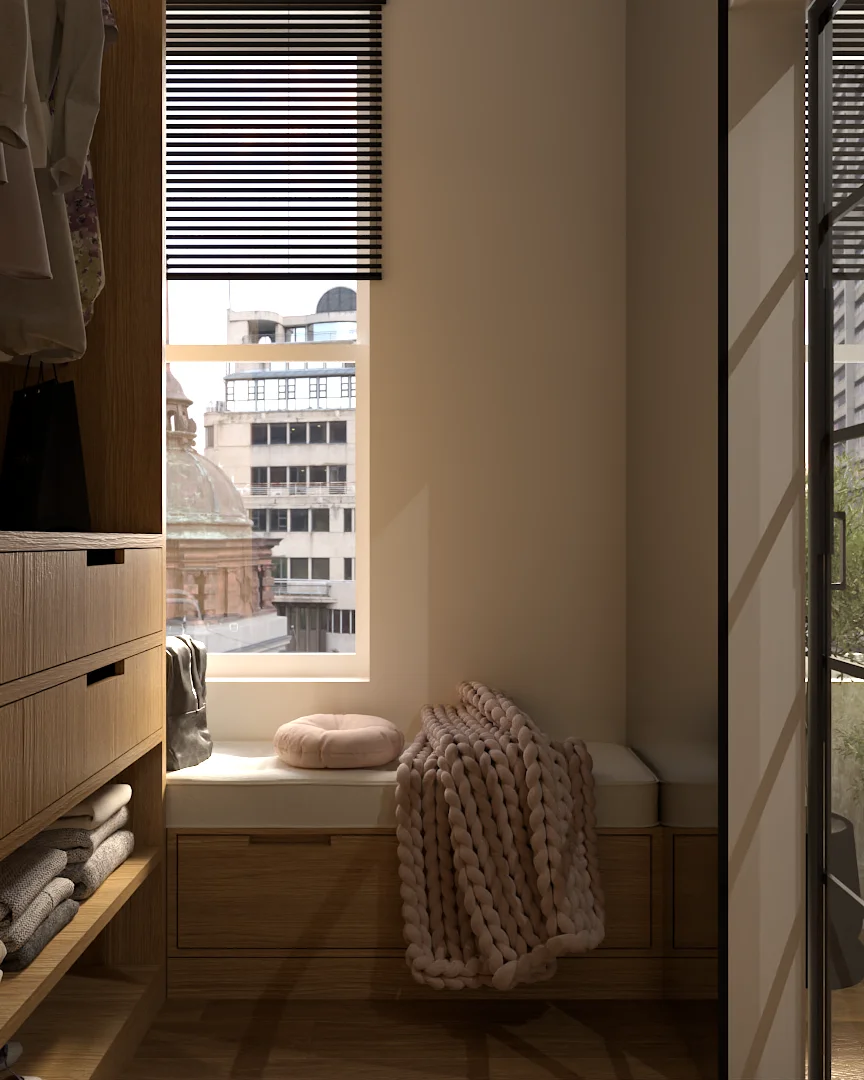
A built-in window seat with storage drawers underneath sits right below the sill. It's wide enough to sit and put on shoes, deep enough to hold a cushion and a throw blanket. The natural light from the window makes the closet feel twice its actual size.
This is the kind of detail that turns a functional space into a favorite spot. The client didn't ask for a window seat. They asked for a closet. But when you study the space carefully, the window was an invitation, not an obstacle.
What Makes This Different from a DIY Closet System
You can buy a closet system from IKEA or the Container Store and install it yourself. For some spaces, that works fine. But here's what an off-the-shelf system can't do:
It can't account for a window at an unusual height. It can't integrate a sliding barn door with glass panels that share light between rooms. It can't design a platform bed that aligns visually with the closet cabinetry. And it can't choose materials and lighting that create a deliberate mood shift between zones.
Custom design is about decisions, not just dimensions. Every choice in this project, the LED placement, the drawer depth, the contrast between dark walls and warm wood, was made to solve a specific problem for a specific person in a specific space.
That's the difference between storage and design.
Why I Always Recommend the Custom Route
I tell every client the same thing: go custom. Not because it's the more expensive option (though it can be), but because it's the one you won't redo in two years.
Off-the-shelf systems are designed for average rooms. Your room isn't average. It has a window where a shelf should go, a ceiling height that's 4 inches too short for standard units, a wall that's slightly off-square. Those small mismatches add up. Gaps between the unit and the wall. Shelves that don't quite reach. Drawers that block the door swing.
Custom means every measurement is yours. The drawers fit your folding style. The rod sits at the height where your longest coat clears the shoe shelf by exactly an inch. Nothing is "close enough."
I know budget matters. If you're looking for a more affordable closet solution, I'll be writing a separate post on that, because budget closets and custom closets are genuinely two different conversations. Different materials, different expectations, different trade-offs. Trying to cover both in one article would do a disservice to each.
But if you're investing in a space you plan to live in for years, custom is what removes the daily friction. No fighting with a system that almost works. No reorganizing every few months because the layout doesn't match how you actually get dressed. Just a closet that fits your life, built once, built right.
Frequently Asked Questions
Answers drawn from 2,000+ projects and real client conversations.
How do you organize a closet in a studio apartment?
Start by dividing the closet into zones: hanging for daily wear, drawers for folded items, and open shelving for shoes and bags. Use LED strip lighting so you can see everything at a glance. In studios, every inch matters, so vertical storage from floor to ceiling makes the biggest difference.
How much does a custom closet design cost?
Custom closet design through an online interior design service typically starts at $600 per room. You receive 3D renders, a full shopping list with trade discounts (15 to 25 percent below retail), and two rounds of revisions. The closet materials and installation are separate costs that vary by region.
What is the best color for a small closet?
Light, warm tones like natural oak or light maple reflect light and make a small closet feel larger. Pair them with warm LED strips under shelves to create depth. Dark closet interiors can work too, but they need more lighting to feel open.
How do you maximize storage in a small closet?
Double your hanging capacity with a two-tier rod system. Add drawers below the hanging section instead of wasting that space on more shelving. Use the floor level for shoes and bags. And never skip the back of the door, it can hold accessories, scarves, or a mirror.
Is it worth getting a custom closet designed?
If your closet is under 50 square feet, absolutely. Off-the-shelf systems assume standard dimensions. A custom layout accounts for your specific ceiling height, window placement, and wardrobe habits. The difference between "it kind of works" and "everything has a place" is usually a few smart decisions about drawer depth, rod height, and shelf spacing.