Why Interior Designers Avoid Matching Furniture Sets
There's something appealing about a perfectly matched furniture set. Everything coordinates. No decisions to overthink. It promises a finished look without the guesswork.
But after furnishing dozens of living rooms, I've noticed something: the spaces that feel most like home are never the ones where everything matches. They're the ones that feel collected over time, even when they weren't.
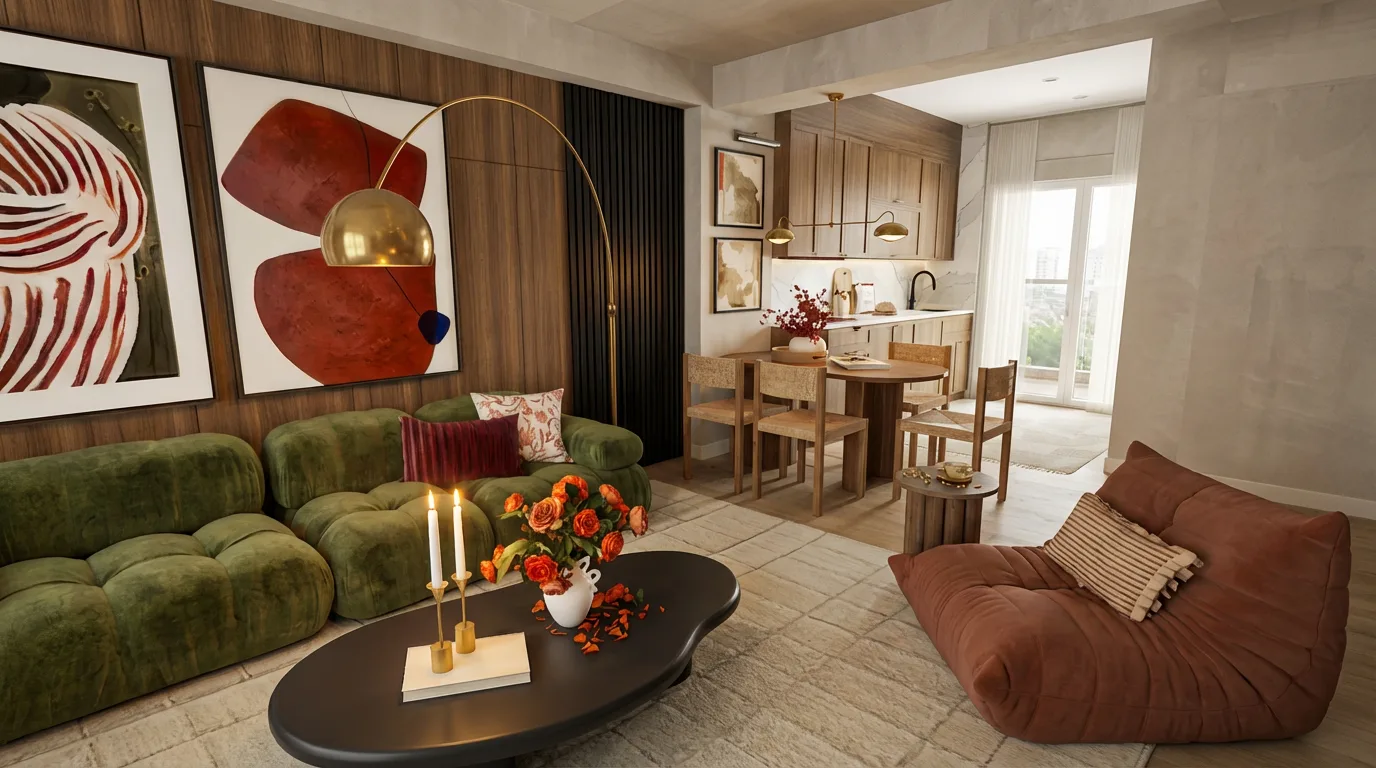
The living room below came to us empty, just bare walls and an open floor plan. The client shared their budget and a collection of inspirational pictures so we could better understand their style.

Design Palette
From neutral base to bold anchor: cream walls set the tone, brass and walnut add warmth, while the moss green sofa makes its statement.
Why Matching Furniture Sets Exist
Furniture sets exist because they're easy to sell. The showroom loves them. Everything photographs well together, and the sales pitch writes itself: "Just take the whole collection."
But showrooms aren't homes. And that's the problem.
When every piece matches, the eye has nothing to explore. The sofa mirrors the armchair, which mirrors the side table. Nothing stands out because nothing is permitted to. The room photographs well, yet feels like nothing.
How to Mix Furniture Like an Interior Designer
I start with one anchor piece. In this project, it was the green velvet sofa. That color and texture set the direction for everything else.
Then I work in opposition. A sculptural sofa needs something softer beside it, so I chose a rounded armchair in warm brown. The matte black coffee table grounds the composition. Brass appears in deliberate doses: a lamp base, picture frames, hardware on the credenza.
If you're working with a designer on your living room project, expect them to source from five or six different brands. That's not indecision. That's the method.
How to Use Color Without Matching Everything
In refined interiors, color serves as a connecting thread rather than a strict rule. Designers repeat tones across the space in varied intensities and materials.
The moss green grounds the room through the sofa, while lighter neutrals soften the composition through textiles. Brass from the coffee table legs echoes in the lamp and picture frames. Walnut appears in the credenza and side table, each surface reflecting light differently.
The result is cohesion that feels effortless rather than engineered. This approach works for a cozy living room just as well as a formal space.
The Living Room We Designed (And Why Nothing Matches)
The client wanted warmth without heaviness. Their Pinterest board was full of creams and natural textures, but also a few bold green moments. We ran with that.
The sofa is similar to the Marcel Sofa from West Elm. Velvet in moss green. It's the room's anchor and the biggest color commitment. Everything else had to earn its place next to it.
The armchair came from a completely different brand, something closer to the TOGO Fireside Chair from Design Within Reach. Rounded, soft, warm brown. It's the sofa's opposite in almost every way: curved where the sofa is angular, leather where the sofa is velvet, warm where the sofa is cool.
That tension is the point.
The coffee table is matte black. Simple, grounding. The brass appears in the lamp and a few smaller objects. Nothing from the same collection. Nothing that "goes together" on purpose.
For more on where to find pieces like these, see our DWR furniture review.
Is Mismatched Furniture a Good Idea?
Every room I design follows the same logic: anchor, contrast, repeat. Whether it's a neutral dining room or a living room like this one, the approach doesn't change.
But here's what I rarely say out loud: getting this right is harder than buying a set.
You have to understand scale, or a beautiful armchair will look lost next to an oversized sofa. You have to feel proportion, or the coffee table will fight the rug instead of grounding it. You have to know when contrast becomes chaos, when "collected over time" starts looking like "couldn't make up my mind."
Most people get one or two pieces wrong. Not because they have bad taste, but because mixing furniture requires seeing the whole composition before any of it exists. That's the skill.
You don't need matching furniture. You need pieces that belong in the same story. And sometimes you need someone who's written that story a few hundred times before.
The Difference Between Finished and Designed
Matching sets are convenient. They're also forgettable.
The rooms people remember are the ones where someone made choices. Where the green sofa feels bold, and the brown chair feels warm, and the brass lamp catches your eye from across the room.
That's the difference between finished and designed. One is a transaction. The other is a conversation.
If you want help building a room with that kind of intention, book a free consultation and we'll figure it out together. Or check out our design packages to see how we work.
Frequently Asked Questions
Answers drawn from 2,000+ projects and real client conversations.
How many brands do professional designers typically source from per room?
Five to six minimum. No single brand designs for contrast. They design for coordination, because that's what sells in showrooms. To create the visual tension that makes a room feel refined, designers source across collections and compose pieces with intention.
Why do matching sets photograph well but feel flat in person?
Matching sets are optimized for catalog shots, not lived-in spaces. In photos, coordination reads as polish. In person, the eye needs variety to stay engaged. Rooms with mixed pieces hold attention longer because there's something to discover.
Do mixed furniture rooms affect how buyers perceive a home?
They do. Real estate stagers avoid matching sets because they photograph as "showroom" rather than "home." Buyers respond better to spaces that feel collected. The psychology term is cognitive engagement: variety holds attention longer, making rooms more memorable during walkthroughs.
What's the hardest part about mixing furniture without a designer?
Scale and proportion. A beautiful armchair can look lost next to an oversized sofa. A statement coffee table can fight the rug instead of grounding it. The skill is seeing the whole composition before any of it exists, which is why working with a designer saves most people from expensive mistakes.