Interior Design Shopping List: What It Is, Why It Works
Most homeowners think an interior design shopping list is a wishlist with a budget. It is not. It is the document that turns a 3D render into a buyable plan, and it does more practical work than any other deliverable in an online interior design project.
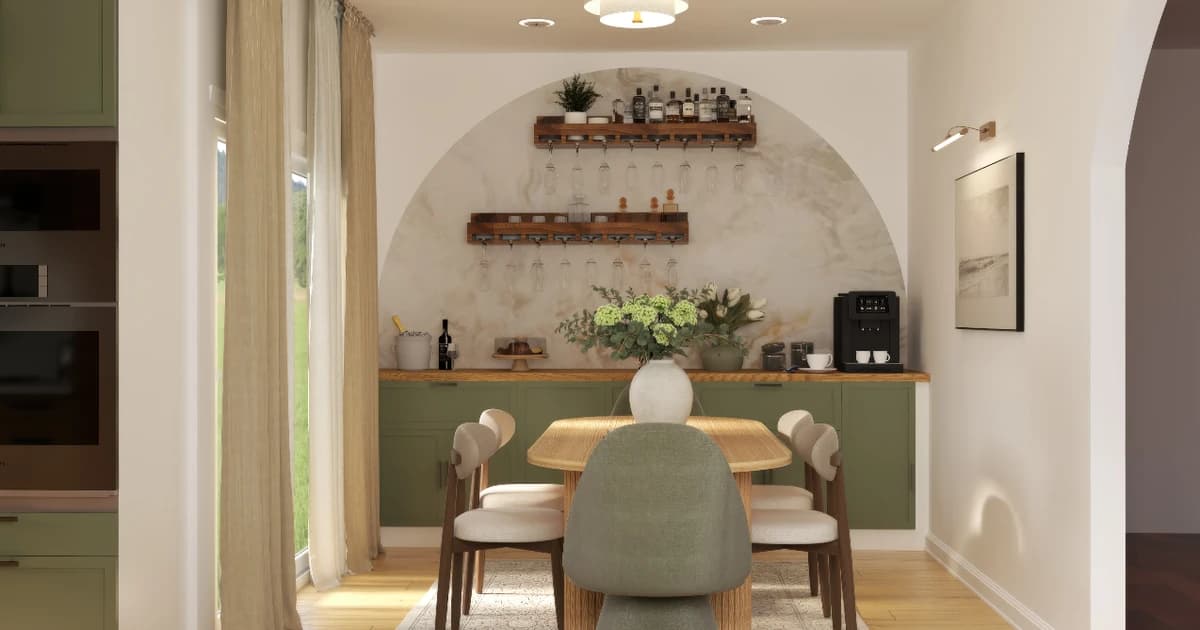
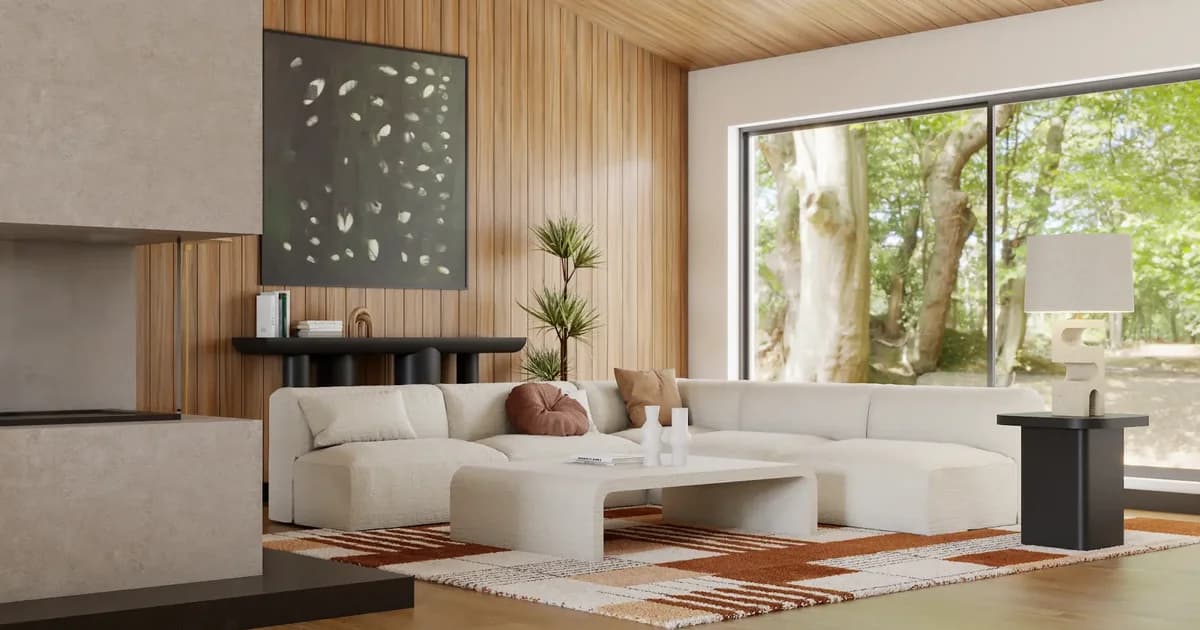
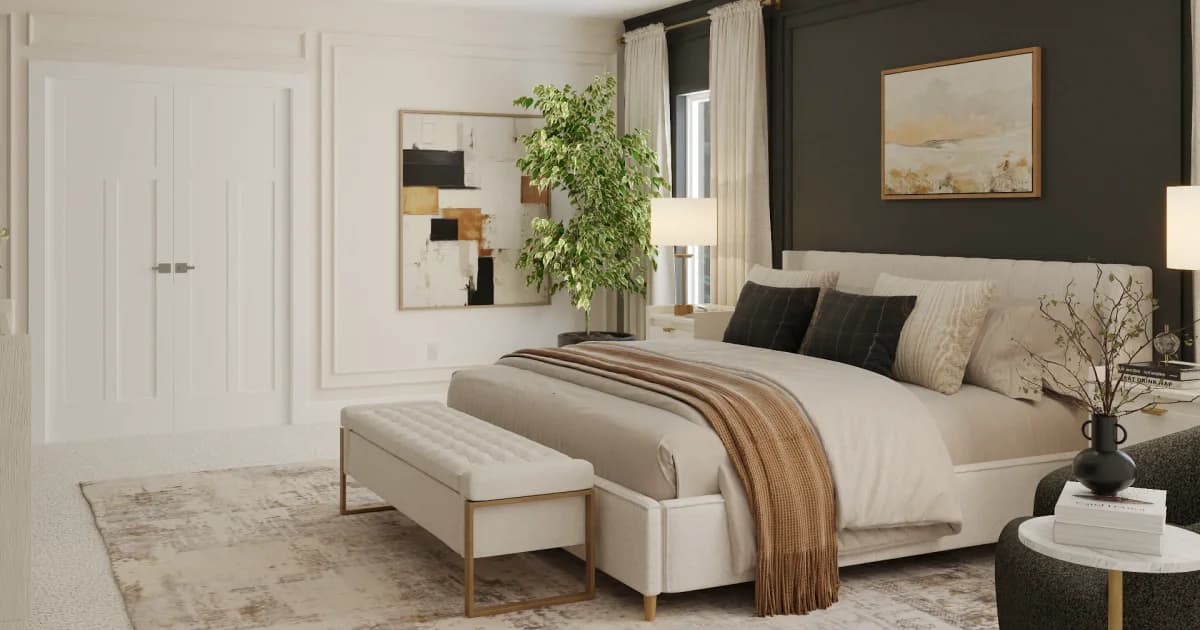
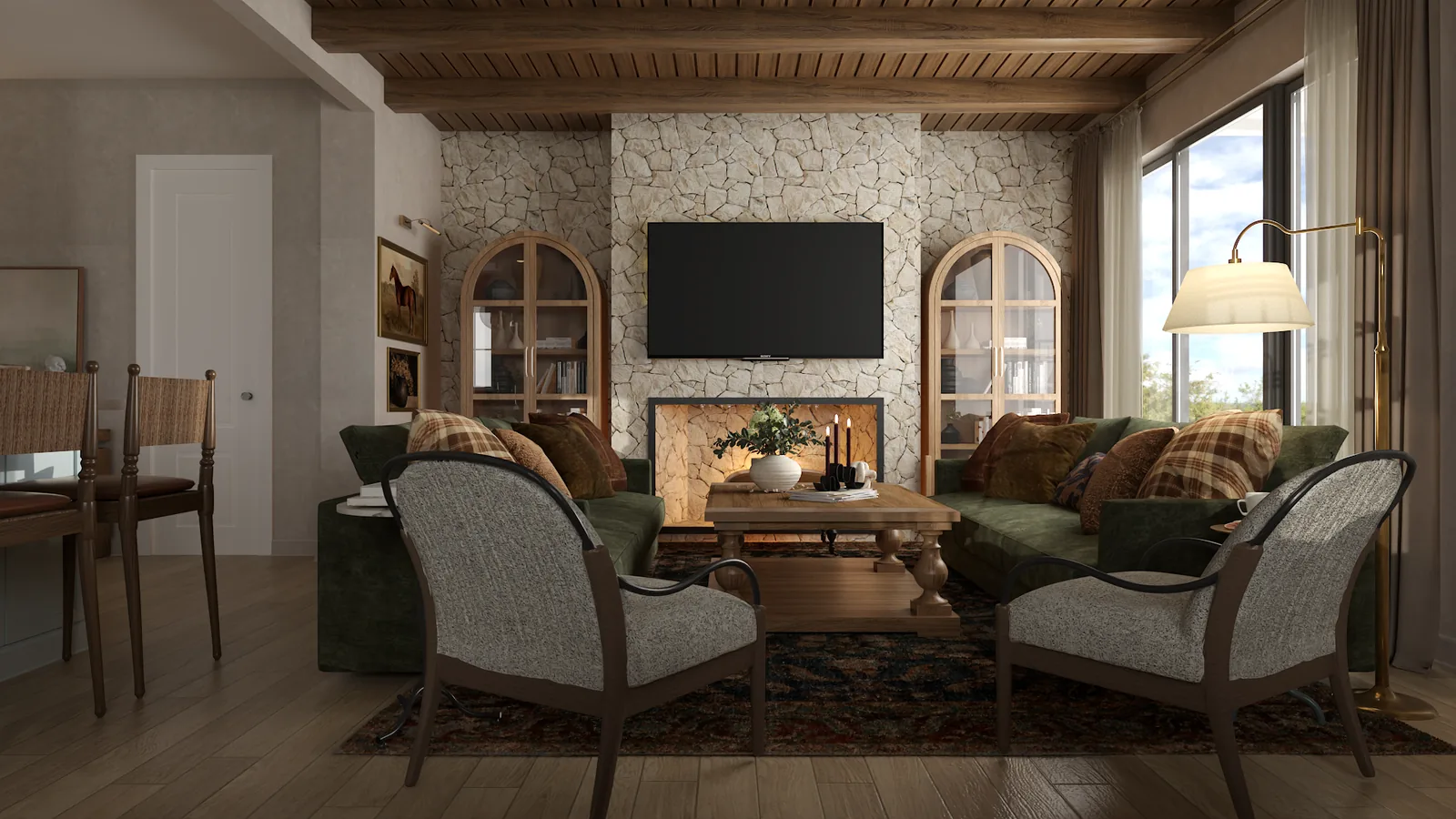
Below is a real one from a recent Debora project: seven renders, the exact palette, and the full shopping list as a free PDF. The numbers, retailers, sizes, and finishes are unedited. Everything else in this article is about how a list like this works as a system.
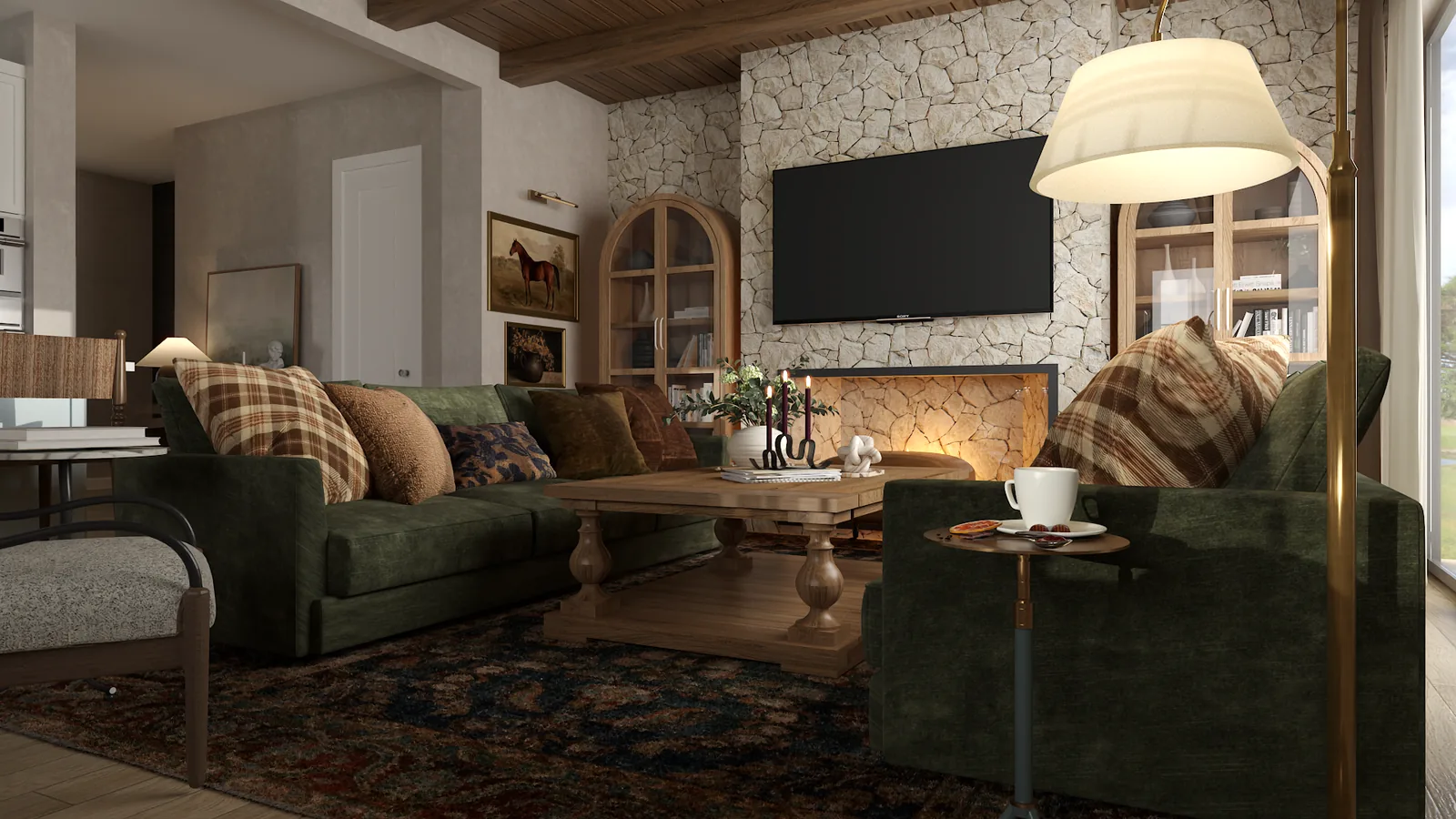
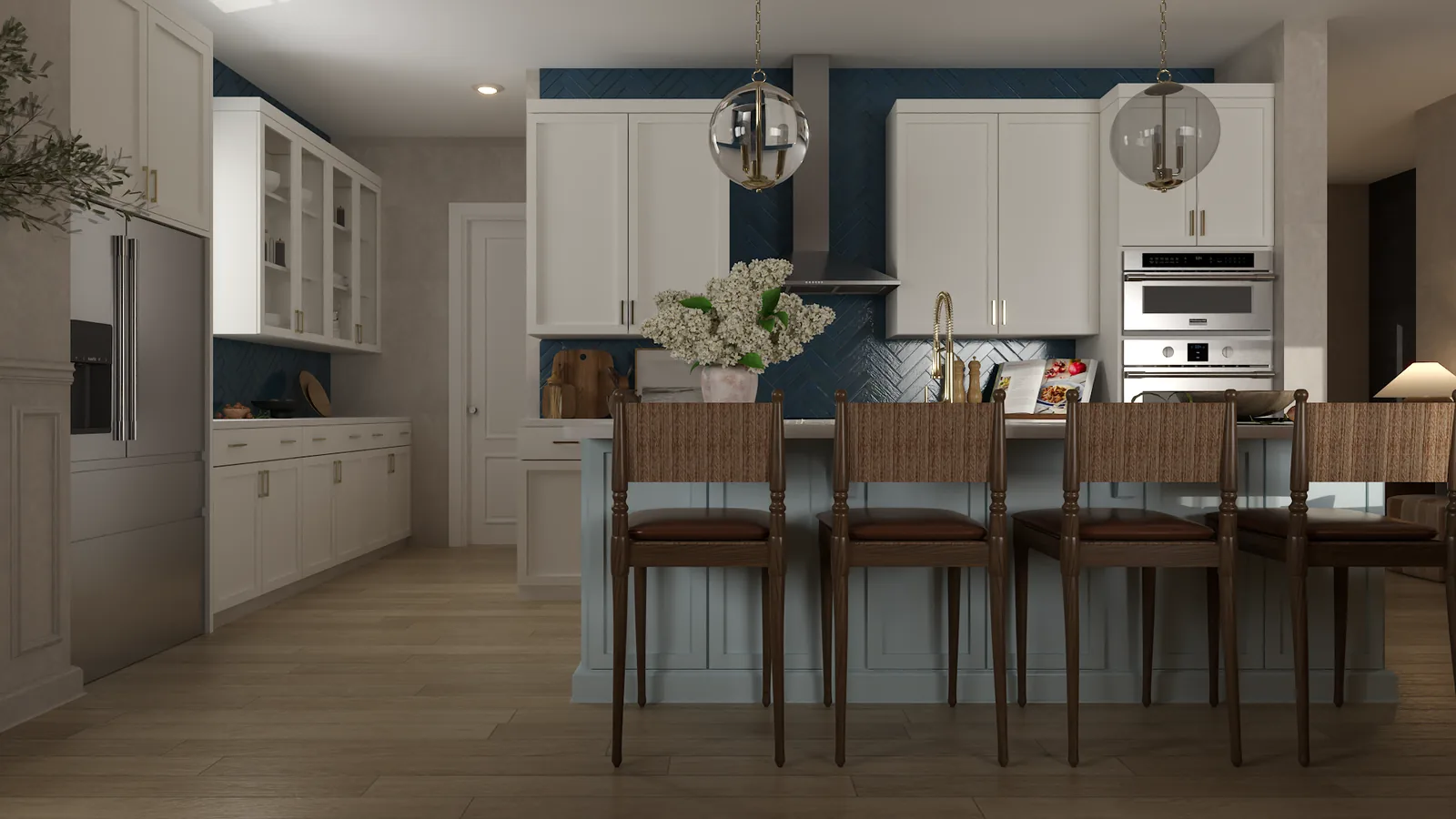
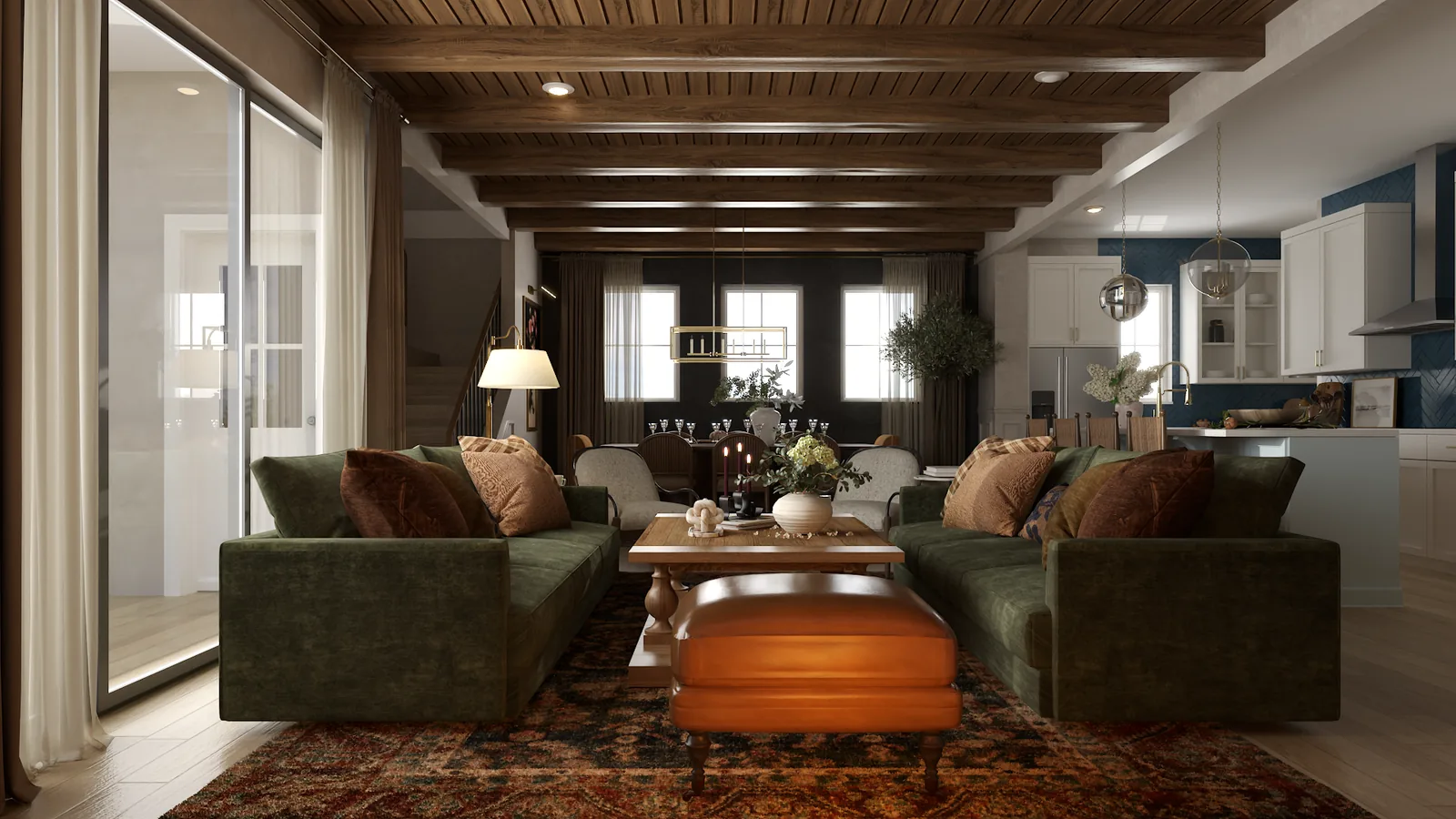
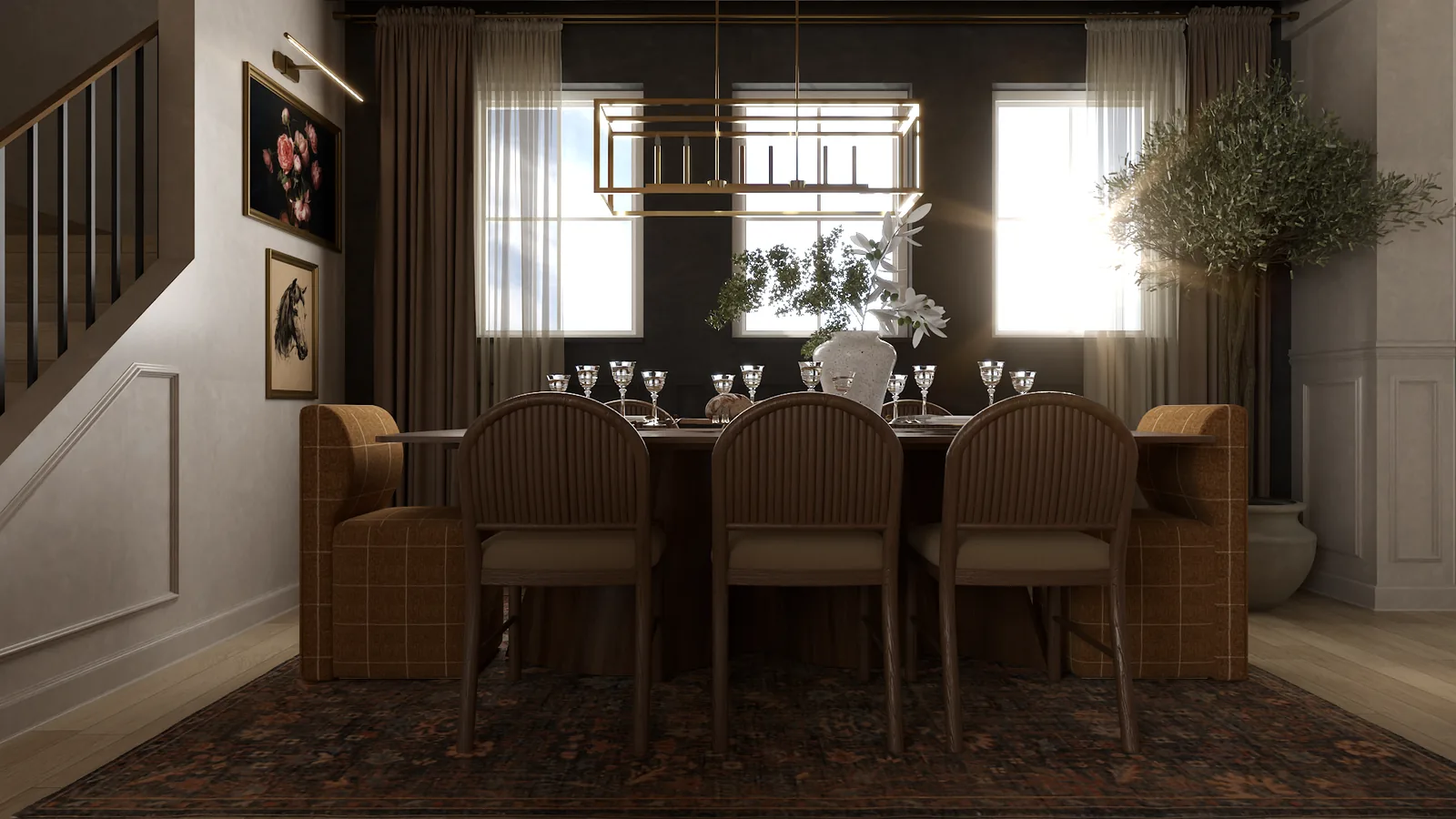
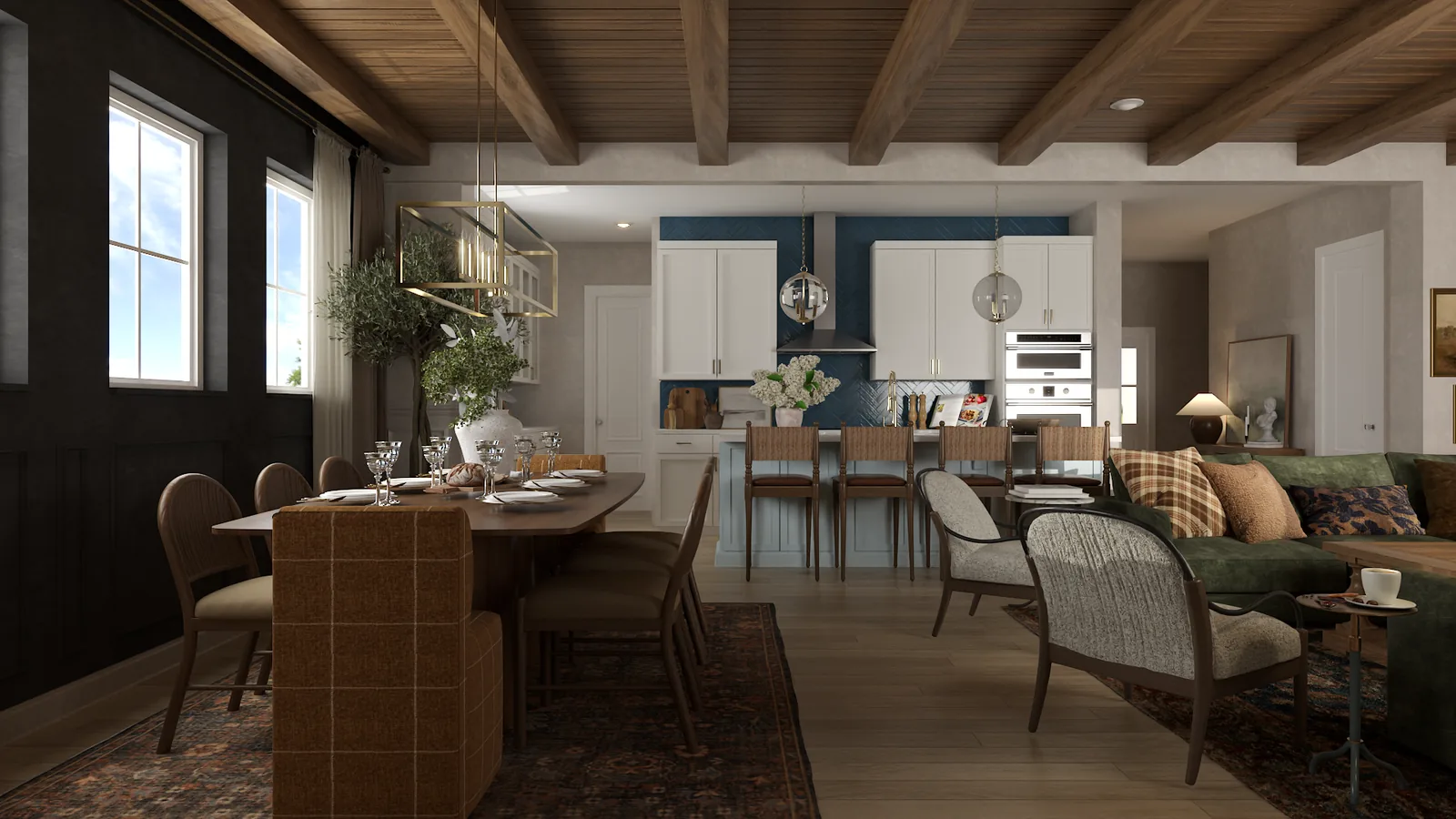
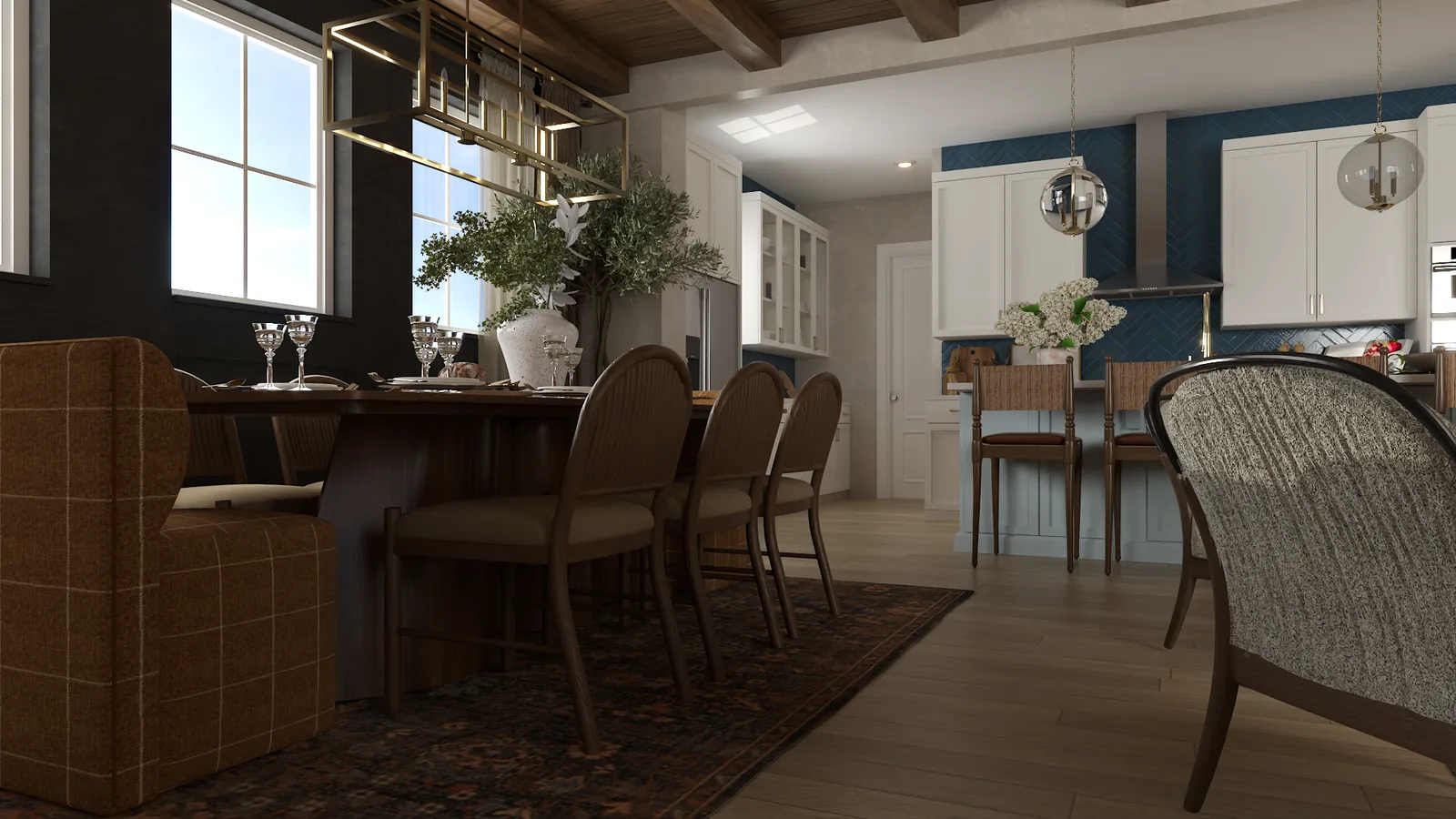
Palette - Warm Transitional Family Home
Six colors do all the heavy lifting across the living room, dining room, and kitchen. Calcare Cream limewash on most walls, Carbone Gray Black on the dining accent wall, with brass and cognac warming the moodier zones.
Walk through the room in 360
The renders above are static frames. The way we deliver them to clients is interactive. Drag inside the viewer below to spin the room, look up at the beams, or pan toward the kitchen. Switch angles with the tabs to see how the same plan reads from different parts of the house.
These are the actual 360 walkthroughs the client received before any piece was ordered. Every Debora project ships with a full set like this for the rooms in scope. It is what removes the last gap between "looks great in the render" and "feels right in real life."
The project behind the renders
The brief was specific. The client wanted a warm transitional family home where the living, dining, and kitchen all flow into each other. Deep moody tones. Layered textures. Real wood, real stone, real velvet. No minimalism. Every item on the list was chosen against those expectations, not pulled from a template. The renders above are what the client approved before a single piece was ordered. Two of our interior designers worked on it in parallel. Total turnaround was nine days from brief to delivered PDF.
The palette above was locked first, right after the client brief was nailed down. From that point on, no item entered the list unless it lived inside those six colors. That is how a room ends up reading as cohesive instead of close-but-off. When a homeowner builds their own list, the order usually reverses: they find pieces they like, and then try to make a palette out of the leftovers. The discipline of locking the palette first is the cheapest design move that exists.
What an interior design shopping list actually is
A shopping list is the last deliverable in an online interior design project. It comes after the floor plan, after the mood board, after the 3D renders. By the time it lands in your inbox, every design decision has been made. The list is what makes those decisions executable.
Every line item has eleven pieces of information attached to it: an item number, a product photo, the exact product name, the store, the size, the finish, the quantity, the unit price, the total cost, a direct purchase link, and a live status for availability and delivery. The point of all that detail is to remove every chance of guessing. You should never have to ask, "Will this fit?" or "Is this the right color?" The list answers those questions before you click buy.
A shopping list is a procurement document. Treat it that way and the room comes together. Treat it like a Pinterest board and you'll end up with a $300 chair that ships back because the seat depth was wrong.
Why a real shopping list takes so much time
A list like the one above is not a one-evening project. The PDF that landed in the client's inbox came after weeks of design work, and the underlying labor is heavier than the spreadsheet format suggests. Every item gets sourced, vetted, dimensioned, color-matched against the palette, and verified for in-stock status before it makes the document. For 31 items across 16 retailers, the sourcing alone runs into dozens of hours. Most homeowners who try this themselves give up somewhere around item nine.
There is one specific step that adds the most time, and it is also the one that makes the rest of the project work. We build every single piece into a custom 3D model of the client's actual space. Not generic stock models, not flat moodboard collages. Each chair, each rug, each lamp, each piece of art is reproduced manually from scratch at full scale inside their real floor plan. That is what the renders above show. Before any item lands on the shopping list, it has already proven itself inside the room at 1:1, against the windows, the doors, the ceiling height, and every other piece on the plan.
The reason this matters is simple. A sofa that looks great in a square thumbnail can eat half the room when it arrives. A dining table that "feels right" on a moodboard can leave thirty inches between chair backs and the wall, which is the difference between a usable room and a hallway. Modeling everything in 3D first is the only way to catch that before the credit card runs.
This is the work that turns a list into a finished plan instead of a guessing game. It is also the work most online interior design services skip, and the reason their shopping lists feel like product carousels. We do it on every project. It is the most labor-intensive part of what we deliver, and it is the part the client never has to think about.
The eleven columns, and why each one earns its place
People look at a Debora shopping list and assume the columns are administrative. They are not. Each one prevents a specific failure mode that I have watched homeowners run into when they try to do this on their own.
| Column | What it does | Failure mode it prevents |
|---|---|---|
| Item number | Sequential reference, 1 through 31 on this project | Conversations that start with 'the brown chair, you know, the one from...' |
| Picture | A product thumbnail next to every line | Confusing two pieces with identical names across five different stores |
| Name | Exact retailer product name, copied verbatim | Losing the product forever when a link breaks and you have no searchable string |
| Store | One retailer per line, 16 total on this project | Paying full price somewhere when it is discounted somewhere else |
| Size | Exact dimensions: width, depth, height, pile depth, diameter | Roughly 90 percent of return-shipping disasters. The sofa that didn't fit |
| Finish | Specific color, fabric, leather, or wood option | Two pieces that look great alone, fighting each other in the same room |
| Quantity | How many of each item to order | Ordering three of something you needed four of, then waiting six weeks for the fourth |
| Price | Retailer's listed unit price at build time | Sticker shock when the project total finally lands |
| Cost | Quantity times price, plus a running total at the bottom | Discovering you are $5,000 over budget after everything is ordered |
| Link | Direct, working URL to the product page | Spending forty minutes re-finding a chair you already picked |
| Availability + Delivery | Live status columns updated through the project | Ordering in the wrong sequence and eating off a folding chair for two months |
That is what the system is. Now to the interesting part, which is what is on the list.
Mixing premium and mass-retail: the strategy nobody publishes
Here is something most interior design content gets wrong. They imply that an interior designer's shopping list is a luxury manifest. It is not. A real list pulls from many tiers of retailer because the room demands it.
On the example list, the spread looks like this:
| Tier | Stores on this list | What goes here |
|---|---|---|
| Premium / Trade | Arhaus, Lulu and Georgia, One Kings Lane, Anthropologie, Birch Lane, Crate & Barrel | Statement pieces, dining table, sofa, curio cabinet, dining chairs, ottoman |
| Mid-tier retail | West Elm, Pottery Barn, CB2, John Loloi | Coffee tables, lamps, accent pillows, sculptural decor |
| Specialty | James Alexander Paint, Etsy | Custom limewash paint, handmade textile accents |
| Mass / Accessible | Amazon (10 items), Wayfair | Curtains, curtain rods, art lights, faux greenery, large value rug |
For reference, the premium pieces in this project came from Arhaus, Lulu and Georgia, and Crate & Barrel, with accent pieces from One Kings Lane and Anthropologie. Mid-tier sourcing went through West Elm, Pottery Barn, and CB2.
The same list contains heritage furniture worth thousands and finishing pieces that cost less than a dinner out. Both belong because they serve different rooms with different requirements.
This is the part of professional sourcing nobody talks about. The investment should sit on the pieces you sit on, sleep on, eat at, and look at every day. Everything else can come from wherever delivers the right look at the right price. A faux olive tree is a faux olive tree, no matter where you buy it. You do not pay luxury prices for items where the markup serves no one.
When an interior designer mixes tiers like this, the room reads as expensive but does not cost what an all-luxury list would. Trade discounts compound the savings further. On a project like this one, the trade discounts Debora passes to clients on premium pieces alone often exceed the entire design fee. The list is, in a real sense, how the design pays for itself.
How to evaluate any interior design shopping list
Most homeowners only see one shopping list in their life: the one their interior designer sends them. They have no benchmark to grade it against. Here is the benchmark. Run any list, ours or anyone else's, through this checklist. If most boxes are unchecked, the list is incomplete, no matter how pretty the formatting looks.
A shopping list is complete only if it has all of this
- Every item has a product photo, not just a description. You should be able to identify it at a glance.
- Sizes are exact: width, depth, height, pile depth, diameter. Approximations are not enough.
- Finish is named with the retailer's exact label (Distressed Velvet Juniper, Antique Brass), not 'green' or 'gold'.
- Every product link works the day you receive the list. Old links to dead pages are a red flag.
- Quantities are explicit. You should never have to count chairs from a rendering.
- Pricing shows unit price and line cost separately. A running total at the bottom is mandatory.
- The retailer mix spans investment, mid-tier, and accessible. A list that is all premium is overpriced; a list that is all Amazon is under-designed.
- Items have been modeled in 3D inside your actual floor plan, not pasted onto a moodboard.
- The palette is defined and visible, with hex codes or paint names. Every item on the list can be traced back to the palette.
- The list is a living document, not a one-time PDF. Availability and delivery columns should update during the project.
A list that hits all ten is a procurement plan you can execute. A list that hits five or fewer is an inspiration board the studio is trying to charge you for. The gap is enormous, and most homeowners cannot tell the difference until the wrong sofa shows up.
What to do once you have the list
Receiving the list is the start, not the end. There is a sequence that protects the budget and the timeline, and it is the same one we coach clients through on every project.
Order long-lead items first. Anything from premium retailers tends to have eight to sixteen week lead times. Sofas, dining tables, casegoods: these go in week one. Decor and accessories from mass retailers arrive in days and can be ordered last.
Stage the paint before the furniture arrives. Paint dries in days. Furniture arrives in months. Painters work in empty rooms. The order is obvious in hindsight and somehow everyone reverses it.
Confirm dimensions one more time before clicking buy. The list has the sizes. Your hallway is the bottleneck. If a 96-inch sofa has to come up a flight of stairs, the list will not catch that for you. Measure the path, not just the room.
Keep the list open as a working document. The Availability and Delivery columns are designed to be updated. Use them. The list becomes your project tracker through the entire furnishing phase, which usually runs four to twelve weeks.
What this kind of list gives you
The math is what makes the design fee easy to justify. On the project above, the client got:
- About 60 hours of sourcing time back
Picking, measuring, and verifying 31 items across 16 retailers from scratch is dozens of hours of work. We do it on the client's behalf and deliver the finished plan.
- Trade discounts on premium pieces
Passed directly back to the client at participating premium retailers. Most homeowners cannot access these prices. Debora can.
- A scale-perfect plan, modeled at 1:1
Every piece on the list was already proven to fit, both physically and visually, inside the client's actual room before it entered the document.
- A working PDF, not a static screenshot
Live availability, live delivery status, every link working, every column searchable. The same format you can download above.
The design fee on a single-room Debora project starts at $600. For a multi-room project at the size shown here, it scales with scope. In either case, the math works. You can read more in our interior designer cost guide for the full breakdown of online vs. local pricing.
How to get your own shopping list
If you want to save the time and let the team handle the entire build, here is what the process looks like.
What we need from you
- Phone photos of the rooms you want designed (no professional shots required).
- Rough measurements or a floor plan. Hand-drawn is fine. We redraw it cleanly.
- A short brief: how you want the room to feel, what you don't want, your budget range.
- A custom 3D model of your actual space
Every item modeled at full scale inside your real floor plan, so nothing on the list is a guess.
- Renders from multiple angles
Just like the seven above. You approve them before a single piece is ordered.
- A 360 VR walkthrough
Stand inside the finished room from your phone or a VR headset before anything ships. Example on our [virtual reality interior design tour](/interior-design/virtual-reality-interior-design/).
- A color palette locked to your brief
Six to eight colors that govern every item on the list, like the palette at the top of this page.
- The working shopping list (PDF + live document)
Every product, size, finish, quantity, store, and direct purchase link. The same format as the PDF above.
- Trade discounts on premium pieces
Passed directly back to you at participating retailers. We earn nothing on the products you buy.
Most projects at this scope deliver in nine to fourteen days. The first step is a free consultation with Debora.
The shopping list is not the design. The design happens first. The list is what makes the design real, and if it is built well, it carries you from the render to the room without surprises. That is what the eleven columns are for. That is what the palette is for. And that is what the PDF on this page is for: a real example of how it all comes together, with nothing hidden.
Frequently Asked Questions
Answers drawn from 2,000+ projects and real client conversations.